Hilda May Staveley was born in Muston on March 29th 1890, the daughter of John Staveley (1861-1909) Mary Elizabeth Staveley ( nee Boynton ) (1864-1944).
In the 1901 census Hilda Staveley is age 11 and living in Muston. Her relation to the Head of house George Boynton age 59 is that of Grandchild. Ann Boynton his wife is aged 61 and Edith Annie, Hilda May’s sister, is also living at this address and is 14 years of age.
She was married to Henry George Godfrey on May 31st 1909 at St Saviours Church in Scarborough. The Wedding caused quite a stir and got a mention in the local newspapers. Several Jack Tars ( seamen ) had replaced the horse. George Godfrey of HMS Hindustan and his bride, a Scarborough girl, who had changed her name just before at St Saviours Church from Miss Hilda Staveley to Mrs Hilda Godfrey. Visitors entered into the spirit of the incident and the couple received many a greeting. Hilda May is 19 years old and Henry is 23 years old.
HMS Hindustan was a pre-dreadnought battleship of the Royal Navy. 1903-1921.
The 1911 census shows Hilda as being aged 21 and Head of the house. She is living at 8 Belle Vue Street, Scarborough, and is shown as being married. It is very likely that her husband is away on a ship. Walter Boynton Staveley is her brother and is aged 15 and living with her. Their father died in 1909.
8 Belle View Street, Scarborough.
Their first child Edwin Henry Godfrey is born on September 16th 1911 at Scarborough. Sadly he dies at the age of 16 months in Portsmouth where his mother and father are recorded as living at 4 Canal Walk, Landford. At this point Henry George Godfrey is serving aboard the dreadnought battleship HMS Britannia.
HMS Britannia was a pre-dreadnought battleship launched in 1904 and sunk by SM UB-50 in 1918.
Their first daughter, Hilda May Godfrey is born on 16th May 1913 and baptised at St James Church near Portsmouth on January 25th 1914. The family then move to Ireland where Henry is stationed as a lighthouse keeper in Mullaghmore, County Sligo. They are living at 6 Coastguard Cottages. Eileen Godfrey is born on January 16th 1920 at Mullaghmore in Co Sligo.
One minute of Mullaghmore in County Sligo, Ireland.
Having returned from Ireland Henry Godfrey now takes a job as a leading boatman for the coastguard. They are living at 5 Coastguard Station, Bexhill Road, St Leonards on Sea. Mary Elizabeth Godfrey is born on 9th January 1923. Dora Lane Godfrey is born on May 6th 1924. Vera Godfrey follows on May 6th 1925.
The birth of their last child, John David Godfrey takes place on June 10th 1931 which is quite a gap. At this time they appear to be living in Exeter.
The family have moved to Westward Ho by the time of the census in 1939. The family settle here and Henry becomes the Lighthouse Keeper in Westward Ho for the next 15 years before he retires in 1946. The Bull Point Lighthouse was build in 1879 and shown here in the photo. It was demolished and rebuilt in 1974 due to ground subsidence and infrastructure problems. It is most likely that Henry Godfrey worked here.
They live at 4 Westbourne Terrace, Westward Ho, Bideford in Devon. Whilst this would have been housing in 1939 it is now a pub and within just a short walking distance of the beach.
Previously a residential address – 4 Wesbourne Terrace, Westward Ho.
Just before Henry retires he finds a body of a local women, a Mrs Mildred Cartwright, who had committed suicide along the beach about 2 miles from the slipway at Westward Ho.
After his retirement the couple continued to live in Bideford at Sea View Road. Henry died at Bideford Hospital in 1961. He is buried at St Margarets Church, Northam. Hilda died in 1974 in Exeter.
To view the family tree of Hilda May Staveley click here.
The following is Walter Staveley’s own account from a diary in his own hand writing that was found after his death and which is recorded here so that we can see what he went through in the early years of his posting overseas.
SS Mauretania II launched in 1938 and used during WWII as a troopship
29th June Saturday 1940 aboard the SS Mauretania II
I awoke this morning at 6 o clock and felt the ship moving. I looked out of the porthole and found that we were just moving out into the river mouth, assisted by tugs. Just out of the river mouth the tugs left us and we moved out into the open sea.
An hour or so after the tugs left us, one or two lads were looking pretty green, there was a heavy swell running. Towards the evening we sighted Ireland and we kept it in sight until dark. At one time we could see Douglas on one side and the Scottish coast on the other. I think we were steaming dead north practically all day.
Our convoy consists of the Aquatania on the extreme port bow, The Queen Mary next and then ourselves.
There were two destroyers and the light cruiser Cumberland steaming at the sides in front of us. The crew say we steam at a steady 24 knots.
HMS Cumberland was a County class heavy cruiser of the Royal Navy that saw action during the Second World War.
30th June Sunday 1940 I think we have steamed west most of the night and we must be well out in the atlantic now according to the sun. We can get a very good view of the Queen Mary and the Aquatania now, I think they’ve moved closer. I had two breakfasts this morning. One up and down, and we seem to running into heavier weather. We had a pleasant surprise today. Cigarettes are only ½ price as we have left the 3 mile limit. We take our lifebelts with us wherever we go.
1st July Monday 1940 The sea, thank the Lord, is much milder this morning and I think I’ve got over the sickness and found my sea legs. This mornings routine consisted of rifle drill and P.T. The rest of the day I spent walking around the ship.
2nd July Tuesday 1940 The weather is still warm today. We had P.T. and rifle drill again this morning. This afternoon has been uneventful. We have been told that we can write one letter home and it must be handed in to our N.C.O. in the morning, ready for censoring. I wrote it after tea.
3rd July Wednesday 1940 We paraded in K.D. this morning, and handed our letters in. Before P.T. we went down for a swim in the swimming pool. It’s not very big, but is very well made. Each squad has bout ¼ hour in which to swim and get dressed. The weather is slightly warmer and we seem to be travelling S.S.E.
4th July Thursday 1940 The usual routine this morning. I saw a few shoals of flying fish. They fly, or jump over the water similarly to sea gulls. They are about 6” long. Well, for five nights and six days now the ships have been steadily driving along and we havent seen one square inch of land. We are just beginning to get slightly bored. We have a pretty decent concert every other night but the places gets too packed, and the weather is by no means cool. I spend quite a lot of time on deck with Ron. The sea is very calm and very blue now, it is also, no longer necessary to sleep in bed now. We sleep on top.
5th July Friday 1940 The temperature is still rising and we had iced lemonade at dinner today. I was on the fatigue party which carried the cases from the brig to the mess. Our routine seems pretty well fixed now Reveille 6.30, Check parade 07.00 am, First sitting for breakfast 07.15. Second sitting 8 am. Parade 9.30am then rifle drill, swimming and P.T. under our own corporal and sometimes a lecture ( by various people ). We had Pay Parade this afternoon 8/- The flying fish are more numerous now, there seem to be hundreds all around the ship. Sunset comes very quick, and it is almost dark by 7.45 pm. By the way, I forgot to mention that we put the clocks back ½ hour every day.
6th July Saturday 1940 We had the usual routine again this morning and then a lecture by Major B on RAF and Army co operation. Ron and I went to a concert given by the R.A.M.C. at night, it was very good indeed. In fact, we’ve something on our plate to beat it. The skipper and D.C. troops was there. O.C. is something of a comedian. He gave us a talk about discipline etc and then the skipper gave one too. Captain Ames, the skipper is a fine fellow with white snowy hair. A typical sea captain. I think we changed course to E.N.E. today.
7th July Sunday 1940 Church Parade on Prom Deck. The O.C. and the skipper were there. We had rather an amusing service, as the water from the open air swimming pool kept splashing us with the motion of the ship, and wetting the skpper and padre, etc.
Nothing unusual happened during the day but towards the night we changed formation to in-lin-ahead with Queen Mary in front, Aquatania second and us behind. By the way, out total escort now is one cruiser. However, we have one six inch gun, one 3” a.a. gun and a Lewis gun. The QM and the Aquatania are similarly armed and the cruiser carries two walrus aircraft, so we aren’t badly armed.
There are rumours that we shall see land tomorrow. Its impossible to work out our position for ourselves because we keep zig zagging all the time. So the rumours is not counted on.
Walruss: In the campaigns in Norway and East Africa it was used as a combat aircraft, even performing some ground attack and bombing sorties.
8th July Monday 1940 This morning was pretty dull, but the rumours proved correct. Just before going down for a swim, there were shouts and cheers. The lads had spotted land, which turned out to be Freetown, Sierra Leone. After the swim we went on deck and practically the whole draft lined the rails while we sailed up the fairway past the boom and dropped anchor in the harbour at 1 pm. The harbour was packed with shipping, tankers, freighters, naval vessels, fishing boats, tugs, pilot boats, yachts and last and least, the natives in their canoes.
Everybody was in high spirits for it was the first bit of land seen for 9 days. Freetown, and all the country around it as far as we can see, is a lovely picture. First of all, coming down the fairway in Freetown you see the lovely wooded hills shrouded in mist, then as you get closer you can see the beach and the palms coming down to the water’s edge. Also, a lighthouse on the starboard side of the river mouth coming nearer still, on of two plantations on the hillside and then round a slight curve, the town.
All around the town, almost lost in the dense vegetation are houses, mostly white, almost lost in the dense vegetation on the hills. Then every 100 yards or so narly all the houses in or around Freetown are white, or cream with red roofs. Just after dropping anchor, the rain started, and how! The real downpour lasted for ¼ of an hour but it drizzled all day on and off.
Freetown Harbour circa 1940
I watched the natives in their canoes this afternoon. Some will dive for money, others, the older ones sell fruit, native baskets, monkeys etc. They are marvellously built men. I bought a silk handkerchief from one of them. Cost me 6d and 4 woodbines, but we couldn’t go ashore so it was the only way of getting a souvenir. I went on deck after tea, but soon went below. The atmosphere could be cut with a knife.
Darkness fell about 7 o clock. A tanker came alongside this afternoon and started refuelling us. We can almost touch the men on her from our porthole. She is the Pondilus of London, most of her crew seem to be Japs.
9th July Tuesday 1940 We woke this morning after a night of purgatory owing to all portholes having to be shut, and found ourselves still in the harbour. However, about 8 a.m. we felt the ship shudder and we were off again. Most of the smaller shipping moved with us, but once out of the harbour mouth we opened out and left them standing, as it were.
We speeding faster than ever before now simply tearing through the water. I think we must be behind schedule. It hardly seems possible that all this weight, 35,000 tons, can move so fast. I put my head out of the porthole two mins since and the air rushing past nearly tore it off. My last glimpse of Sierra Leone was the pale blue mount mountains white capped with clouds. I played Ron at draughts in the afternoon. At night Ron wanted to write up his diary so I went to a sing song in the aft canteen.
10th July Wednesday 1940 Weather has been slightly cooler today, although we crossed the line. We had the usual parades this morning but this afternoon we had a good laugh watching the ceremony of crossing the line. Old Father Neptune and Davy Jones were, I believe, two of the shops company. Besides Davy Jones and Neptune there were 2 bears ( 2 R.A.M.C. blokes ) half a dozen corp’s, also R.A.M.C. A barber, executioner, doctor and a bloke with a black face and a blue dress, I don’t know what he was supposed to be. There were also 6 or 7 sea nymphs (mermaids).
The ceremony consists of subjecting the victim to a mock trial. The victim is always guilty. He is then daubed with slimy paint, his mouth is filled with soap, and he is then sat on a tip up chair on the edge of the open air swimming pool. Daubing him with more slime of various colours, he is then shaved with a wooden razor and finally tipped into the pool to be dealt with by the bears who are floating around all the time. It was very good fun ( although one or two of the victims looked a bit fed up).
The show and make up rather reminded me of Leed’s Rag Day. I went to the pictures tonight in the Grand Hall. It was the Ware base. Actually it was for No2 mess but I managed to get in. I think we are going due south now. Still speeding.
11th July Thursday 1940 The weather is slightly cooler, and we had the usual routine. I played Ron at draughts again, after which we went to a concert in the Sgts mess.
12th July Friday 1940 Weather is cooler still today and we had the usual routine, except that Lt Fletcher instructed our squad on rifle drill and P.T. He certainly knows his stuff, but shouts too much, Henry gave us another concert this afternoon in Ron’s cabin ( Henry is a variety show on his own ). I spent the night playing draughts again with Ron and Sayer. We were paid again today 10/- There was another sing song in the aft canteen tonight but unfortunately we didn’t go. Unfortunate because Henry gave one of his shows. We had another boat drill today. I was right in the middle of a letter when the alarm went.
13th July Saturday 1940 Lt Fletcher too us for rifle drill again, but not for P.T. The morning passed as usual. Ron and I went to the Grand Hall this afternoon and I saw ‘The Ware base’ again. I spent the evening washing clothes, arguing and playing draughts with Ron. The weather is very cool now and orders say we have to wear S.D. tomorrow.
14th July Sunday 1940 We had church parade on deck again. The weather was rather chilly at times, so it’s a good job we had on our S.D. Ron and I spent the afternoon on deck. We played the usual game at night. I won for a change. According to orders we shall be in Cape Town soon.
15th July Monday 1940 The usual routine, except for baths being stopped indefinetly. We changed course again at night in-line-ahead, so I think we’ll be in Cape Town tomorrow.
16th July Tuesday 1940 We sighted the Cape at about 6.30 this morning. At first we could only see the tips of the mountains. Coming closer we could make out Table Mountain, a really marvelous sight! The rock seems absolutely perpendicular from the sea until you get near enough to see the town.
Gradually the whole town comes into view and the docks and lighthouses as well. There are two lighthouses, one on the eastern side of the bay and one of the west. Cape Town and Table Mountain itself are right at the back of the bay and the mountains, or the mountain, Table Mountain comes gradually down on either side, on the east for about 4 miles on the west for about 1 mile. Also, the west is a very large hill called Green Point, very similar to Olivers Mount at Scarborough. The whole forms a natural harbour about 5 miles square.
Cape Town itself is practically isolated from the rest of the peninsular owing to the terrific mountains surrounding it on three sides. The only ways out are around the cliff and mountain roads and railways cut into the sheer mountain sides. There is also a marvellous rope railway from the centre of town right up to the top of the table. Sometimes the clouds cover just the slope of the Table for all the world like a table cloth. It really is a lovely sight and I’m not much good at describing it so I’ll leave that to the picture postcards. I’m afraid my eloquence won’t do it justice.
Well, we dropped anchor about 10 p.m. and tied up to the harbour. Queen Mary and the Aquatania stayed just outside the harbour. We stood on the deck admiring the view till finally we had our passes issued and we went ashore.
I shall never forget the marvellous time we had ashore. I won’t try to describe it in detail but the Cape Towners gave us a glorious time. As we walked from the docks into town, motorists stopped and took the lads on sightseeing tours all around the district. Afterwards, stopping again at hotels or their private houses, or roadhouses and treating the lads to drinks, ten course dinners, cigars, cigarettes, chocolate, fruit, in fact we were given the run of the town.
The folks were viing with each other as too who could take the most soldiers out. I think most of the people had the day off from work, some had two. There were organized tours the second day in private cars. They have a two minutes silence every morning here when a bugle sounds in memory of the men who fell in the last war.
The native people are very loyal to us, but hate the Dutch, some of whom will not observe the silence. The ceremony however is very impressive. I was very much struck by the way the white people seem to be able to run big cars. Everybody seems to have a big car, most of which are American 30 h.p. 40h.p and 60 are not uncommon.
17th July Wednesday 1940 We were allowed out till 10 o clock today. We had another marvelous day. Ron and I went ashore about 11 a.m. Walked into town, about 5 mins walk and spent an hour or so walking around the town, after which were picked up by a car whilst we stood talking to three of the lads in the street.
We were picked up by a man and woman. The man was an agent for an insurance firm, the lady stayed at the same hotel and he was taking her there from her office. Well, we all went to his hotel met the rest of the people there including his wife. He then gave us two or three drinks and then we had dinner. After dinner we went for a long tour round Table Mountain, the Rhodes Memorial, Hout Bay. In fact all around the place.
We called for a drink at a roadhouse in Hout Bay after which we went back to his hotel for tea. After tea we ended a perfect day playing billiards with the folks in the hotel. We set off back for the boat in the car about 9.40 and arrived back just in nice time. There we left them after promising to write when we arrived where we were going. He also made us promise to call and see him if ever we came back this way.
18th July Thursday 1949 Well, all good things come to an end, and this morning we moved out of the harbour to the accompaniment of many groans of disgust and sailed round the point of the Cape round to Simon’s Town, a naval base near Cape Town about 20 miles away. We arrived about 12 a.m. and dropped anchor alongside the Aquatania and Queen Mary, who, I forgot to mention had sailed round to here yesterday. The cruiser escorting us now is the Australian ship ‘Canberra’.
We left the old Cumberland at Cape Town. At first we thought we might be going ashore because we could see the lads from the other two boats sending lads ashore in tugs. Anyway, we stayed aboard all day.
Canberra, was a Royal Australian Navy (RAN) heavy cruiser of the Kent subclass of County class cruisers.
19th July Friday 1940 A tanker, The British Loyalty of London came alongside this morning and started fuelling us again. Most of us spent the morning fishing, the sea is alive with fish. However, bent pins and cotton aren’t much good for sea fishing and I’m afraid we didn’t exactly get a large haul. I caught some after about 2 hours fishing on a line about 80 ft long. It was a queer fish. When pulling it up the side the thing blew up like a balloon and when we examined it on deck we found it had teeth and croaked like a frog.
The tanker left us about 1 p.m. and then they started preparing to sail again. We set off about 2.30 pm. Whilst we were being paid. I got 10/- again today. We had an extra escort of two coastal command aircrat. I believe they were Avro Anson’s. Once out of the bay we sailed east and spent the rest of the day and night in rough weather in the Indian Ocean.
20th July Saturday 1940
The sea is rather rough today. We have been rolling around all over the place. There were no real parades today so we had practically the whole day free. We had a sad blow this afternoon, we had to move out of our cabin to make room for the offices. I am now sleeping in the 3rd class lounge. I am now sleeping on a dilapidated camp bed instead of a spring bed but there are about 40 of us in here so we should have some fun.
21st July Sunday 1940 It appears that the Cumberland has been with us since we left Cape Town, although she was out of sight. This morning at 9 o clock she came over the horizon, came close to us, flashed a message to us and sped back in the direction she had come. The message was pinned up on the notice boards. It read:
Commodore Convoy Troops and Nursing Staff “ Goodbye and best of Luck” Cumberland
I wish we were going back with them. There was the usual Church parade on deck. Ron and I didn’t go.
22nd July Monday 1940 Nothing unusual happened day. The usual routine.
23rd July Tuesday 1940 We changed back into K.D. Usual routine. The sea is getting slightly rougher. There are hundreds of rumours as to where we are going – Colombo, Aden, Mombase, China. I gave up believing rumours back in dear old England.
24th July Wednesday 1940 The sea is very rough today sometimes we seem to rise clean out of the water. We had an official check parade this morning instead of the usual parade. I spent the afternoon on the foredeck watching the spray coming over the side. I was nearly blown over myself once when the wind blew me from the bows to the f’oclse. I was wet through 3 or 4 times trying to dodge the spray.
25th July Thursday 1940 The sea is still rough today. In fact I believe its rougher than yesterday. The wind is also stronger and we had quite a job trying to walk about without bumping into the walls and door posts. We had half an hour P.T. this morning and the Pay Parade. We got £1 this time. I missed dinner and tea today as I felt slightly off colour and thought I’d feel better if I laid down. I spent the day from 11.30 laying on my bed and taking it easy.
26th July Friday 1940 The sea is still rough. We were dismissed at 9.30 this morning as the preliminary sports were run off this morning. The finals were run this afternoon. I spent the morning on the foredeck watching the sea again. This afternoon and night I spent writing more letters.
27th July Saturday 1940 Nothing unusual except for heavy weather
28th July Sunday 1940 No Church Parade today. Rifle inspection instead. I spent most of the night watching a lighthouse on the starboard. They say we shall be in Colombo in the morning at 11. High spirits tonight.
29th July Monday 1940 We sighted Ceylon at about 9.30. Land is very flat and very difficult to see. I think we had some trouble this morning as we came in, for the cruiser dropped behind and when on the horizon fired four or five salvos. Anyhow, we carried on, and waited outside the harbour for the pilot. The most outstanding thing in Colombo, seen from the sea, is a massive sign “Ceylon for good tea”.
The pilot came out in his launch to the Aquatania first and took her in. Then another pilot came out and gave instructions to our skipper, such as they were. It was rather funny. The pilot in his small launch shouts up to the skipper “ alright come in, are you clear?” the skipper shouts “Have I to ignore the signal FFC” so the pilot shouts back “Aye, this is all right lad, come in” so in we went, dropped anchor about 11.30. We were as usual free for the day so I spent the time watching the natives in their boats. I was twisted out of 3/- for 2 elephants ( ebony )
30th July Tuesday 1940 Went ashore in the tenders at about 10.45 am. We were marched through the town to a point on the sea front and dismissed till 5.30 pm. We were stopped by a lady who offered to take us a lift in her car. First call was the bank where we changed our money. The rate is 6 Ruppees 60 cents for 10/-.
Our next call was the Sundae tea rooms where we had a light lunch of tea and cakes and egg on toast. After a short tour around the town we accompanied her to her house ( we were accompanied by her friend who was also driving some of the lads around ) where we had a drink of pretty good beer.
The house had been built by some of the early Dutch settlers and was very cool. At one o clock our guide brought us back to town and left us as she had an appointment in the afternoon. I spent the afternoon walking around the place for a while and riding around in a rickshaw. I also made a call to the GPO and posted two postcards.
I had a very interesting time bargaining with the natives but they stung me in the end. I bought a ring for 2 ruppees which I could have bought for 6d in Leeds. I spent a very interesting ½ hour as I was walking back to the collecting point talking to an upper class Bengalese man who seemed to want to tell me about Ceylon.
About 5.30 we returned to the ship after a very good day ashore. In the evening the Captain of the “Mauretania” gave a speech of farewell and I spent the rest of the time packing up.
31st July Wednesday 1940 Sad day. About 9.30 we left the old “Mauretania” in lighters and boarded a much smaller ship that was lying about 200 yds away. She was one of the P&O & BI ships. The SS Amra of London.
SS Amra of London
Rather a big change from the other. Most of us were bunged down into the hold about water level. The ship stinks. She is manned by Lascars, some of the officers are Lascars, at any rate, brown. Its almost like the Black Hole of Calcutta.
We immediately christened her the “Allmark?” and said that it was a pity we couldn’t sail in her. We eat at messes of 14. In our hold there are 6 tables of 14 men. We were issued with eating utensils this morning. All cooking is done by the natives in their galley. It’s not too bad although everything seems to have a peculiar smell.
We spent the night in hammocks and apart from one or two lads getting nasty bruises and one a fractured wrist we didn’t do so bad. I spent a whole hour adjusting mine so that was impossible to fall out.
1st August Thursday 1940 Reveille 6 a.m. What a mess. Everybody trying to get washed, changed, dressed & cleaned up at once and everyone getting half strangled in his hammock strings whilst trying to untie it. The weather is very sultry. The day passed monotonously and the sooner we get off here the better. I hope we aren’t on longer than a week.
There are four meals a day. Breakfast at 8.0, Dinner at 12.45, tea at 3.15 and supper 6.30. No smoking is allowed in the hold so we have to go on deck. What a life! The troops from the Queen Mary have been arriving in the harbour. Queen Mary is at the Naval Base. Was mess orderly today. Uh!
I nearly forgot to mention that we have plenty of company down here. There are hundreds of cockroaches some of them almost as big as cats.
2nd August Friday 1940 Reveille 6 a.m. Parade at 9.30. We had a lecture how we were to carry on whilst on board and then were dismissed. We sailed from Colombo at 14.15 hrs. I think there are 11 ships in the convoy two of which are auxillary cruisers for escort. The sky is rather overcast and there is a heavy swell on the sea. The ship pitched and tossed quite a bit, although not as much as I’d expected.
3rd August Saturday 1940 Bank Holiday Saturday! Marvellous day! Spent all day from Reveille to bed time lounging around the ship. Wrote one letter home at night.
4th August Sunday 1940 Just sailed on
5th August Monday 1940 Same again
6th August Tuesday 1940 We sighted Bombay at about 9 o clock and were told to be ready to go ashore at any minute. However, we missed the tide or something so we dropped anchor just outside harbour and stayed there all day. I was mess orderly again.
7th August Wednesday 1940 A very disappointing day after looking forward to going ashore and hanging around all day watching the other shops go in then are told we are not going in till the morning. Everyone is fed up just now, nothing to do at all. There was a blackout tonight for some half brained reason, the other shops and the town are lit up but our ship is blacked out.
The army works in a weird and wonderful way! There was a good variety of rumours today, caused, I suppose by our idleness. One is that were not supposed to be on this draft. Another, that we are only here for four months training then going back to England. What a hope! There is also rumour that enemy subs have been sighted outside the harbour. What may, or my not account for the blackout. At any rate I don’t believe any.
We have to be up at 4.45 tomorrow as they say we are going in on the early tide. However, knowing the army as I do, I shouldn’t be surprised if we were still aboard this hooker tomorrow night. I’m afraid if we are, there will be a riot!
8th August Thursday 1940 Paraded with full kit on deck this morning. Reveille 4.45 expected going ashore, as we moved into dock about 7 a.m. However, after hanging around on deckt till 10.30 am we were told to take kit off and parade again. We then paraded again, walked ashore, and were marched to a dismissal point in the centre of Bombay, which was a picture house. We were in our thick shirts and shorts. Very warm.
We were dismissed at 11 and Ron and Goodwin and I went for a walk round. First we went to an insurance place and changed our money. I got 4/- Ruppees 5 annas for 8/6. We then went for dinner to a recommended restaurant. We had a good feed and did we enjoy it!
We then walked around again, I wish I had the space and time to write of the queer things we saw! Snake charmers, beggars, pariahs, fakirs, Buddhists, Brahmn monks, Moslems and Hindus, all sorts of men and customs. Each separate sect have a different distinguishing mark. Some have a star shape burnt into their foreheads, some have a ring, and others just a black dot of paint. Everyone seems to have a different marking.
About an hour after dinner we met three more of our lads and finally we decided to go for a bus ride. We caught the first bus and each gave the conductor 2 annas and told him to tell us to get off when we’d had our 2 annas worth . As it happened, we were lucky and our ride finished just outside the Victoria and Albert Museum.
The museum is in the middle of the Zoological Gardens. First all we went round the museum and then around the gardens. Actually, it was a museum, garden and zoo combined so as we walked around the garden we also saw the animals.
The weather was very hot but there were occasional heavy showers. However, after a very enjoyable walk around we caught a bus back to town and went to the pictures. Saps at Sea was the title and Laurel and Hardy were the actors. I thought it too daft to laugh at and was almost bored to tears. The seats were half price ( 9 annas ).
The picture house was a pretty modern one. The only difference from an English picture house was the numerous electric fans around the place. A very noticeable thing when the show was over the “The King” was played was that ¾ of the audience comprised mostly of natives, walked straight out ( By the way, today is the day that Britain offered India her independence ). Also I forgot to say that the natives have been celebrating the feast of the Sun God and we saw several processions through the streets.
After the show we went to the café again for tea. I had the same as I had for dinner, egg and chips etc. We then went for a general walk around the native quarter and then back to the ship. There was a check parade at 10 o clock. We just got back in nice time. As we had handed our hammocks in we had to make the best of it and sleep on the deck or the tables.
9th August Friday 1940 The vibration of the ships engines woke me this morning and when I looked out I found that we had moved to another part of the docks. At about 9.30 we paraded in full marching order and disembarked to the quayside. After standing there for the usual ½ hour while the officers checked up, we embarked on another ship. This was the “HMT Devonshire”, a regular troopship which had moved into dock an hour earlier and moored next berth to us.
The Devonshire is a proper troopship and has only been built 12 months. Everything is spick and span and run to a fixed system, a big contrast to the “Amra”. I should imagine she is a 20,000 tonner. We spent the day watching th loading up of the supplies etc and walking around the docks. We were allowed ashore within the dock boundary for about 4 hours. I turned in about 9.30 but about ½ hour afterwards went on deck as I felt the ship moving. However, it turned out to be a short move to the entrance of the harbour where we tied up in readiness to move straight off in the morning.
HMT Devonshire ( Troopship )
10th August Saturday 1940 We left Bombay this morning about 7.30. The weather was pretty rough and we seem to be having rough going. Our convoy consists of 11 troopships, 1 cargo ship and 2 auxillary cruisers. I don’t think we are doing above 10 knots. The Deovnshire armaments consists of two A.A. guns and two Lewis guns.
I reported this morning for special duty at 9 a.m. There are 10 of us who have to sweep the decks 3 times a day. 9 a.m., 1 p.m. and 4.30 p.m. I think it’s a permanent job. Worst luck! Anyhow, we get out of parades. The job takes about ¾ hour each time and the rest of the day is our own. There are one or two duties to do aboard this ship so we may have landed a good job.
11th August Sunday 1940 I had some trouble dropping off to sleep last night and since we weighed anchor the portholes have been closed. Our mess is right forward and the water comes well abouve our portholes when it’s rough. The room is very hot.
12th August Monday 1940 Sea very rough today. Weather pretty dull. Nothing particular happened today. I slept on deck at night.
13th August Tuesday 1940 Sea rougher still. The ship almost stands up vertical. The weather is still cool and dull. We had and air raid practice this morning. I think they are expecting a bit of trouble. The crew say this ship has been bombed every time she has been on this route before.
I spent the evening on deck listening to the wireless speaker ( records ) and practising shorthand with H.Riley. We are still going west.
14th August Wednesday 1940 The sea is still rough, but not quite as bad as yesterday. Still heading due west. We had another practice this morning and nothing unusual has happened during the day, except that we had our lemonade ration stopped owing to the fact that someone smashed the padlock off the ice box and won’t own up. Sad day! Most of the lads seem to be getting over the sea-sickness now.
The current rumour is that we are going to Aden. I think its very likely, and according to my reckoning we should be either Saturday or Sunday. The distance by regular trade route is 1600 miles approx.
15th August Thursday 1940 Sea not quite as rough. Our escort was strengthened this morning by a cruiser of the Leander class at about 11 o clock. She patrols up and down in a zig zag direction across the front of the convoy. I found out this morning how deceptive distance is at sea. When the shops blow the foghorns the steam coming from the whistles stops tow or three seconds before the sound. So, by calculating the distance the shops are away from us, I generally found they are about 4 times as far away as they look.
16th August Friday 1940 The sea became smoother during the night, and this morning it was just like a sheet of glass. It was a marvellous sight. The sun was very hot. From today until we land, we have to carry our respirators and tin hats, lifebelts around with us wherever we go, Also from, and starting tomorrow morning reveilled is at 4.30 and we must parade at 5 on the main deck with lifebelt etc and stand by till sunrise.
They mounted a couple of extra Lewis guns on the bridge this morning. I guess we shall be seeing some action soon. We had another addition to our escort this morning when we were joined by another naval vessel. I don’t know if she is a destroyer or cruiser as she is too far away. I spent most of the day watching the sea as it was very easy to see the fish with it being calm.
There were all sorts of fish around this morning, sun fish, dolphins, flying fish and others I can’t name. Some are coloured every colour in the rainbow. We were paid again this afternoon, the usual ten bob. I also washed a few socks etc. I spent the evening on deck with Ron watching the washing dry. The sea had by the evening become slightly rougher.
We slept on deck tonight as it was covered with the canvas awnings this morning and so we were safe from rain. We had to sleep on the top deck as they filled two small collapsible swimming pools on the main deck today and consequently the deck is soaked.
17th August Saturday 1940 This morning the sea was as smooth as glass again. We stood by at 4.30 till sunrise. We had a lecture on deck at 10.30, after which we were joined by another convoy of 5 ships and a naval sloop. Our convoy now consists of about 16 shops and 5 naval vessels. Earlier this morning 2 of our original convoy left us and turned inland. I think they are going to Aden with some R.A.F aboard.
We heard some rumbling noises like gunfire this morning and when the news was read out tonight it appears that It was our navy off Somaliland which was firing on the advancing Italians.
We sighted land this evening on each side of the ships. There were mountains, one of which had a lighthouse on top. I think we are now in the Red Sea as we are told that this is the most dangerous part of the trip.
18th August Sunday 1940 Stand by again this morning. Sea smooth as glass. Direction NNW. Ships steaming in two lines now. I met a lad from Meanwood on deck in the morning. Smith is his moniker and he is in the RASC.
The weather was much warmer today. The temperature on our mess deck averages about 95 degrees. I slept on deck at night.
19th August Monday 1940 There was no official stand by this morning, but just after Reveille a plane was sighted and all took cover. However, after 5 mins the ‘all clear’ was blown and we resumed our duties. It was a Blenheim of ours. Later in the morning we also saw an Avro Anson but no alarm was given, nothing unusual happened during the rest of day. Weather, sweltering.
Slept on deck. I was sick in the afternoon. Think it is the after effects of the rough sea.
20th August Tuesday 1940 HO stand by. I reported sick. Go for treatment 3 times a day for 2 days. Don’t feel very good. Excused duties so I took it easy all day. Nothing unusual occurred, except that the navy plane got into slight difficulties whilst landing, which caused the cruiser a slight delay.
I think we have passed Port Sudan so I expect we are going to Cairo. I think we should be there by Friday.
21st August Wednesday 1940 Orders to be ready for disembark
22nd August Thursday 1940 Disembarked at Port Suez. Went by train to Maadi Camp, 10 miles south of Cairo. Additional Information
Queen Mary troop movements. War records show the Captain as Captain Irving. This convoy was recorded and confirms the actual dates of W.Staveley’s account. The Queen Mary was in convoy with the other ships.
June 29, 1940 to July 8, 1940
Clyde to Freetown
4,233
9 days, 0 hours, 42 minutes
19.60k
WW #3
Irving
July 9, 1940 to July 16, 1940
Freetown to Cape Town
3,507
6 days, 19 hours, 36 minutes
21.43k
WW #3
Irving
July 17, 1940
Cape Town to Simonstown
85
0 days, 4 hours, 13 minutes
20.19k
WW #3
Irving
“Reveille” is a bugle call most often associated with the military; it is chiefly used to wake military personnel at sunrise.
11 Prospect road is the small house with the door to the right of the shop.
Ethel May Staveley (1893-1976) was born at 11 Prospect Road in Scarborough on September 3rd 1893, the daughter of John Staveley (1861-1909) & Mary Elizabeth Staveley ( nee Boynton ) (1864-1944).. The 1901 census shows the family living at 1 James Place in Scarborough. Her father, John Staveley, is documented as being a van man mineral water salesman. Also listed at this address is his son George aged 15, Eliza aged 13, Ethel May aged 8 and Walter Boynton aged 5. Note the absence of John’s wife Elizabeth. Perhaps she was visiting relatives.
In 1914 according to the marriage bans Ethel May is living at 16 Low Street, Tong in Keighley. Ethel’s sister Eliza was also living at this address prior to her marriage to George Harry Painter in 1913. William Singleton Munday has his home address listed as 17 Lily Street, Huddersfield. His father, Singleton Munday is a Moulder by trade.. William Singleton Munday has his home address listed as 17 Lily Street, Huddersfield. His father, Singleton Munday is a Moulder by trade. Ethel May Staveley & William Singleton Munday get married on 23rd December 1914.
Delivered as Esperance Bay for Australian Government
On 28th August 1923 the family boards the ship – Esperance Bay from London to Adelaide. The passenger list reads: William Singleton Munday of Cross Road, Keighley, a farm worker aged 29 who is accompanied by Ethel May aged 29 and daughters Hilda age 3 and Clarice age 2. The family arrive in Australia and settle down to life in their new adopted country.
The new home circa 1925. Clarice and Hilda in front of the house.
On Saturday 5th May 1934 an entry in the Adelaide Advertiser – Pilling, formerly Munday, nee Pickles – On 3rd May, Mary Alice, dear mother of William Singleton Munday and loving grandma of Hilda & Clarice, Black Forest Estate – aged 63 years.
Another advertisement is placed under Silver Weddings in the Adelaide Advertiser on December 23rd 1939 – MUNDAY-STAVELEY – On 23rd December 1914, at St Mary’s Church, Tong. Bradford. William Singleton, only son of the late Mrs M.A. Pilling and the late Mr Singleton Munday of Bradford, Yorkshire, England to Ethel, youngest daughter of the late Mr John Staveley of Scarborough, Yorkshire, England. Present address, 10 Dryden Road, Black Forest Estate, South Australia.
In 1941 the family is still living at Dryden Road. William Singleton Munday is mentioned in the news when he is assualted by a Henry John Rivers and receives compensation. At this time he holds the position as secretary of the Moulders Union. The Federated Moulders Union was a fairly militant union representing moulders – skilled tradesmen who fabricated the moulds for casting metal products in foundries.
It was during 1941 that work ceased in all of South Australian foundries with 800 men of the Iron Moulders Union demanding more pay. It needed to be resolved fairly quickly because the government did not want to hold up the production of munitions.
The family had a nice home in Adelaide. All would appear well but unfortunately there was bad news to come. In 1948 Ethel May Munday is petioning William Singleton Munday for divorce on the grounds of his adultery. This must have been a very painful experience for the family. Our Aunt Ethel would have been 55 years old. Clarice is 27 and Hilda is 29.
Ethel May marries George Stoddart on 5th December 1949
Despite the difficulties and trauma that this must have caused there is a happy ending. Ethel May Staveley ( Munday ) would find a new love in her life. On December 5th 1949 in Adelaide she would marry George Stoddart who was originally from the town of Amphitheatre in the county of Victoria. They would remain together until his death in 1957. George’s wife – Lilian Ada Stoddart ( nee Dillon ), who he had married on 30th September 1916 in Adelaide. She had passed away in 1939 and he had 2 sons and two daughters by this marriage.
Hilda, Aunt Ethel, the Staveley family and Clarice far right.
In 1969 whilst returning from service in Hong Kong on board the cruise ship “SS Oronsay” with his family, Walter Staveley (1921-2005) called in and visited Aunt Ethel in Adelaide. The descendents of our Australian relatives still live in Australia and can be viewed on our family tree.
George Stoddart and Ethel May Stoddart are buried at the Centennial Park Cemetery, Adelaide, South Australia.
To view the family tree of Ethel May Staveley click here.
There is a large and impressive alabaster memorial tomb in Hunmanby Church. The inscription on the tomb reads “Tomb erected to the memory of Robert Staveley, died 1742, age 2. William Staveley died in Jamaica 1765 age 36 ( 1729 – 1765 ). This tomb was restored in 1900 by two great grandchildren and one great-great granddaughter of William and Rosamund Staveley. They being:- The Right Hon. Alexander Staveley Hill Q.C. M.P.”
When I visited the church with my father back in 1992 he took one look at the dates and the connection with Jamaica and said “I hope they are nothing to do with our lot”! The business connections of this family, particularly the three brothers William, Richard and Luke had extensive and intricate trade connections with Jamaica that may or may not have been legitimate.
The Island of Jamaica – 1780
Interestingly, there is a reference to a Stavley Park in Jamaica on the Legacies of British Slavery website of the University College London. It reads: John Miller, merchant, born circa 1778 in Glasgow, Lanarkshire, husband of Mary Robinson McCook, born Jamaica. Described also as a merchant in Kingston, Jamaica. Awarded compensation as co-owner of 3 enslaved persons in Kingston, Jamaica, and for 19 enslaved persons on Stavely Park in Jamaica as executor of Robert Hamilton. Could one of the Staveley family have founded this Stavely Park Estate?
St Augustine the Less Church in Bristol – damaged by fire in 1940 and demolished in 1962
I spent some time trying to add further detail to the research that Peter Staveley carried out. St Augustine the Less was a Church of England parish church in Bristol, England, first attested in 1240, rebuilt in 1480, damaged in 1940 by fire, and demolished in 1962. They do not appear to have any information relating to the marriage of William Staveley to Elizabeth Lee in 1781.
There is an interesting entry in the Jamaica baptism records in 1801 showing the birth of a daughter Ann to a Richard and Ann Staveley but nothing else before or after this date which gives us any indication as to what happened to them before or after this event.
Perhaps we will never know what really happened to the Staveley members that died in Jamaica. Their lives and involvement in trade, legal or otherwise whilst they were in Jamaica, may never be revealed to us. I have nothing more to add and I hope that one day someone can fill in the details for us.
Bristol & Jamaica connections
Bristol Harbour in 1780
1773 – William Staveley pilot for the Port of Bristol
1779 – 23rd October – Ship “Polly” sailing from Jamaica to Bristol under Captain Staveley is captured by a French ship “The Monsieur”.
1781 – 30th December – Marriage of William Staveley to Elizabeth Lee at St Augustine the Less. Bristol.
1782 – 18th March – William Staveley, Captain of the Bristol Privateer “The Queen”.
Note: This William mentioned above may be the son of William Staveley (1729-1765), elder brother of Luke Staveley of Bridlington line who died in Jamaica aged 36 and who is recorded on the Hunmanby Church Monument. Note that on Jamaica records the surname is spelt Stavely.
An extract from the will of William Staveley 1729-1765 leaving property to his brothers.
Note: William (1729-1765 ) leaves a will dated 5th May 1766 which calls into question the death date of 1765. It is is extremely hard to read. It provides a wife with a yearly annuity of £4 and there is some reference to a provision for a Mary and Elizabeth which would probably be Luke’s wives. The will mentions his mother Rosamund as Rose and shares his property equally with his four brothers Richard, Thomas, Luke and Robert equally. There is also a reference to a Captain Croplon.
Additionally, two of Luke Staveleys sons from his first wife MARY FROUD – William (1765-1811) and Richard Staveley (1773 -1804) are both thought to have died in Jamaica.
1801 – Ann Staveley, daughter of Ann Jane Davison guardian (girl born?) by Richard Staveley was baptised 30th September in Kingston.
1804 – 10th June – Richard Stavely burial in Jamaica. He is listed as a clerk who died from fever. Perhaps he was keeping merchant records for his Staveley family business back home in England? Ref: Kingston Burial Records – Volume 2, page 310.
1811 – 3rd March – Ellen Frances Stavely – Mother and Father Stavely – Belonging to John Henry Barrett Esq. – Kingston Baptism Records – Volume 2, line 14, page 104.
1837 – 5th March – Dunwell Stavely- Christening. Parents:Stavely. 1839 – 14th April – Edward Stavely-Christening. Parents: Thomas & Olivia Stavely 1852 – 4th March – James Staveling – Baptism
Details from Peter Staveley Notes
On Oct 23 1779, the ship Polly, whilst sailing from Jamaica to Bristol under a Captain Stavely, was captured by the Monsieur, a French privateer, and carried into St Malo. (info. taken from The Belfast Newsletter, 29th October-2nd November 1779, p2.) This just may be the same Staveley skipper as the Queen above, some three years later.
The Marriage of William Staveley to Elizabeth Lee at St. Augustine the Less, Bristol on 30 Dec 1781. This is only Staveley event in Bristol I have ever found and suspect it is our skipper.
I also suspect this William may just possibly be a son (currently unrecorded) of William Staveley (1728-65), elder brother of Luke Staveley of the Bridlington line – see later chapter), who died in Jamaica aged 36 and is recorded on the Staveley family Hunmanby church memorial.
Any son of this Jamaica William may well have been born about 1750-55 and, given Jamaica William’s possible seafaring background, any birth may have occurred in Jamaica or elsewhere, and hence left unrecorded. The Bridlington line was suspected, as you shall read later, to have connections in Jamaica and may even have had a certain smuggling heritage. This ‘son’ being a sea captain in his late 20’s (cabin boys were at sea from as young as 12), betwixt Jamaica and Bristol with the slave trade and sugar plantations/linen export, seems to tie in well.
The Black Rebellion in Jamaica in 1831 – The Baptist War
This is, however, all pure speculation, as almost all records of Bristol privateers were sadly destroyed by a Bristol fire in the 19th century. Research continues in this matter.
I was unable to locate a picture of the ‘Queen’, but above is the ‘Old England’, another Bristol privateer no doubt built by the same shipyard, as she was identical to the Queen in many aspects, having 3 masts, 2 gun decks, 280 tonnage, 120 compliment and so forth
Please let us know if you can find out any more information about these brothers and their connections with Jamaica.
The Manor of Bridlington had been confiscated by Henry VIII from the monks of Bridlington Priory during the Dissolution of the Monasteries in 1537. The country was divided and it was inevitable that problems would occur in the future. The English Civil Wars occurred from 1642 through 1651. The fighting during this period is traditionally broken into three wars: the first happened from 1642 to 1646, the second in 1648, and the third from 1650 to 1651.
The government tried to raise taxes with all kinds of wonderful and ingenious ways to extract money from the working population. Times were tough and there was a lot of sympathy for the smugglers and traders who brought cheap goods onto the market place.
Bridlington Priory Church
The Staveleys of Bridlington can be traced back to the birth of Robert Stayfley who was born around 1500. He originated from the village of Bempton. Upon his death in 1558 his surname was recorded as Stafeley. He is listed in 1557 as being an inn keeper along with his wife Agnes. This whole area would under the ownership of the Bridlington Priory prior to its Dissolution of the Monasteries. For a period of around 30 years the manor was under the ownership of the crown.
In 1566, Queen Elizabeth I leased the manor to 12 key inhabitants who became known as Lord Feofees. In turn they had 12 assistants. They paid rent to the Crown and it was their job to maintain and upkeep the piers and harbour and administer the lands and manors. Interestingly enough this society is still in existence today. Further information can be found here: https://www.lordsfeoffees.co.uk/
This is where our story really begins. One of the very first leases was in 1595, when one of the Lords was a certain William Staveley ( 1568-1596 ) who was married to an Agnes Law ( his second wife ). Unfortunately he died just a year after his appointment.
In 1623 James I broke what should have been a 40 year least and devolved the Manor to a certain John Ramsey the Earl of Holderness. It was in payment and a reward for his defending the King and saving his life during an assassination attempt. When Ramsey died in 1629 the Manor was sold to the 12 Lord Feoffees which was formed by the townsfolk as a body of men to place the manor ‘in trust for the majority’. They were back in control again and this group of twelve people would now rule Bridlington for the next two hundred and fifty years!
Our story continues with Richard Staveley ( 1591 – 1651 ) who was born in Bridlington in July 1591 and died in 1651. He was just an infant when his father died aged only 28 but he looks to have elder sisters. One was seemingly at least 18 and another may have been slightly older. They were probably looked after by his widowed mother until he came of age.
Richard Staveley was appointed in 1630 as one of the 12 Lords of the Manor of Bridlington Priory. His children were all born in the village of Bessingby which was just 2 miles from Bridlington town centre in those days. The Manor House at Bessingby was home to the Staveley family during this period.
After Richard died his son William Staveley ( 1626 – 1696 ) would also become a Lord Feoffee. This is recorded in 1655. He married an Ursula Copeland an is recorded as still being a Lord Feoffee in 1684. The connection with Staveleys then ceases to exist after the death of William in 1696. Did the family move into trade with Jamaica? Possibly smuggling or the slave trade? This seemingly innocent line of Staveley farmers may have taken a more lucrative occupation.
William’s brother Richard ( 1631 – 1672 ) is recorded as having purchased the manor house in 1659 from a Thomas Syring. He died intestate but a letter of administration covering the estate ensured that the property was left to his wife Elisabeth and her five children.
It is a very valid suspicion of Peter Staveley, who did an enormous amount of work on the Staveley ancestry, that his son Richard, with quite likely some position in society and money behind him, could possibly have moved into the smuggling business. This dangerous and elicit trade was about to take off along the Filey to Bridlington coastline and in fact throughout the whole of England.
There is a very clear link with Jamaica that certainly deserves further investigation. I have not found any direct evidence of what this particular branch of the Staveley family were up to in Jamaica but perhaps someone can shed more light on this?
There is a reference to a Stavley Park in Jamaica on the Legacies of British Slavery website of the University College London. It reads: John Miller, merchant, born circa 1778 in Glasgow, Lanarkshire, husband of Mary Robinson McCook, born Jamaica. Described also as a merchant in Kingston, Jamaica. Awarded compensation as co-owner of 3 enslaved persons in Kingston, Jamaica, and for 19 enslaved persons on Stavely Park in Jamaica as executor of Robert Hamilton.
Tomb erected to the memory of Robert Staveley, died 1742, age 2. William Staveley died in Jamaica 1765 age 36 ( 1729 – 1765 ). This tomb was restored in 1900 by two great grandchildren and one great-great granddaughter of William and Rosamund Staveley. They being:- The Right Hon. Alexander Staveley Hill Q.C. M.P.
The above is the alabaster tomb of this line of Staveley’s. It can be found on the wall of the church in Hunmanby.
*Michael Staveley ( 1712 – 1779 ), the son of Richard who died in 1672, sold Bessingby manor in 1729 when aged only 17, to a Thomas Goulton. There is probably a lot more to this family tie over three generations than meets the eye and it would be interesting to get more details if possible from a Goulton family researcher. Michael and his family moved to Beverley near Bridlington. The were grocery traders of some means.
Richard Staveley ( 1684 – 1721 ), the son of William ( 1626 – 1693 ), was a well known grocer in the area and he had one son and three daughters with is wife Ann Newton. His son, William Staveley ( 1705 – 1780 ) who is mentioned on the tomb in Hunmanby Church and who married Rosamund Cattles, would to on to have many children who would have dealings with Jamaica. They were clearly a very wealthy and influential family.
Luke Staveley ( 1740 – 1835 ), William and Rosamunda’s son, married twice and would still be producing children at the age of 55. He would outlive his younger second wife and died at the age of 95 after participating in radical politics in London and having lived in Halifax.
Luke held positions in London having been elected to the Common Council of the City Corporation between 1770 until 1777. Records show that in 1769 his occupation was that of a business merchant and linen draper at 27 Ironmonger Lane. He was also the Governor of the London Workhouse for a period of thirty years.
*Michael’s grandson William became the assistant Governor after marrying the York Castle Prison Governor’s daughter Martha Clayton. He would go on to take over the position of of Governor when his father in law retired.
The association with politics would continue through Luke’s son, Henry Hill who was the father of the famous politician Alexander Staveley Hill and through his son, Henry Staveley Hill. But that is another story! This family line continues on our family tree and includes the branch of the Staveley Hill ancestors and their involvement in government.
For a full and very detailed account of the intricate story of the Staveleys of Bridlington please contact Peter Staveley directly via the Staveley Genealogy website.
Find out more about the Bridlington Staveleys. Click here. ( No login required )
This article has been written with two aims in mind. The first was to summarize what is known about my forbears, on both my father’s and my mother’s side. The information presented derives partly from notes which my parents either inherited or wrote themselves, and partly from memorized conversations with them. The second objective was more broadly based.
The surname Staveley cannot be described as fairly The surname Staveley cannot be described as fairly common on the one hand, or as very rare on the other. But there seems to be a sufficient number of Staveleys in existence to regard them as forming a group analogous to a clan, though lacking the ancentral or patriarchal head who presides over a Scottish clan. A Staveley might well wonder if there is any connection between his own family and one or more of other branches or families of the clan. The chance of achieving some success in seeking such connections would largely depend on how lucky the seeker was in discovering new facts, but at least the total number of members of the clan should not be so great as to make such an investigation ridiculous. I therefore thought it worthwhile to collate and present what information I could muster about Staveleys in general. Some of this has come from published works, but a substantial portion – which perhaps provided the more interesting facts – has really reached me just by chance.
With regard to my mother’s lineage, almost nothing is known about her father. Her mother’s maiden name was Cleobury, pronounced Clibbery, and relatively little is known about the Cleobury family. Accordingly, the reason why the treatment of this family, which follows that of the Staveleys, occupies less space is simply that there is less to say about the Cleoburys. There has been absolutely no question of discrimination.
I hope that what follows will be of some interest to some present and future members of the family, and perhaps even of some slight help to any one of them contemplating a serious genealogical study.
The origin of the name Staveley
Staveley is a place-name. There are four places so named in England. The largest is that in Derbyshire, a few miles north-west of Chesterfield and not far from the Yorkshire border. There is a Staveley to the south of Ripon, a mile or so from the A6055, which puts it quite near places with Staveley associations, as we shall see. Another is that in Cumbria Gn the part which used to be Westmorland), familiar to many visitors to the Lake District as it lies a few miles to the east of Windermere on the A591. Finally, there is Staveley-in-Cartmel, north-west from Grange-over-Sands and near the junction of the A590 and A592.
All four places are settlements of considerable age. They are all to be found in thirteenth century records, and the Derbyshire and Yorkshire Staveleys appear in the Domesday Book (1086). As is to be expected, a variety of spellings turns up. The Concise Oxford Dictionary of English Place Names gives the following (besides the ‘correct’ version):- Stavelie, Staveleia, Stavelay, Stavele, Stanlei, Staflea and Staveleie. Rather surprisingly, the Stavely so often inflicted on modern bearers of the name is not in this list. All forms of the name have their origin in the Old English ‘staef-leah’, ‘a wood where staves were got’.
The geographical distribution of Staveleys in England
All four places having the name are in northern counties. Since for most people in earlier times life was relatively localized, no doubt for a long while Staveleys tended to be concentrated in the north. Indeed, this still seems to be true. The pedigree of our branch of the family, as far as it is known, starts in the eighteenth century in north-east Yorkshire, a county where the surname is more common to this day than in, say, southern England. Thus, there are only ten Staveley entries in the current edition of the London telephone directory, whereas there are twenty in the directory covering York and its immediate neighbourhood, and seven in
the corresponding directory for Harrogate. In the directory which covers Oxfordshire and part of Berkshire there are three Staveley entries (including mine), plus one example of Staveley contributing half of a double-barrelled name, in this case Staveley-Parker.”
Even though the Staveleys were concentrated in the north, and in spite of the difficulties in travelling in medieval times, some enterprising Staveleys must have moved south. In the church at Bicester, 13 miles from Oxford, there is a memorial brass (on the left of the altar) to William Staveley, dated 1498. (We shall see that William has been a popular choice of a Christian name for a Staveley). Later on, I shall have a little to say about Staveleys in the seventeenth century in London and. Leicestershire. Some must have emigrated. There have been Staveleys for some time, for example, in Ireland, New Zealand, and the U.S.A.
Our own branch of the Staveleys
You can view the family tree of L.A.K Staveley on Geneanet. Click here.
Our certain knowledge of this begins with Samuel Staveley, born in 1788 in the village of Harpham, which is roughly midway between Bridlington and Great Driffield, and a little south of the A166 which joins these two towns. It is remarkable that although
It may be noted that telephone directories could be used, with a little effort, to make an approximate estimate of the size of the Staveley clan, i.e. of the total number of people in England with this surname. It would be a matter of finding the total number of entries in the directories covering a suitably large region (e.g. by multiplying the total number of pages by the average number of entries per page), and combining this with the appropriate population statistid to give the average number of individuals per entry, and then multiplying the total number of Staveley entries by this factor.
Samuel Staveley fathered nine children, only one of these continued the male line, and then just one son continued the succession in each of the next two stages. It is at once obvious that anyone seeking a connection between our branch of the family and another must begin the backward search in the second half of the eighteenth century. The frequency of the name of Samuel is noteworthy, and this might be of some help in attempts to discover who preceded Samuel Staveley of Harpham.
This Samuel Staveley, who heads the family tree in Appendix 1, died at the age of 47, leaving six small children. It is believed that the widow and her children left the Great Driffield district and settled in London, effectively losing touch with any Yorkshire relations. It would certainly seem that the son Samuel, who was to continue the male line, was far from the north when he married Ann Kilby, as she was generally known in the family as Ann of Woodstock. (Ann, the source of my own third Christian name, was the fourth of the eight children of Edward and Charlotte Kilby, who were married in Oxford in 1824).
My parents seemed to regard Great Driffield as the centre of the region associated with the family in time past, but it appears that the local Staveleys resided in nearby villages rather than in Driffield itself, and still do. There are Staveleys now living in the villages of Wetwang, Nafferton and Tibthorpe (or at least there were quite recently), which are all within a few miles of Great Driffield. In the eighteenth century, and perhaps earlier, there appear to have been Staveleys residing in Market Weighton, which is a little further from Driffield, being west of Beverley on the A1079.
My parents
I have no intention of presenting potted biographies of any living Staveleys, but it might perhaps be of some interest to younger members of the family to know a little about my parents. Both were ‘only children’, and both grew up in London. in fact, in the City of Westminster.
I imagine that their homes, especially that of my mother, ran on a fairly tight budget. Her own mother was widowed when my mother was about five, and although my grandmother received a pension I believe this was rather meagre, and had to be supplemented by her earnings from a part-time job with a local church.
The schools my parents attended still exist. My father went to Westminster City School (not to be confused with the famous Westminster School next to the Abbey), and my mother to the Grey Coat Hospital. I think they both left school at the age of sixteen or so, my mother having acquired a love of English history which remained with her all her life. She took a course in shorthand and typing, and until she married had a secretarial job with a firm. Her employer seems to have been a benevolent man. On one occasion, observing that my mother looked rather ‘run down’, he hold her to take a seaside holiday, and gave her five pounds to cover all expenses.
My father became a Civil Servant in the Customs and Excise Department. He began as an Officer at the age of twenty-one, and his first permanent posting took him to Stamford in Lincolnshire, where my parents were to live for the next twenty years and where my brothers and I were born and went to school. Promotion of my father to the next rank of Surveyor meant, at that time, his taking a competitive examination at which candidates were allowed two attempts, with approximately a one in ten chance of passing. A rather small house containing four boys is not the ideal place in which, at the age of forty or so, to study in one’s spare time for an examination, but my father made it as at his second attempt, and in due course the family left Stamford. He held positions in Grimsby, Birmingham and London, and for the last five years of his career was Acting Higher Collector at the Customs and Excise Office in central Birmingham.
On his retirement, in 1946, my parents moved to Hunstanton in Norfolk, where my father created and maintained a garden with reasonable success, bearing in mind that the garden faced north, was only about two hundred yards from the cliff edge, and was virtually unprotected from the often icy winds coming off the North Sea.
Both my parents were fond of music. My mother sang (contralto), and my father was a competent pianist and organist. He was organist and choirmaster for some ten years (the nineteen twenties, effectively) at St. Mary’s Church in Stamford. This church stands on the road through the town which, before the days of by-passes, was the A1, known as the Great North Road. (It was so much admired by Sir Walter Scott that it is said that he always took off his hat to it when passing it on his journeys by stage-coach between Scotland and London). A feature of my father’s time at St. Mary’s was that he organized (no pun intended!) the performance of several oratorios, which included Mendelssohn’s St. Paul and Hymn of Praise, Gounod’s Redemption, and an abridged version of Haydn’s Creation. The orchestra which he conducted was composed of local amateurs, but professionals were engaged to sing the solo parts.
The man whom many would regard as Britain’s most talented living composer, Sir Michael Tippett, was educated at Stamford School. He had piano lessons from a lady in the town with the apposite name of Mrs. Tinkler. Tippett has described in an interview how at that time he was quite ignorant of some aspects of musical theory, and felt that he ought to do something about this. So he asked Mrs. Tinkler who might be able to help him, and she advised him to approach the organist of St. Mary’s. He went to see my father, who expressed willingness to give him some. tuition, but the question of payment for this posed a problem as Tippett, (then about seventeen), had no money to spare. So they agreed that, instead of paying for the lessons, and notwithstanding a leaning on Tippett’s part towards agnosticism or atheism, he would sing in the choir at St. Mary’s, which was rather thin on the adult side at the time. I read Tippett’s account of this incident long after my father’s death, but I remember him once telling me that he had given the young Tippett some lessons in the theory of music.
As a result of the salary increase which went with my father’s promotion to the rank of Surveyor, he was able to rent a house superior to that in which we had lived hitherto. This latter was a three-bedroomed semi-detached house, no.45, Queen Street, in which my three brothers and I slept in one room. The move to the seventeenth century house, 40, St. Martins, where the family spent its last five years or so in Stamford, doubled the number of bedrooms and more than doubled the area of the downstairs rooms. (It was later converted into two residences). The rent my father paid for it (to the Burghley Estate) was £60 per annum. St. Martins is perhaps the most beautiful street in an attractive town. In 1977, the Royal Commission on Historical Monuments published a volume wholly devoted to Stamford. It contains several photographs of buildings in St. Martins, including one showing part of no.40.
Correspondence with Staveleys of other branches of the family
I have twice in my life received letters, quite out of the blue, signed by a Staveley unknown to me. The first reached me at Oxford during my first year (1932/3) as an undergraduate at Trinity College. The writer was a Tom Staveley, a master at Tonbridge School, who had himself been at Trinity before the First World War. He said that he had seen my name on a list of new members of the College, and as he was very interested in his personal genealogy he was writing to see if there might be a link between his family and mine. In reply, I told him that I would pass his letter on to my mother, as she would be of more help than I could be. They duly exchanged letters, and in one of his he gave his pedigree. Unfortunately, the copy of this has not survived, but I do remember that his family tree began with the entry “William Staveley. artist, of York, b.1760′. Tom Staveley said he thought it was ‘obvious’ that his branch of the family and ours were linked together ‘at some remote date’. He pointed out that in his branch the traditional names for the men were Tom and George (I’m surprised that he didn’t mention William), while the Samuel so frequently encountered in our branch was completely absent from his. He added that he proposed to send the copy of our family tree which my mother had provided to his cousin, Admiral Cecil Staveley, as he was more of an authority on genealogical matters than he was. In the current edition of Who’s Who, there is an entry for Admiral William Staveley, who was born in 1938 and is the son of an admiral, who in all probability was Tom Staveley’s cousin Cecil.
The second totally unexpected letter came from New Zealand in the early nineteen forties, i.e. during the Second World War. The writer was a farmer, who said he believed that there was a Staveley residing in Oxford, and would that be me, and if so might I be a relative of his, even if a distant one. His syntax was a little shaky at times, but from the way he expressed himself it seemed that the Staveley resident in Oxford whom he had in mind was an elderly spinster, who had lived in Oxford but who had died a few years before, I wrote to him and told him what I could about my forbears, which prompted him to reply with a much longer letter than the first. This began ‘Dear Stave’. (The only other example I have encountered of this abbreviation is on my driving licence). In this second letter he had a remarkable story to tell. But before I disclose this, I have to confess of having made a mistake which I have always regretted. Knowing Tom Staveley’s considerable and genuine interest in Staveley genealogy, I sent the New Zealander’s letters to him without making copies. Of course, I asked that the letters should be returned to me, but I never saw them again. I got in touch with his son, who had also been at Trinity College, and he reported, very apologetically, that he had searched through his father’s papers for the missing letters but without success. I later learnt that his colleagues at Tonbridge School regarded Tom Staveley as an eccentric character, and that the eccentricity had increased with age. Accordingly, what I have to say about the contents of the New Zealander’s letters comes entirely from my memory.
The story involves one of England’s well-known stately homes, namely Harewood House, roughly midway between Leeds and Harrogate. The owner of the house and estate is the Earl of Harewood, and the family name is Lascelles. The present family has a connection with the Royal Family, in that the wife of the Earl earlier in this century was Princess Mary, the only daughter of George V. According to my New Zealand correspondent, this property originally belonged to a Staveley family. But unfortunately one of the Staveley owners died at a fairly early age, leaving a widow with two young sons, one of them named Miles. A Lascelles then enticed the widow into marrying him, and he had the two boys deported to Ireland – I think it was to the south of that country. This account of how the Lascelles acquired the estate ended in the letter with the sentence ‘So they didn’t get it honest’. The writer then went on to say that he possessed a few family relics, which included the seal. He gave some details about the cost of arms which I can’t recall, but I do remember that he said that the accompanying motto was ‘Fidelis ad urnam’, i.e. ‘faithful to the (funeral) urn’, or, one might say, ‘faithful to the grave’.
This was the last letter I had from the New Zealand Staveley. But not long afterwards we received from him several pounds of dripping, a welcome gift in wartime when stringent food-rationing prevailed. There are certainly Staveleys in New Zealand today. One of them appears in the current ‘Who’s Who’. He is Sir John Staveley, a highly regarded member of the medical profession to judge from the honours and decorations he has received. He was born in 1914, the son of William Staveley, and has one son and one daughter.
The story that the Staveleys had been dispossessed by a roguish Lascelles may seem rather fanciful, but I would like to add two pieces of information which may have some relevance. The first results from a recent meeting with an old friend of mine, by name John Moy, who told me that, having retired, he had been carrying out research into the genealogy of his family. Knowing that he had relations, if distant ones, in Ireland, he had sought the help of a friend there to investigate the Irish branch of his family. This contact recently reported his findings to John, and in connection with the coat of arms of the Irish side of th Moy family he had written: “The motto is ‘Fidelis ad urnam, which is also the motto of the Irish Staveleys’. My second comment is simply that my father once told me that there was a belief in his family that one of his forbears (I don’t know which) could have laid claim to a substantial inheritance in Yorkshire, but that he was a rather stubborn person, and in spite of attempts to persuade him to submit an application, as it were, he had declined to do this.
One example of a contemporary Staveley in Ireland has been provided by my daughter Rosalyn. She has a friend, a professional violinist, who knows a David Staveley, an Irish musician.
I had hoped that I might find information bearing on a possible connection between the Staveleys and the Harewood estate in that monumental work ‘The Victoria History of the Counties of England’, but in spite of its title it is still not complete, and the required volume (or group of volumes) on the West Riding of Yorkshire has yet to be published. If alphabetical order played some part in the planning of the History, then Yorkshire West Riding might well come last. Volumes on the North and East Ridings and on York itself have already appeared.
An Australian Connection
In the late nineteen-thirties, my brother Geoffrey reported meeting a group of R.A.F. officers, one of whom was a young Australian called Stavely (he used the one-E version), who seemed to be delighted and surprised to encounter an English Staveley. He told Geoffrey that he had met a Tony Staveley of the Coal and Iron Company, and that Tony’s mother had shown him a family Bible containing the following entry:- ‘Aloysius James Staveley, sent to Australia in 1741 for cheating at cards’. He said that one of his ancestors was so named, and that therefore he should be regarded as being on the black sheep side of the family.
The Staveley coat of arms
In the village of North Stainley, which is about five miles north- north-west of Ripon on the A6108, there is a public house called The Staveley Arms. Joyce (my wife) and I discovered this by chance about twenty years ago. Unfortunately, we arrived well before opening time, otherwise we would have gone in and made enquiries about the origin of the pub and about the Staveley family. The motto was not ‘Fidelis ad urnam’, but a better known pair of words ‘Nil desperandum’ or ‘never despair’
Published references to Staveleys
Although the part of Yorkshire with which the Staveleys have been most closely associated is the West Riding, references are made to them in the volumes on the North and East Ridings in the Victory History of the Counties of England. The earliest mention I have found of members of the clan is that roughly seven hundred years ago Staveleys were among the under-tenants of the Manor of Bishop Burton, a village about three miles west of Beverley. A William Staveley held land there in 1284/5, and John Staveley in 1302/3. I suppose it is a reasonable inference that at least these men had risen above the level of serfs. About 1660, some Staveleys belonged to a group of Quakers active in or near Hull. There is a cryptic reference to one Lord Frescheville (whose name might suggest a character in a bedroom farce but who was, in fact commander-in-chief of the forces stationed in York in 1667) as being also the First Baron Staveley. In the church of All Saints at Hunmanby (about three miles south-south-west of Filey) there are monuments to a Staveley family covering the period 1742 to 1771.
Ten years or so ago, I purchased at an antiquarian book-fair and for the trivial sum of 20p, a print of a Thomas Staveley. The print is almost certainly based on a monument in a church and was probably taken from a book on ecclesiastical history published in the eighteenth century. This Staveley was born in 1626 and died in 1684. A Latin inscription records that he was a ‘propraetor’ of Leicester, and that he was a learned and upright man to whom the Church of England owed much. But the really interesting thing about the print is that it includes a coat-of-arms which is identical with that on the inn-sign at the public house at North Stainley. On the print the three stag’s heads are delineated more clearly than on the inn-sign, and the motto is different. It takes the form of a ‘Patior ut Potiar’, ‘I endure in order to gain’ Latin pun.
There are three Staveleys in the Dictionary of National Biography (which I shall abbreviate to DNB). The first of these in time is this Thomas Staveley. He is described as an antiquarian and historian. He was born at Cossington, a village about six miles north of Leicester, where his father, another William, was rector. Thomas, who spent most of his life in or near Leicester, was a Justice of the Peace, and also Steward of the Courts of Records. He wrote several books, one being a History of Leicestershire, which (quoting the DNB) ‘included a curious pedigree of the Staveley family drawn up in 1682’. This book could probably be found in the British Museum (or maybe in the National Library), and perhaps also in the archives in the main library in Leicester. Thomas was buried in St. Mary’s Church in Leicester.
My brother Martin recently sent me a transcript of a letter which had appeared in an exhibition in Bath relating to various aspects of correspondence in past centuries. The letter was written by a Staveley from London to his brother Thomas in Leicestershire, its chief purpose being to inform his brother that he and his wife and children had survived the Great Fire of London (1666) without any harm coming to them. There can be little doubt that the recipient of this letter was the Thomas Staveley of my print.
The second Staveley entry in the DNB is a soldier, William Staveley (1784-1854). His father is stated to have been ‘William Staveley of York’, who might well have been an ancestor of the Tonbridge School master Tom Staveley, since the latter’s family tree began with the entry “William Staveley, artist, of York, b. 1760′. William (the professional soldier) served under Wellington throughout the Peninsular War, and was on his staff at Waterloo. In the later stages of this epic battle, Wellington’s army was joined by the Prussian army under Field Marshal Blücher. During the battle, Wellington wished to contact Blücher, partly to report on how the battle was progressing, but also, no doubt, to enquire when Blücher’s troops might be expected to reach the battlefield. The officer chosen to ride to Blücher with Wellington’s message was William Staveley. The rank he finally reached in his military career was Lieutenant-General.
William had a son, Charles (1817-1896), who too was in the army. He served in the Crimea and in China, attained the rank of General, and was knighted. He spent his last years in the town beloved of retired army officers, namely Cheltenham. It is quite likely that this line of soldiers has continued down to the present day. The current edition of Who’s Who gives a Major-General Robert Staveley, born in 1928 and the son of a soldier.
My mother’s ancestry. The Cleobury family
There is not much information about my mother’s lineage, and what there is is almost entirely of the word-of-mouth variety. The subject is best approached by beginning with her parents and then proceeding backwards in time. There is little that I can say about her father. His name was Alfred Shepherd (whence my second Christian name), and before he married he was in the Royal Navy, in which he reached the rank of Petty Officer. Apparently his wife to be, Emma Cleobury, refused to marry him until or unless he left the navy, so probably when they were married she was about thirty and he somewhat older. My mother, their only child, was born in 1884 (and died on her eightieth birthday). Unfortunately, only a few years after this her father contracted pulmonary tuberculosis, then commonly called consumption, and he died about 1890. My mother said she could just remember walking with him when his illness must have been far advanced, for she said he had to stop every few yards to rest against a wall or railings, gasping for breath. She described him as having been strongly built and a good swimmer, who in his navy days had just missed being selected to go on an Arctic expedition. He had visited the Indian Ocean, and some of the souvenirs he brought back from that part of the world are still in existence within the family. My mother’s mother was the only one of my four grandparents whom I actually knew. She was born about 1850 in the small town of Broseley in Shropshire, about two miles from a place which, though no larger than Broseley, is much better known by virtue of its association with the
beginning of the industrialization of Britain, namely Ironbridge. Her maiden name was Cleobury, which, like Staveley, is a place-name. Between Bridgnorth and Ludlow there is Cleobury North, and a few miles south-west of this lies Cleobury Mortimer. The ‘Cleo’ probably, but not certainly, has the same origin as Clee, a name applied to more than one village and to more than one hill in that part of Shropshire.
Emma Cleobury was the only girl in the family, but she had several brothers, one of whom was drowned at the age of seventeen in the river Severn. When and where she met Alfred Shepherd, and when she moved to London, I do not know. She lived well into her eighties, and when she was in her seventies she left London and came to live with us in Stamford, at a time when we occupied the three-bedroomed house. She always wore black or at least dark clothes, with skirts almost down to the ground, and when she went out she sported a black bonnet. So her appearance corresponded closely to the mental picture many people would now have of a Victorian widow. I cannot recall a single occasion when she spoke to me and my brothers about her husband.
Once again I must admit to complete ignorance of a forbear, in this case my maternal grandmother’s father. But the position with regard to his wife, my great-grandmother, is slightly better. Her Christian name was Mary and her maiden name was Oswell. Joyce and I possess two articles which belonged to Mary. One is a sampler which she had worked. It is about eighteen inches square, and now, alas, has faded to near- illegibility. On the upper part is the alphabet and numbers to eighteen, which seemed to be almost obligatory on samplers of the period. On the lower part there is a somewhat stylized house, flanked by trees, plants and birds. In the middle there is this verse:
Firm as the earth they gospel stands, My Lord, my hope, my trust, If I am found in Jesus hands My soul can ne’er be lost. Underneath the verse is the following:- Mary Oswell aged 13 April 20th 1835
So Mary was born in 1822. This sampler conjures up with me a rather touching picture of this girl, little more than a child, working diligently on the sampler, probably often by candlelight. Perhaps this was the only form of diversion allowed her on Sundays.
The other article of hers which we possess is an oak chest. She must have been married in the eighteen-forties, and the oak chest was one of her wedding presents. Whether it was then new or not I don’t know, but it is interesting in having inside it, near the top, a small lidded box, presumably for money and valuables like jewellery. Also, the lock system is such that the chest is locked simply by dropping the lid. At a time when people made little use of banks (or indeed no use at all) for safeguarding their money and valuables, presumably the procedure for dealing with a threat of imminent theft was to put them in the little box in the chest and simply drop the lid.
Some fifteen years ago Joyce and I visited Broseley and went to the church. Unfortunately, it happened to be the worst day and time for conducting any serious research and enquiry – a Sunday morning when the service was about to begin. Nevertheless, one of the churchwardens found time to tell us that he believed that there was an elderly Miss Cleobury still living in Broseley. In the churchyard, a number of tombstones had been removed from graves and propped up against a wall. One of these, though rather badly defaced, clearly carried the name of Cleobury.
One of the several brothers of my grandmother Emma had a son named Frank. So he, Frank Cleobury, and my mother were first cousins who did, in fact, keep in touch over the years. Frank was a Civil Servant for a considerable time, reaching the position of Principal in the Foreign Office, but in middle age he left the Service and was ordained priest in the Church of England. The present Director of Music at King’s College, Cambridge, and hence the man responsible for its famous choir, is Stephen Cleobury, a grandson of my mother’s cousin Frank. This piece of information may prompt the reader to wonder what relationship he or she has to this distinguished musician. If so, the problem of evaluating what number of cousin he is and how many times removed is (as textbooks sometimes say) left as an exercise for the student.
While I have deliberately avoided reporting on the activities of living members of the families discussed in this article, I cannot refrain from mentioning that at the present time the Cambridgeshire Youth Orchestra contains both a Cleobury and a Staveley. The Cleobury, a violinist, is a daughter of Stephen Cleobury, while the Staveley is Richard, a grandson of my brother Alan, who plays the trumpet. These two young musicians therefore have a pair of great-great-great- grandparents in common.
One of Oxford’s legendary figures is a Dr. Martin Routh. Famed and respected for his scholarship and his personality, he died in the middle of the nineteenth century at the age of 99, having been President of Magdalen College for 63 years. Towards the end of his long life he was asked to suggest just one maxim which could serve as a rule for life. Perhaps it might be expected that the reply would be something like ‘say your prayers daily’, or ‘avoid alcohol’ or ‘have a cold bath every morning’. In fact, the old man pondered for a moment, and then said, ‘Sir, you will find it a very good practice always to verify your references’. In words of one syllable, I take this to mean ‘be sure you get your facts right’, and I like to think that I have done my best to do this in what I have written so far. I have, however, dredged up from the depths of my ageing memory two other items relevant to my subject, which I have not had the opportunity of verifying. Neither is of much importance, but both, I think, are milding interesting, so, protected by my caveat, I have decided to include them.
The first item is that about forty years ago I came across in an American scientific journal, a paper, one of the authors of which presented himself as Homer P. Stavely (with one E). I find it impossible to believe that any Staveley (or Stavely) born in England would have been christened Homer, so I can only conclude that this part-author came from an already well-established American family, which points to emigration by one or more members of the clan to the U.S.A. in the nineteenth century, or even earlier.
The second unverified recollection relates to a fictitious Staveley. I recall finding a novel, which I think was one of Trollope’s numerous works, in which one of the characters is a Miss Staveley. She is responsible for one of the chapters being headed ‘Miss Staveley declines to eat minced veal’ – or perhaps it should be ‘declines to take minced veal’! Finally, I must thank Joyce and my brothers for the help they have given me, without which this admittedly somewhat desultory and fragmentary article would have been still more desultory and even more fragmentary.
Dr L A K Staveley February 19, 1990.
A Supplement to a Tale of Two Families
1. Introduction
On December 28th, 1989, Joyce and I celebrated our Golden Wedding. We were touched and delighted to receive from Rosalyn, John, and Anthony and Evelyne a present the nature of which came as a complete surprise. It was, in fact, a professional report prepared by Windsor Ancestry Research on the ancestry of the Kelhams (Joyce’s forbears) and the Staveleys. In both cases, this work (which from now on I shall refer to as ‘the Report’) greatly adds to our knowledge of our ancestors. In what follows, I have attempted to extract and present the most interesting pieces of information in the Report about the Staveleys.
The following are the components of that part of the Report which deals with the Staveleys.
(a) There are four pages in which the history of our own branch of the Staveleys is discussed, and taken back to about 1720.
(b) The writer of the Report made use of that part of a modern compilation of recorded baptisms and marriages which deals with the County of York. It seems that the two chief sources of material for this compilation were the civil registration system inaugurated in 1837, and the International Genealogical Index (or I.G.I.) which began before 1837 and continued to about 1870. The I.G.I. deals chiefly with baptisms, but provides some information about marriages. The Report contains no less than 21 photocopied pages from this compilation which have over a thousand entries in the name of Staveley (or Stavely) in the County of York. These entries are presented alphabetically in Christian names, and most are dated between 1700 and 1850, though there are a few (possibly derived from wills) with dates in the seventeenth century, and one in 1540. Our branch of the family has long regarded Samuel as a traditional Staveley name, but it only provides fifteen entries, the earliest being dated 1667. The most popular male Christian name is William, which is responsible for more than one hundred entries.
(c) The writer of the Report discovered a book on the Staveleys privately published by (or for) the American members of the clan. Copies of eighteen pages of this book, which I shall refer to as ‘the American Study’, are included in the Report. On two of these pages there is a handwritten note, the first of these being ‘presented to the Society of Genealogists, Chaucer House, Malet Place, London W.C. by Fredk. W. Stavely, March 20, 1969′. The second note is as follows; ‘Each of us has inherited and enhanced some of the good qualities of our environment and heredity from our ancestors, and these we pass along to generations yet to come’. This is also signed Fredk. W. Stavely, and stamped under his signature is his address – 208 Overwood Rd., Akron, Ohio.
The American Study contains five genealogical trees, the headings of which are the Staveleys of Cork, the Staveleys of Antrim, the Staveleys of Stainley Hall, the Staveleys of North Anston, and the Staveleys of Bridlington. The Report also includes eight pages copied from the American Study which deal with various aspects of the history of Staveleys, and two more pages from the same source are devoted to the coat of arms. (d) Finally, the Report contains a copy of two pages from Burke’s Peerage and Baronettage dealing with the house of Harewood (i.e. the Lascelles family). In the following pages, Section 2 discusses the extension of our own pedigree, and Sections 3 to 7 survey the more interesting points which emerge from the five pedigrees in the American Study, taken in the order given above. Section 8 deals with what might be called the Lascelles
2.The extension of our family tree
With the information provided by the Report, the pedigree of our family can be taken back from the birth of Samuel Staveley to about 1720. Samuel’s bride Esther had the unusual surname of Snowball. (In some references to the birth of her later children her Christian name is given as Hester). They were married on Aug. 1, 1820 at Weaverthorpe, and their first child Jane, who died in infancy, was christened in the same village on Nov. 26, 1820. They were to have eight more children, all of whom were baptized at Harpham.
This kind of sequence had already been followed by Samuel’s parents, Michael and Penelope. They were married at Nafferton on Jan. 1, 1776, and their first child was christened there on July 17, 1776. Their other six children were baptized at Harpham. Anyone casting a disapproving eye on the pre-marital activities of earlier Staveleys, however, should not be too censorious. After all, at that time one could not just drop into the local tavern and extract a packet of condoms from the slot-machine in the lavatory.
Samuel was far from being an only child. He had four brothers, and it is obvious therefore that if there are Staveleys alive today who are descended from these brothers, then they are our nearest Staveley relatives. Samuel’s uncles on his father’s side may also have provided descendants. However, tracing such lines of descent to the present day could be far from easy. The invaluable tables included in the Report are not only limited to the County of York but chronicle chiefly baptisms. Fewer marriages are recorded, and deaths not at all. Thus, there is no reference to Samuel’s eldest brother Isaac other than his baptism. He might have died young, or never married, or, of course, he might have left Yorkshire, as Samuel did.
To take a further step backward in time it will be necessary to discover the parentage of the Isaac Staveley who was probably born between 1715 and 1725. This period is more or less on the limit of the I.G.I. The writer of the Report points out that a search should be made for Isaac’s baptism in parish records, adding encouragingly ‘Prospects for further research are good’. I found from the Report that there was a Robert Staveley in Kirkburn who had a daughter who was christened Ann on Feb. 11, 1711, and a son Richard baptized on Oct. 4, 1713. So it is possible one cannot say more than that – that Robert also fathered Isaac, but that for some unknown reason the baptism was not included in the County of York compilation. If this is true, then since Robert Staveley would probably have been born between 1680 and 1690, the pedigree would now cover three hundred years.
3.The Staveleys of Cork
The first five lines of this pedigree are shown in Appendix 3. They have been carefully copied to be exactly as presented in the American Study, because they contain a fact which, if true, is quite extraordinary, namely that the William Staveley who went to Ireland lived to be 118. The same year of his death (1748) is given in the pedigree of the Staveleys of Antrim, where it is added that he went to Ireland between 1638 and 1655. Another remarkable feature of this part of the pedigree given in Appendix 3 is the appearance of the name Lascelles. This will be discussed in Section 8.
The pioneer émigré to Ireland, William, had two sons, Joseph and William. It is not known which was the older, and which therefore is to be regarded as the founder of the senior branch of the Irish Staveleys.
However, while William remained in or near Kells in Co. Antrim, Joseph went south after marrying and established the Cork branch. The Cork pedigree descends through a series of eldest sons all of whom were christened Robert. Two of them, namely Robert III (b. 1795) and Robert VI (b.1892), are noteworthy in that both of them, and especially Robert VI, made a serious study of Staveley history. Much of the history in the American Study is the outcome of the investigations of Robert VI. The main male line appears to have ended with him. In 1923, he married Ilys Evelyn Sutherland. They had no son, but one daughter, Evelyn Ilys, (b. 1925). But at some stage in the male line which stage is not clear – there must have been a return to England, since in the American Study there is a passage, almost certainly originating with Robert VI himself, which ends with the following sentence: “The Family History is largely the result of the efforts of Robert Staveley III and Robert Staveley VI (1928) of Merton Lodge, Headington, Oxford, and of Mrs. Cecil Staveley of Cosmore Farm, Middlemarsh, Sherborne, England, who was the wife of Admiral Cecil Staveley of the British Navy’.”
It should be pointed out that the pedigrees presented in the American Study are generally only concerned with the main male line, and give no information about collateral descents. So even if one of the Roberts did return to England, some Staveleys were no doubt left in or near Cork. In the American Study there is only one sentence about them as a group, which is as follows: “The family in Cork was important and a respected one where it continued for nine generations, many of whom were very well educated and distinguished in their respective fields’.
There is a brief reference to the Admiral on page 8 of my article ‘A Tale of Two Families’.
(4) The Staveleys of Antrim, and later of the U.S.A.
This genealogical tree is given in much more detail than that used in the previous Section. The first three lines are essentially the same as those of the Staveleys of Cork pedigree, but thereafter it deals with the descendants of William (Joseph’s brother). This William settled at Ferniskey, near Kells and Connor, Co. Antrim, where he acquired some property which remained in the family for at least four generations. He and his wife are said to have died of fever on the same day, and to be buried in the churchyard of Connor Cathedral. William had a son, Aaron, and also two daughters who, probably after marriage, appear to have started the emigration of members of the family to America. Aaron was followed by three Williams, the third of these, Aaron’s great-grandson, being the last William in the pedigree. He was born in 1812, married in 1840, and in 1842 he left Ferniskey for the U.S.A., where he died in 1899. The change in nationality was accompanied by a change in the family surname to the one-E version. Among the grandchildren of this last William is a Frederick W. Stavely (b. 1894), who was surely the Fredk. W. Stavely mentioned in the introduction as being the man behind the American Study. He could justly claim that his known ancestry went back nine generations to the Robert Staveley who died leaving a widow who married a Lascelles. Frederick had one son, Robert Thomas (b. 1931), who in turn had (or has) two sons with whom the pedigree in the American Study ends, namely Frederick Allan (b. 1956) and Brian (b. 1960).
It is sometimes possible to buy a one-page family history for a particular surname. The way that such brief articles are presented, (they tend to be padded out with a little general English history), suggests that they are intended to catch the eye of visitors from overseas with that surname. I have a copy of such an article on the Staveleys, for which I am indebted to my nephew Peter. In addition to Staveleys who migrated to America from Ireland, there can be little doubt that some of the clan went directly from England to the New World, and it is probable that the following extracts from this one-page article applies to migration from England. ‘Members of the family sailed aboard the huge armada of three- masted sailing ships known as the ‘White Sails’, which plied the stormy Atlantic. These overcrowded ships were pestilence ridden, sometimes 30% to 40% of the passenger list never reaching their destination. In North America, migrants included Elizabeth Staveley, landed in America in 1760; John Stavelie, settled in Philadelphia, Pa., 1834; Edward Stavely, settled in New Castle, Del. in 1839; John, Richard and Robert Stavely, settled in Nova Scotia in 1774.”
(5) The Staveleys of Stainley Hall
In my previous article, Stainley Hall was mentioned as a result of the chance discovery of a public house in the village of North Stainley, near Ripon, called the Staveley Arms, which has the Staveley coat of arms on its inn-sign. In the pedigree of this branch of the clan the most popular name for the heirs is Miles, which occurs six times in thirteen generations, while William only makes three appearances. Some less common names in the pedigree are Ninian, Sampson, Marmaduke and Basil. The tree starts about 1500 and side-steps, as it were, early in the nineteenth century. The tenth generation was headed by General Miles Staveley (1738-1814). He left no issue, and bequeathed the Stainley Estate to a grandson of a cousin, a Capt. Hutchison (1780-1860), at some time M.P. for Ripon. Hutchison changed his name to Staveley, but his only son died at the age of fourteen, and the estate passed to a daughter who never married. She died in 1941, leaving a will which transferred the property to a William Miles Staveley (b. 1913), whose origin is not made clear. There is a passage about Stainley Hall in the American Study in which the ubiquitous Fredk. W. Stavely appears again, which is as follows: “The current occupant is Capt. William Miles Staveley, who was most gracious in showing Fredk. W. Stavely pictures of some of the early occupants. This is the third residence on this site’. The present house is probably early Victorian. The estate covers about a thousand acres.
(6) The Staveleys of North Anston
I am not sure where North Anston is. There is an Anston roughly midway between Sheffield and Worksop. The pedigree is relatively short (ca. 1700-1850), and not particularly interesting. The name given to the eldest son was Francis. A Lieut. Francis Staveley was killed at Badajoz in the Peninsular War, and one of his brothers is entered as ‘John Staveley- Shirt of Harthill, assumed the name of Shirt’ – surely a retrograde step. A William Staveley emigrated to Australia in about 1850.
(7) The Staveleys of Bridlington
If one had to associate our own branch with one of the five considered in Sections (3) to (7) the obvious choice would seem to be the Bridlington branch on geographical grounds. But not a single place is named in the Bridlington pedigree (the work of Robert Staveley VI of Section 3), and there is nothing to suggest a link between this tree and the Staveleys of the villages near Great Driffield. The pedigree starts about 1500 with Robert Stayfley, and his son Richard is given the same surname. After that, beginning with Robert Staveley (b. ca. 1545) it is Staveley all the way. In the fourteen generations listed, Richard is the preferred Christian name, appearing seven times, with William as the runner-up. The male line is unbroken, and ends with Delwyn C. Staveley (b. 1898), which of course implies that we are now in the U.S.A., or at least a long way from Bridlington. At a guess, emigration of an eldest son in this branch could have started early in the nineteenth century. Sometime in the second half of the previous century a younger son, Luke by name, had started a branch in Halifax presumably the Halifax of Yorkshire rather than that of Nove Scotia.
(8) The Lascelles legend
In my article ‘A Tale of Two Families’, I summarized a story which had reached me in a letter from a New Zealander, according to whom a Staveley had died leaving two young sons and a widow who had then married a Lascelles. The sons had been deported to Ireland, and it was believed that in this way the Lascelles family (later to provide the Earls of Harewood) had thereby acquired property which really belonged to the Staveleys. Information provided by the Report shows that at least the story is not complete nonsense, though it is still not possible to say unambiguously what really happened. According to the beginning of the pedigree in Appendix 3, a Robert Staveley who died in 1638 left a widow who later married ‘Lascelles’, and a son William, born in 1630. This information is repeated in the pedigree discussed in Section (4). That only one son is mentioned in the pedigree does not exclude the possibility that there was a second son. In the extract in the Report from Burke’s Peerage and Baronettage the following entry appears in the section headed Harewood: ‘Francis Lascelles, of Stank and Northallerton ….. b. 23 Aug. 1612, m. Frances (bur. 20 Sept. 1658), dau. of Sir William Quinton, 1st Bt. of Harpham, co. York’. The date of the marriage is not given, but they had a son born in 1655. So, from the dates, it is quite possible that Robert Staveley had married Miss Frances Quinton of Harpham, who, after her husband’s death, became Mrs. Lascelles, though this cannot of course be regarded as proven. It may be just coincidence that Harpham is where years later numerous Staveleys of our own branch were to be born. But if, in fact, Frances did marry Robert Staveley, he might well have lived in or near Harpham.
These events took place about a century before Harewood House as we know it was built. The Sunday Times of April 8, 1990 devoted most of the magazine to listing the wealthiest people in Britain. Each entry took the form of a photograph accompanied by a biographical note. The present Earl of Harewood appeared in this survey, his estate being valued at £50 million. The biographical note began as follows: ‘Henry Lascelles, having made a fortune from the slave trade, bought the Harewood estate outside Leeds in 1738, and commissioned the house, now regarded as one of England’s great treasures’.
(9) Some comments on the early history of the Staveleys and on their distribution in England
The author of the text of the American Study who was perhaps Fredk. W. Stavely himelf – supplied some interesting information about the Staveleys in medieval times, mostly based on property records. The Staveleys began, so to speak, in Westmorland (now Cumbria), Yorkshire, Lancashire, Cheshire and Derbyshire, settling in places roughly on the same latitude. Much of the land they possessed was originally given by William the Conqueror to his relatives, friends and supporters. This seems to have been the case, for example, with Adam de Staveley (d. 1218), who owned a large amount of land in the above regions. The discussion in the American Study of Adam’s ancestry is not very clear, but evidence obtained from the Cumberland and Westmorland Archaeological Society seems to imply that Adam was a descendant of Earl Alan Fergant, who commanded the rear of the Norman army at the battle of Hastings (1066).
Alan had no son, and on the marriage of his daughter Alice his estates passed into other hands. References to Staveleys as property owners are encountered down to about 1620.
In Derbyshire, the first recorded member of the clan was Richard de Staveley in 1187. In 1264 another Richard (perhaps descended from the former) was granted a pardon for murder on the condition that he and his collaborators would stand trial if called upon to do so. In 1305, a Richard de Staveley, possibly the pardoned murderer, was himself murdered by one Nicholas de Matlack, who was later pardoned for his crime. Several Staveley families lived in Derbyshire, at least until towards the end of the eighteenth century.
Information about the Cheshire Staveleys begins about 1200 with Simon de Staveley. These families were connected with Staveleys in Lancashire and Derbyshire, and descendants can be traced down to about 1780. The outstanding Cheshire Staveley seems to have been Ralph de Staveley, who was around in 1457 and who was sometimes referred to as Lord Staveley. His daughter married Sir Thomas Ashton, and as a result the manor of Staveley passed to the Ashton family. For a time, Leeds was a centre for Staveleys, but the records of burials, while fairly numerous, fall in the rather limited period of 1624 to 1722, suggesting movement away from Leeds.
Migration to southern counties began quite early. In my previous article, brief mention was made of a William Staveley who is commemorated by a brass dated 1498 in the church at Bicester. He undoubtedly came from Yorkshire, and was a man of considerable wealth and influence. His family, however, does not appear to have expanded in Oxfordshire or neighbouring counties, but rather to have moved north into Leicestershire. Reference was made in my earlier article to a Thomas Staveley who lived in or near Leicester in the seventeenth century. He was a historian, and one of the three Staveleys to be found in the Dictionary of National Biography. A Staveley family moved from Yorkshire to Devonshire in about 1500, settling in East Buckland, near Barnstaple. Descendants are almost certainly to be found in the county today, as I was once asked when I was an undergraduate (though this was admittedly a long time ago) if I was ‘one of the Devonshire Staveleys’. From wills made in the seventeenth century, Staveleys were associated with Exeter, Sidmouth, West Buckland, and also with a place given in the American Study as Sideford, which might be a mis-spelling of Bideford, or of the village of Sidford, near Sidmouth.
Two cities with which Staveleys were closely associated in the fifteenth and sixteenth centuries were Ripon and York, especially the former, where Staveleys appear to have become numerous and prominent quite early in the fifteenth century, well before they took up residence in Stainley Hall some four miles from Ripon. They held land near Ripon (apart from the estate at North Stainley), and were active in civic affairs, as is illustrated by the clan providing the Wakeman of the city three times, in 1447, 1463 and 1531. It is gratifying to note that each of the three Staveley Wakemen were given the appellation ‘Gent’.
In York, some of the Staveleys were merchants, and, as in Ripon, they were prominent in civic administration. For example, one Alan Staveley, who had been made a freeman of the city in 1494, was Lord Mayor in 1514 and 1515.
(10) The Staveley Coat of Arms
This side of Staveley history begins in the reign of Edward III, but the earlier coats of arms differed from what might be called the later established version. The American Study contains a drawing of this.
Until the seventeenth century, the Wakeman in Ripon was the leading official. The ‘Wakeman’s House’, dating from the thirteenth century, still exists, as does the custom of blowing a horn at 9p.m. every night – the ‘Wakeman’s Horn’.
version which is essentially the same as that depicted in my previous article. It has almost certainly been taken from Burke’s Landed Gentry and bears the motto ‘Nil Desperandum’. The earliest recorded date for it is 1531, when it was displayed by the Devonshire Staveleys, who had probably brought the coat of arms with them when they left Yorkshire. Other places or districts associated with Staveleys who sported this coat of arms include Stainley Hall, Dublin, Oxford, London and Cheshire. There are two specimens to be seen in the windows of Stainley Hall, and three in Ripon Cathedral, and of course there is the inn-sign of the Staveley Arms at North Stainley which was used for the drawing in my previous article. The Staveley coat of arms consists of three red lozenges on a white background, and three bucks heads on a blue chevron. In heraldry, white or silver denotes peace and sincerity, lozenges represent honesty and constancy, while bucks symbolize purity and fleetness. It would appear that self-advertisement was not wholly absent from the minds of the Staveleys when they designed or chose their coat of arms.
Dr L A K Staveley Dec. 18th 1991.
APPENDIX 2 Kirkburn, Kilnwick, Bainton and North Dalton form a group of villages on the wolds a few miles south-west of Great Driffield and about the same distance north-west of Beverley. Kirkburn is on the A163 about four miles from Great Driffield, and the same distance north of Kilnwick. Bainton is on the B1248 to the west of these two villages and about equidistant from both of them, while North Dalton is two miles west of Bainton. Nafferton and Harpham are on the opposite side of Great Driffield. Nafferton is on the A166 (the road to Bridlington) about two miles from Great Driffield, and also on the railway line between the two towns. Harpham is also on the A166, roughly midway between Bridlington and Great Driffield. Weaverthorpe is about ten miles north of Great Driffield on the west side of the B1249, while Leven is about six miles north-east of Beverley on the A1035.
Two villages in particular, Kirkburn and Kilnwick, have been closely associated with the family, and it would not be surprising to find Staveleys living there now. The references to both villages in the County of York register cover nearly a century and a half, from 1711 to 1858 for Kirkburn and from 1736 to 1876 for Kilnwick. There is a curious point concerning the two villages which I cannot explain. In the twenty-one photocopied pages from the County of York register, there are fourteen baptismal entries giving Kirkburn as the relevant place which are immediately followed by another entry identical in every way except that Kirkburn has been replaced by Kilnwick.
Bainton has a fine fourteenth century church, while that of Kirkburn is Norman and said to be ‘remarkably interesting’. It certainly could be to a Staveley if the parochial records for the last three hundred years or more still exist. Weaverthorpe also has a partly Norman church.
Note: When this research was originally carried out there were no automated websites that would locate and find documents for you. Everything was done by the examination of records in a painstaking process which was not always 100% accurate.
Here we have a list of famous & interesting Staveley members through history listed in no particular date or order. Are you related to any of them?. A full family tree of many of the relatives can be found on My Heritage and Geneanet.
Confidence Staveley is a Cyber security professional, inclusion advocate and a cyber talent developer with over a decade experience in technology.
The Staves are an English indie folk duo of sisters Jessica and Camilla Staveley-Taylor from Watford.
The Staves began performing together at open-mic nights in Watford hosted by a local pub, The Horns. Originally performing as The Staveley-Taylors, the trio later changed their name to The Staves.
Robert Staveley born 1944
The Lightwater Valley Park in the 1980’s
Robert Staveley founded the Lightwater Valley Park in North Stainley in Yorkshire. It is famous for once being home to Europe’s longest roller coaster. Robert Arther Miles Staveley was born in 1944, the son of William & Nancy Staveley and a line of very impressive military ancestry. To view his family tree click here.
Lightwater Valley Family Adventure Park is an adventure park in North Stainley which was founded by Robert Staveley in 1969. North Stainley Hall during this time and was starting to crumble. The farming business was in decline and the house maintenance costs were significant. Robert Staveley decided to save it and foundedFrom humble beginnings as a “pick your own” fruit farm the park expanded to include many top quality fairground rides and included a Shopping Village. Featuring go karts, BMX bikes, an adventure playground and water chutes and rides it became a popular destination.
With several successful rides including and underground roller coaster and in 1991 the world’s longest roller coaster which was a mile and a half in length. The park provided a number of successful water rides. With around 30 rides the park receives in excess of 300,000 visitors per annum.
During the mid 1990’s Robert Staveley gave the park to his children, *Amanda and James but in 1997 due to financial difficulaties and heavy investment on “The Ultimate” ride the park was sold to a private firm for £5.2 million. It would later become part of the Brighton Pier Group in 2021.
North Stainley Hall. To view the family tree of the Staveleys of Bridlington click here.
Born and bred in Yorkshire, landowner Robert Staveley and the North Stainley Estate near Ripon was a gift to his ancestors from Cardinal Wolsey in 1516. The local pub is called the Staveley Arms and the village signs show the family crest of a stag.
*Amanda Staveley, business woman and entrepreneur, famous for her business dealings with Manchester City Football Club.
Amanda Staveley born 1973
Amanda Louise Staveley was born on 11th April 1973. She is the daughter of Robert Staveley the Yorkshire landowner who founded the Lightwater Valley theme park. Amanda was educated at Queen Margaret’s School in York. She competed in show jumping and athletics. During her student years she worked as a model.
Amanda Staveley is known for her business acumen having amassed a very respectable personal fortune through her firm PCP Capital Partners. The company website tells us that her company was formed in 2005 and that the group is based in Abu Dhabi, UAE.
The company hit the international headlines when it was involved in a takeoever bid for the Manchester United Football Club. The firms guidance in the Abu Dhabi recapitalisation of Barclays Bank in 2008 is also well documented. This involved the sum of £3.25 billion. Whilst based in Abu Dhabi the firm still invests in London.
Amanda Staveley dated Prince Andrew for two years but turned down his proposal of marriage in 2003 because she did not want to become a Royal and valued her independence. She did however marry Iranian businessman Mehrad Ghodoussi in 2011. Having been diagnosed with Huntington’s disease in 2013 she now lives in Dubai but also spends time at her home in London. To view the family tree of Amanda Staveley click here.
Brian Staveley lives in Vermont, USA, with his family. Before he began to write fiction he taught literature, philosophy, history and religion.
An introduction to Brian Staveley, fantasy writer who lives in Vermont, United States
An accomplished fantasy writer his books include an epic fantasy trilogy – The Chronicles of the Unhewn Throne (2014–2016), is an epic adventure that follows the three children of an assinated Emperor. The first novel received the Gemmell Morningstar Award for best debut novel and was nominated for the Locus Award and Goodreads Choice Award.
Skullsworn is the first in a series of novels about characters from the trilogy and Ashes of the Unhewn Throne – The Empire’s Ruin being the first volume which was published in July 2021.
Click on the books to obtain more details of the work of Brian Staveley
Sir John Malfroy Staveley ( 1914 – 2000 ) – New Zealand
It was with great pleasure that my wife Susan and I have accepted the invitation to the opening of the Sir John Staveley Library here at the New Zealand Blood Service in Auckland. The library is named in honour of a well known and respected Auckland doctor who died three years ago aged 91 and who more than 50 years ago founded the Auckland Blood Transfusion Service, which is the forerunner of the current national organisation. “Jock” Staveley (as he was known) championed transfusion medicine in New Zealand, and his work became known and admired internationally.
Henry Staveley Hill ( 1865 – 1946 ) was the son of Alexander Staveley Hill. His father assumed the name of Staveley by Royal License in 1906. An accomplished British barrister he was also a Conservative Party politician.
Henry was educated at Westminster School and St John’s college Oxford and rowed for Oxford college. He was called to the bar at the Inner Temple in 1891 and practiced on the Oxford circuit.
During WWI he served as Lieutenant Colonel in the Staffordshire Yeomanry between 1916-1917. After the war he moved to Wickhamford. He married Eileen De Grey D’arcy in 1901 and entered Parliament as Conservative M.P. for Kingswinford on 4th July 1905. The couple lived at Oxley House but moved to Oxley manor when his father Alexander Staveley hill died in 1905.
Henry Staveley Hill became first Recorder of Banbury (1903–22) and Conservative Member of Parliament for Kingswinford (1905–1918), after winning the 1905 Kingswinford by-election. In 1918 he was appointed as a County Court judge but had to resign in 1928 due to an order of bankruptcy having been made against him. He had already left Oxley Manor in 1920 to live in London and the house was demolished in 1929. The newspapers would report that Henry Staveley Hill had liabilities of £18,115 and assets of just £1062.
In 1938 Henry and Eileen moved to Wickhamford and renamed a property called Longdon Hill House to that of Oxley. They had two sons and daughters. After his death on 25th March 1946 he was buried in the family grave in Bushbury, Staffordshire. The Evesham Journal obituary recorded his career, mentioning that he was a J.P. for Staffordshire, Warwickshire and Northamptonshire and for many years a member of Staffordshire County Council.
Eileen sold the house by auction which was held at the Rose & Crown Hotel in Evesham on 29th April 1946. Eileen passed away in 1968 and is also buried at Bushbury. To view the family tree of Henry Staveley Hill click here.
Alexander Staveley Hill ( 1825 – 1905 )
Alexander Staveley Hill KC, JP, DL, PC (21 May 1825 – 25 June 1905) was a British barrister and Conservative Party politician. He was a Member of Parliament (MP) from 1868 to 1900, representing Coventry, Staffordshire West and Kingswinford.
Hill was born in Wolverhampton, the son of Henry Hill, a banker, and his wife Anne Staveley. He was educated at King Edward’s School, Birmingham and Exeter College, Oxford. He was called to the bar by the Inner Temple in 1851 and joined the Oxford circuit, of which he became the leader. He also acquired a large practice at the parliamentary bar, which he had to relinquish upon entering the House of Commons. He became a Queen’s Counsel in 1868.
Alexander Staveley Hill is also known for his founding of the Oxley Ranching Company near Oxley in Calgary, Canada. It was later changed to Stavely in honour of his name and became incorporated in 1912.
The story actually begins with John R Craig who was born in Ontario in 1837. Having sold his assets in Ontario he created a company – The Dominion Livestock Company of Canada. Cragi travelled to London hoping to get Alexander Staveley Hill to invest but he was wary of investing money in someone that he did not know but he did become the Company Director.
Craig set up the first headquarters of Oxley Ranch (named after Hill’s country home in England) in a cabin built by former whiskey trader just thirty miles north of Ft. Macleod. Staveley Hill and Craig would go on to purchase the rights to a ranch in Montana Craig and Hill would eventually part company on bad terms and Craig had to fight for slice of Oxley ranch which he achieved in 1890. Oxley ranch was sold to a William Roper Hull in 1903.
John R Craig would go on to write a book called ‘Ranching with Lords and Commons’, which was published in 1903 in which he describes his rocky relationship with the company’s investors.
Alexander Staveley Hill also wrote his own book called ‘From Home to Home – Autumn wanderings in the North West in years 1881, 1882, 1883, 1884’. Essentially a travelogue of his autumn wanderings in the American Northwest in the late nineteenth century. You can read it free online here: From Home to Home
Aside from his business connections, Alexander Staveley Hill won three elections and one unopposed election as a Conservatate MP for Kingswindford in the West Midlands. He also contributed towards the restoration of the tomb monument in the Hunmanby Church.
His son, Henry Staveley Hill would continue in his footsteps as a politician in his own right. To view the family tree of Alexander Staveley Hill click here.
William Doveton Minet Staveley ( 1928 – 1997 )
William is the son of Admiral Cecil Staveley. He was educated at West Downs School in Winchester and then at the Royal Naval College in Dartmouth. His career began with joining the Royal Navy as a cadet in 1942. He was promoted to midshipman in 1946 and posted to HMS Ajax and then the destroyer HMS Zephyr.
In 1948 he was promoted to sub lieutenant and served with HMS Nigeria and HMS Bermuda. In 1950 he was promoted again to the rank of lieutenant and then became Flag Lieutenant to Commander in Chief Home Fleet in 1952. He spent some time as an instructor at the Royal Naval College in Dartmouth in 1954 and served with HM Yacht Britannia in 1957.
He went on to command the amphibious warfare ship HMS Intrepid as Flag Captain to the Second-in-Command of the Far East Fleet in November 1970 and was given command of the aircraft carrier HMS Albion in May 1972. He served as First Sea Lord and Chief of Naval Staff in the late 1980’s and was known for his efforts in trying to maintain a large enough fleet to meet NATO commitments.
When he retired he became Chairman of the British School of Osteopathy, the Royal London Hospital, The Chatham Historic Dockyard and President of the Kent Branch of the Royal British Legion. He was also the vice president of the Falkland Islands Association, a member of the court of the University of Kent and governor of Sutton Valance school as well as being a Freeman of the City of London.
In 1954 William Staveley married Bettina Kirstine Shuter and they had a son and a daughter. He died of a heart attack at Sevenoaks in Kent on 13 October 1997.
The writer of this blog was fortunate to meet him at the British Embassy in Ankara during the early 80’s. A few words were exchanged about Yorkshire ties and family history but as a young man in his 20’s I had not even thought about tracing my family roots so I had no information to offer other than immediate family details. Some years later I was saddened to see a very extensive and personal photo album collection of his being sold on ebay. To view the family tree of William Doveton Minet Staveley click here.
Admiral Cecil Minet Staveley, CB, CMG ( 1874 – 1934) was a Royal Navy officer who became Commander of the 1st Battle Squadron. He was the son of General Sir Charles Staveley but instead of joining the army he chose to serve with the Royal Navy.
He served in World War I as a commanding officer of the cruiser HMS Endymion during 1916 and then as Chief of Staff at The Nore in April 1918. He would command the battleship HMS Conqueror in November 1920 and HMS Valiant in 1921. He was awarded a CB ( Companions of the Order of the Bath ) in 1924.
His last duty was as the commander of the 1st Battle Squadron in March 1926 where he was promoted to Vice Admiral in 1929. He was elected as a Fellow of the Royal Geographical Society in 1902. Cecil married Margaret Adela Sturdee, daughter of the Admiral of the Fleet, Sir Doveton Sturdee in 1919. Their son, William would go on to become Admiral of the Fleet. To view the family tree of Cecil Minet Staveley click here.
Charles William Dunbar Staveley ( 1817 – 1896 )
Charles was born in France, the son of Lieutenant General William Staveley. Having been trained in Edinburgh at the military and naval academy he would progress through the ranks to become a General in the British Army. Commissioned as second lieutenant of the 87th Royal Irish Fusiliers in 1835 he progressed to lieutenant in 1839 and captain in 1844.
From 1840 to 1843 he was a personal assistant to the Governor of Mauritius where his regiment was stationed and where his father was acting Governor. From 1848 to 1851 he would serve in Hong Kong as assistant military secretary. His father was in command in Hong Kong during this period.
In 1862 he saw service as Commander of British troops in China and Hong Kong where he helped the Chinese Imperial Troops to clear rebel strongholds. In 1863 he would resign his command and return to England due to poor health.
In March 1865 he was made KCB. Dame and Knight Commander of the Order of the Bath (DCB or KCB). Since 1815 this has been the second level of the Order of the Bath (ranking below Knights Grand Cross and above Companions). Military officers have been appointed to this rank since 1815, civilians from 1847.
Charles was appointed to the command of the first division of the Bombay Army and by 1867 he is a Major General. He took command of the first division and captured Magdala. Sir Robert Napier commended Staveley and noted that he had afforded him most valuable support and assistance through the campain. He received a medal and the thanks of Parliament. He would subsequently become Commander in Chief of the Bombay Army from 7th October 1874 to 7th October 1878. During this time he became a General.
Charles was married to Susan Millicent Minet. They had five sons and three daughters. Two of his sons, Cecil and William, would go on to achieve prominent military careers themselves. Charles died at Aban Court in Cheltenham on 23rd November 1896 and is buried at Brompton Cemetary in London. To view the family tree of Charles William Dunbar Staveley click here.
William Staveley ( 1784 – 1854 )
Lieutenant-General William Staveley CB ( 1784 – 1854) was a British Army officer who fought in the Peninsular War and later became Commander and Lieutenant Governor of Hong Kong.
Born in York he was the son of William Staveley and Henrietta Henderson. He joined the army in 1798 and fought in the Peninsula War. During the battle of Waterloo in 1815 he was a Captain in the Royal Staff Corps and would receive the CB ( Companions of the Order of the Bath ). He was promoted to Lietenant Colonel.
Whilst at Waterloo he wrote several letter. Sent from Brussels in Belgium, this letter remarks that he has been on a short tour of the country, and informs his mother of the defeat of Napoleon Bonaparte and his army of 12,000 men.
During the Waterloo campaign Staveley served with the Royal Staff Corps, arriving with a detachment of the latter in the Netherlands in April 1815. He was on the headquarters staff at the Battle Waterloo in June 1815.
Having served in Mauritius in 1821 he then moved to Hong Kong where he became Commander and Lieutentant Governor in 1847. Staveley Street in Hong Kong is named after him.
After leaving Hong Kong in 1851 he was given command of the Bombay Army. In 1853 he was Commander in Chief at Madras with the rank of Lieutenant General. He died unexpectedly and suddenly on 4th April 1854 on his way to the Nilgiri Hills and was buried in Utakamand.
William was married to Sarah Mather in 1817. He left one son and three daughters. His son, Charles William Dunbar would continue in family tradition with service in the military. To view the family tree of Lieutenant-General William Staveley CB click here.
Amanda Smith ( Frederick Wimbolt Staveley 1843 – 1915 )
Amanda Smith is not a famous Staveley but she did stay with Frederick Wimbolt Staveley and his wife on her visits to England. Her fascinating book which mentions the Staveleys in Chapter 30, details her life as a coloured envangelist who managed to travel the world.
Eliza Fanny Staveley (1831–1903) is the author of a book called British Spiders which was published in 1866. She was born in Kensington in 1831, the daughter of Thomas & Eliza Staveley. She died in 1903 in Tunbridge Wells. To view the family tree of Eliza Fanny Staveley click here.
The book is in the public domain and you can download it here: British Spiders
Lilian Louise Staveley
Lilian Louise Staveley ( 1811 – 1897 ) married General William Cathcart Staveley on 30th September 1899 at Kensington in London. Her family was affluent and her father James Bowdoin forbid her marriage to General William Cathcart Staveley because his family did not have sufficent means. It was only after his death that Lilian decided to go ahead with the marriage.
Lilian turned her back on Christianity and became an atheist before becoming more spiritually engaged with God. She wrote about her spiritual journey in a frank and humble way. Her books were published in London under an anonymous name and it was only after her death that her husband discovered her hidden spiritual life.
Her three books are in the Public Domain and can be downloaded free of charge.
Thomas Staveley (bapt. 26 November 1626 – 2 January 1684) was a Stuart antiquary, magistrate, anti-Papist, and Church historian. He spent most of his life researching the antiquities of his home county, Leicestershire.
Born in East Langton, Staveley attended Cambridge University from 1644 to 1654. Here he studied law, that being the profession he would later take on, serving as a Lancashire Justice of the peace. He was described by contemporaries as a just and even-tempered magistrate, but was most renowned for his manuscripts of Leicestershire history, which were instrumental in the later histories of John Nichols. Staveley published only one work in his lifetime, The Romish Horseleech (1674), a political tract protesting James II’s Catholicism, later held up as a “no-Popery classic”. Staveley died on 8 January 1684 in Friar Lane. Posthumously, two lesser-known historical treatises of Staveley were published, on the English monarchy and Church history, respectively.
In 1656, Thomas Staveley married Mary (d. 1669), the youngest daughter of John Onebye of Hinckley, in Belgrave, Leicester. Thomas and Mary had seven children, three sons: Thomas (d. 1676), William (1662–1723) and George (1665–1709); and four daughters: Mary (d. 1729), Anne (1663–1694), Christiana (b. 1667) and Jane (1669–1705).
The history of churches in England: wherein is shewn, the time, means, and manner of founding, building, and endowing of churches, both cathedral and rural, with their furniture and appendages. By Thomas Staveley, 1712. Download copy.
May Christophera Staveley ( 1863 – 1934 )
May Christophera Staveley (14 May 1863 – 20 December 1934) was a British university teacher who created the first university hall of residence that allowed women from outside Bristol to study at the university. She became the warden.
Staveley was born in Wisbech in 1863 to Eastland and Ann Stavely. She was the fourth daughter and despite being largely home educated she went to study modern history at Somerville College, Oxford at the age of 32.
From Somerville she went to Birmingham to become the first warden of its women’s university settlement. In 1905 she became head of the women’s hall of residence, at Liverpool University, and lecturer in history there. In 1907 she moved to Bristol University as lecturer in history and tutor to women students. She also became president of the Bristol branch of the International Federation of University Women.
Staveley persuaded Bristol University to purchase Clifton Hill House, assisted by her supporters from the Symonds family in 1909, in order to create the first hall of residence for women in south-west England. This house was had been home to the nineteenth century ‘man-of-letters’, John Addington Symonds, whose father had bought the house in 1851.
In 1911, the university took over the running of the house and they bought the adjacent Callandar House, which dates from the late 18th century and is itself grade II listed. During the war Staveley was honorary secretary of her university’s Women’s War Work Fund. She had worked in France during the summer in France for the Quakers before the war and now the Fund organised a hostel for refugees from Belgium.
Callandar House was extended in the 1920s thanks to the Wills family (regular benefactors to the university) and, along with Old Clifton, continued to house only female residents.
Staveley died at Clifton Hill House in 1934. Her popularity was such that the Quaker funeral was held on a Saturday to allow university staff and students to attend.
Mrs. Annie Lou Staveley (our founder) was born and raised in eastern Washington State. Attending Reed College in Portland, Oregon, she met a visiting professor from England who became her husband. They began married life in England in the 1930’s. It was there that she met and began to work with her teacher, Jane Heap, a student of G.I. Gurdjieff, who he had sent to London to begin teaching his ideas. After WW II, she periodically travelled to be with Mr. Gurdjieff in Paris until his death in 1949.
Through word of mouth, people from all walks of life began to gather around her. When her home could no longer accommodate the growing number of pupils, a hall in Portland was rented and, later, a farm was purchased in Aurora, Oregon which became known as Two Rivers Farm. This became her new residence, where under her caring and watchful eye, she passed on the teaching of Mr. Gurdjieff to many students until her death in 1996.
On the left of Cardigan Mount is number 33, next 35, then 37.
Walter Staveley (1921-2005) was born on 26th January 1921 at 35 Cardigan Mount, Kirkstall, Leeds as shown in the photograph above. Walter is the first child of his parents Walter Boynton Staveley (1896-1972) and Ruby Millicent Staveley (1894-1970). The photographs below show him as a small baby and at around the age of three.
In 1927 Walter gets his first school report praising him for his excellent English lesson skills and noting that he is very weak at arithmetic. The report also states “He is a very eager worker, especially in English. He answers very well in oral lessons. Is very intelligent”. Like many children in those days he collected stamps and built up a pretty large and impressive cigarette card collection.
Photograph as apprentice with co workers – Leeds
Walter’s school reports continue to be good throughout his education. When he leaves school he decides to become an electrician and signs up for an apprenticeship with a local electrical firm. The war interrupts this and Walter Staveley is called out for military service on 22nd September 1939. He is 18 years old. His call up papers instruct him to bring a civilian gas mask and report for duty at the Gibraltar Barracks.
Walter was fortunate in that he was flat footed and not suitable as a foot soldier. Without doubt his experience as an electrician helped him to secure a place as a signalman and subsequently served with the Royal Corp of Signals. At the tender age of 18 he is drafted into the army and by 1941 he is on his way to Egypt to play his part in World War II.
On Saturday 29th June 1940 he is aboard the SS Mauretania II which is steaming off to a destination that is not known to those on board. You can follow his progress by watching a video or reading his dairy of the World War II Convoy.
Walter Staveley in the Middle East circa 1942
Walter spent the entire war in the Middle East as a signalman with the Eighth Army in the North Africa Campaign. During this time he found himself for the most part in Egypt but also having been in Jordan, Libya and Iraq. He took quite a few photographs along the way, images of war and every day sights. Photos 1940-1944. Also a small UK selection.
By early 1944 it is becoming very clear that Germany is going to lose the war so preparations are underway to plan for soldiers to return to civilian duties and Walter is placed on a course in Electrical Engineering which he completes in December 1944.In 1945 he is posted to Germany and spends some time there prior to being sent back to the UK in April 1946. He receives his Release Papers on 16th April 1946.
Walter’s notification of impending release from military duties states: “ This man is a trustworthy and steady worker who carries out his duties efficiently without supervision”.
Walter becomes a member of the Royal Signals Association in Leeds on 7th November 1947 and regularly attends functions. From 1946 until 1948 Walter Staveley is being paid by the Ministry of Labour and National Service a full time electricians wage to continue his apprenticeship, to effectively pick up where he left off before the war.
One of Walters Ration Cards dated May 1950
Rationing is still in place and even by 1950 Walter has a ration book for fuel for his motorbike. Walter did not want to continue his career as an electrician. In 1952 he is applying for a position as a Civilian Wireless Operator Admiralty. He is still living in Leeds at this time. In October 1952 he takes a morse test and interview in Scarborough. In December 1952 he signs the Official Secrets Act. Walter Staveley finally ends up being transferred to Cheltenham.
Repairing the BSA Motorcycle punctured inner tube circa 1955
Walter is now working for the Government Communications Headquarters in Cheltenham where he will remain for the rest of his working life. This same year he applies for an International Driving License and plans a trip through Europe with a friend on their motorbikes. Tour Photos.
Walter tours Europe on his motorbike and takes many photos along the way. In 1954 Walter met Ruth Beck at a dance at Cheltenham Town Hall. They became officially engaged on a day out to Bourton on the Water near Cheltenham and were married 6 weeks afterwards on 24th August 24th 1957 at Cheltenham Parish Church.
Ruth at Bourton on the Water in Gloucestershire and Walter and Ruth’s Wedding in 1957
Ruth Mary Staveley ( nee Beck ) can be seen with her father Wilfred Beck and mother Edith Beck ( nee Marshall ) to her immediate right. We have a separate and full family tree for the Becks and the Marshalls. You can find more information about the Beck’s here.
Ruth Beck ( Staveley ) with Mum and Dad Wilfred Beck and Edith Beck
Ruth Staveley moved around a lot as a child due to Wildred’s work as a commercial traveller or furniture sales representative as he might be called today. He was one of the few people who had a car in those days and he particularly liked the Morris 8.
Ruth worked at Dowty’s in Tewkesbury and for the Coal Board at Stoke Orchard. In 1958 Walter was given the opportunity to work in Singapore. Ruth and Walter sailed from Southampton on the 23rd August 1958 and lived at 3 Poulden Court in Singapore until their return. Their first son was born in Singapore on the 2nd of December in 1960.
3 Poulden Court, Singapore – 1958 – 1961
Their daughter Julie was born in 1962 and Catherine in 1965. From 1966 – 1969 the family were in Hong Kong where Walter was employed on another overseas tour. Matthew their fourth and last child was born in Hong Kong in 1967.
Chung Hom Kok Apartments where the family lived in Hong Kong 1966-1969
After a three year tour the family travelled back to England on the cruise ship “SS Oronsay“.If you have ever wondered what daily life and entertainment on a cruise ship in the late 1960’s might have looked like then step aboard the Oronsay!
The family disembarked some six weeks later at the Port of Southampton. They travelled by train to London and caught a black cab back to Cheltenham. The house in Delabere Road ( which had been rented ) was vacant and waiting for them when they returned. The Staveley family now settled down to life in England.
44 Delabere Road, Bishops Cleeve just after the houses had been built in 1961
Walter continued to work at GCHQ Cheltenham and would sometimes travel to work on his Honda 90 during the summer months. He was a keen gardener and enjoyed the occasional tipple at “The Apple Tree” or “The Swallow” in Bishops Cleeve. Ruth would work at the Civil Aviation Authority until she retired and she was a keen dancer. After her retirement she would attend dancing classes and had many certificates to show for it.
The children would grow up in Bishops Cleeve and attend the local schools. Walter Staveley passed away in September 2005 and Ruth Staveley joined him in September 2014. Sadly missed by their 4 children and families.
In service of his country – Walter Staveley’s war medalsFor more details on the family tree of Walter Staveley click here.
Most of the Staveleys in East Yorkshire would appear to be descended from Robert Staveley who lived in the Tibthorpe area in the early 18th century. The family may have originated from the village of Staveley about 4 miles north of Knaresborough in North Yorkshire.
Special thanks to Irene Newham of Scarborough, John Watson of Milton Keynes, Mac Staveley from Hull, Dr L A K Staveley, Peter Staveley of Teddington, Middlesex, and all the individual Staveleys involved that I have met or communicated with.
Old map of Yorkshire
The IGI records provided by the Mormon Church provide a very comprehensive list of Staveleys. In Yorkshire alone, the IGI index includes over one thousand entries dating as far back as 1600 and even earlier. Another invaluable source of information from 1837 onwards is the official register of births, marriages and deaths. There are also a number of genealogy websites all vying for your money.
Staveley is a place name. There are four places so named in England. The largest is that in Derbyshire, a few miles north-west of Chesterfield and not far from the Yorkshire border. There is a Staveley to the south of Ripon, a mile or so from the A6055, which puts it quite near places with Staveley associations, as we shall see. Another is that in Cumbria ( in the part which used to be Westmoreland ), familiar to many visitors to the Lake District as it lies a few miles to the east of Windermere on the A591. Finally, there is a Staveley-in-Cartmel, north-west from Grange-over-Sands and near the junction of the A590 and A592.
Domesday Book is a manuscript record of the Great Survey of much of England and parts of Wales completed in 1086 at the behest of King William the Conqueror
All four places are settlements of considerable age. They are all to be found in thirteenth century records, and the Derbyshire and Yorkshire Staveleys appear in the Domesday Book ( 1086 ). As is to be expected, a variety of spellings turns up. The concise Oxofrd Dictionary of English Place Names gives the following ( besides the correct version ); Stavelie, Staveleia, Stavelay, Stavele, Stanlei, Staflea and Staveleie. Rather surprisingly, the Stavely so often inflicted on modern bearers of the name is not in the list. All forms of the name have their origin in the Old English ‘ Staef-Leah’, meaning ‘ a wood where staves were got’.
In Norman times people would have been known under their first name. The place that they were from or their profession might have then been used to identify them further. For example, Robert of Staveley is likely to have been called Robert Staveley and Adam who makes Staves by the Ley might also be known locally as Adam Staveley.
There are a number of Staveleys that are recorded and which date back over a thousand years but piecing all the family tree details is extremely difficult due to the lack of records or any form of concise information regarding their lineage.
A manuscript depicting King Stephen of England (1096 – 1154 CE) on the left, and King Henry II of England Stephen is depicted standing and holding a falcon, Henry II is seated upon his throne.
What we do know is that there was a Swain de Staveley, born in 1085, that is quite possibly the first known individual with the Staveley surname. King Stephen who was the grandson of William the Conqueror, bestowed him with a Lordship and lands at the village of Staveley near Ripon and Knaresborough. Swain de Staveley and his descendents would hold the Manor of the village of Staveley until the middle of the 14th century when their lineage seems to fizzle out.
Adam de Staveley (1165-1225) the grandson of Swain de Staveley would marry into the Norman family of de Percy, daughter of William de Percy of Kildale. The Percy clan were land rich and very powerful. Through this marriage to Alice Percy, Adam would have acquired extensive land ownership around Sedbergh, Dent, Berwick on Tweed, Stainton, and Ingleby Barwick. Adam also had estates at Farnham, Staveley, Knaresborough, Lonsdale, Ilton, Swinton, and Ripon.
Despite the fact that the lack of any heirs would see his own line die out, his brothers are likely to be responsible for the future Staveleys of Yorkshire and beyond.
The Black Death was a bubonic plague pandemic, which reached England in June 1348.
We do know that Adam de Staveley was born at Calverley, near Leeds, in West Yorkshire and that he died in 1225 at the age of 60. He is buried in Jervaulx Abbey, near East Witton, just 14 miles from Ripon. Adam had previously provided the money and land for the foundation of the Abbey.
Scrolling forward to 1300 there are records of land being farmed around Bishop Burton, just 3 miles from Beverley. This land was owned by the Archbishop of York and a William Staveley and a John Staveley held rented land there. Perhaps this is really where the long line of Staveley farmers began. Certainly this location features prominently in future generations of Staveleys.
Jervaulx Abbey in East Witton in North Yorkshire, 14 miles north-west of the city of Ripon.
The Black Death would reach England in June 1348. Originating from Asia it spread across the European trade routes and was caused by infected rats coming off the ships. This bubonic plague pandemic started in Weymouth in Dorset. Within just two months it had reached London and by 1349 it had enveloped the entire country. It would have laid waste to around 50% of the population. It had all but died out in December 1349.
The plague was to return between 1361-1362 and would again cause the death of around 20% of the population. It would return several times during the 14th and 15th centuries. The last recorded outbreak of the plague was in London in 1665-1666. It had become less severe and people had built up an immunity to it.
Unfortunately we leave the early Staveleys here at the end of the 13th Century because although there are a few references to Staveleys after this time, the first plague outbreak was about to take place and the sheer scale of death and turmoil that it would cause left us without a recorded history for almost 200 years.
Ripon Cathedral
We start to see more records become available and there are a number of Staveleys recorded. Perhaps the most important is John Staveley, born in 1400, who was the Wakeman (similar to a Mayor ) of Ripon. John stands at the top of the tree in terms of being the main lineage for the Staveleys of North Stainley. He is recorded as having two sons, John and William. The youngest son John founded the Thornmanby line and William would go on to found the North Stainley Staveley dynasty that would last nearly 400 years. Details of these lines of the Staveley tree can be found on Genealogy sites such as My Heritage. We do not know the exact date of death of John senior but he is buried at Jervaulx Abbey.
Records show us that a certain Ninian Staveley, born around 1500, the son of a John Staveley, is one of the key descendents of the Stainley and Ripon family. The estates under his control stretched out from Ripon as far as the Yorkshire Dales. Tenant farmers would have worked the land on his estates.
Henry VIII orders the dissolution of the monasteries between 1536 and 1541
The dissolution of the monasteries in England and Wales began in 1536 after a large rebel army of over 30,000 people marched to York and demanded that the monasteries should be reopened. This march became known as the Pilgrimage of Grace. The rebels were promised a pardon and a Parliament in York to discuss their demands, and they disbanded.
This would have tested loyalties and would definitely have been percieved as a threat to ordinary farm workers and estate owners alike. Ninian initially took sides with Catholicism and the recognition of the Pope but he seems to have escaped prosecution and any retribution after the opposition faltered.
Henry VIII’s response to the rebels was brutal and a significant number of Catholics were executed. Ninian went on to co-found the Ripon School which is one of the oldest schools in the country.
The pieces of the Staveley jigsaw start to become easier as records become more reliable and numerous. Yorkshire is clearly the county of Staveleys. From here they would travel to other regions around the country and emigrate overseas. Our own family line can be traced back to George Stavelie who was born in 1615.
When we get to Robert Staveley of Millington in our family tree, we find that according to the IGI, he was born in 1673 and was married to a Frances Harrison. However, there is also another Robert Staveley of Millington who was born in 1678 and who married Alice. Millington is such a small place. They must be related somehow. I came across a similar situation with Muston where there are a group of Staveleys that would appear on the face of it to be related to each other but a link is missing. Genealogy is full of frustrations and gaps. People also moved around the county or further afield looking for work and a better lifestyle so tracing them all can be extremely difficult.
One thing we can be certain of is that the Staveley roots are very much Yorkshire born and bred. The Staveleys are one of the oldest families in Yorkshire with roots way back to the times before William the Conqueror. A thousand years of Staveley history!
Peter Staveley, who is the main researcher of Staveleys, produced a CD Rom which until recently was available through the website www.staveley-genealogy.com For anyone lucky enough to have a copy of this extensive Staveley research you can travel back in time and follow the progress of the Staveleys in much more detail than I have provided here.
Genealogy is not really just about collecting births, marriages and death dates. It is a fascinating insight into the social history of our ancestors. Learning how they lived, the conditions under which they lived, and the somewhat harsh environment that they had to endure, in order for us to get to where we are today.
Each entry in a family tree is a life. Each one had a story to tell. Sadly for most of them we will never ever know what their lives were really like.
Your own Staveley line might end up in London, Leicester, Scotland or Ireland. You might be a Staveley ( or a Stavely ) now living in the USA, Canada, New Zealand or Australia. Across the globe, Streets and Roads, Towns and villages, and names of businesses, continue with the Staveley name. I hope that you find this information useful.
For the Staveley family tree on Geneanet click here ( No login required )
Walter Boynton Staveley was born on January 10th 1896. He was the son of John Staveley (1861-1909) and Mary Elizabeth nee Boynton (1864-1944). At the age of 13 his father died from tuberculosis and he would have been looked after by his older sister Hilda May.
In the 1911 census he is living with Hilda May at 8 Belle View Street, Scarborough. Hilda May has been married since 1909 and lives there with her husband Henry Godfrey. Walter Boynton Staveley is 15 years old and already working as a builders clerk.
8 Belle View Street in Scarborough
Walter Boynton Staveley enlists in the army on the 22nd December 1911. He serves with the Northumberland Batteries, Royal Field Artillery which were units of the Territorial Force with its HQ at The Drill Hall, Barrack Road, Newcastle-upon-Tyne. His rank is Corporal.
On 28th July 1914 at the start of the First World War, Walter Boynton Staveley is sent to France where he serves with the artillery units. His military papers show that he is disembodied ( released ) from duty on 12th February 1919.
D Battery RFA, Cup Winners 1918. WBS shown with asterisk above his head
Walter Boynton returned to Leeds to start a family
Ruby Millicent Rowlin third adult in from the left at Rudston Post Office which the family managed
Walter Boynton married Ruby Millicent Rowlin when he was 21 years old. The couple married on 24th October 1917 at the Parish Church of Burley. Walter Boynton was a soldier still in active service at the time and living at 47 Cardigan Crescent in Leeds.
You can see the neat rows of houses around the factory. Cardigan Crescent is near the factory.
Founded in 1905 by Henry Price the company’s factory was built in 1923 on Lennox Road and was extended as far as Cardigan Crescent, off Kirkstall Road in the 1930s.
Ruby was the daughter of Baron Rowlin ( left ) a munitions worker ( shown here on the right) although the family held the village post office at Rudston near Bridlington.
My father, Walter Staveley, was born on the 26th January 1921, his sister Gladys was born in 1925 and Margaret in 1935. The family lived at 35 Cardigan Mount in Leeds but later moved to 15 Monk Bridge Avenue in Leeds. This is the address that I remember and the one that we visited as children.
Both Walter Boynton and Ruby Millicent remained at this address until they died, Ruby Millicent on 1st June 1970 and Walter Boynton on the 8th October 1972.
I remember both grandma and grandad Staveley well. I can recall several visits to Leeds with the family and one occasion just Dad and I both before and after Ruby Staveley died. The house in Monk Bridge Avenue was one of the old back to back terraced houses with a cobbled street and an outside toilet. Coal fires were still used to heat the properties and you could smell the smoke in the street.
Even in the 1970’s this house would have looked very much as it had done when it was built. Although the house now had electric, you could still see the old gas lighting fitments. The house still had its outside loo. A bad pan in the room was needed at night to save having to get up and walk down the path to the toilet. As a small child I hated that outside loo, especially in the winter.
15 Monk Bridge Avenue circa 1957 with Walter Boynton. Ruby, Margaret, Walter & Ruth Staveley
Walter Boynton was not interested in mod cons and he had been used to this lifestyle all his life so there was no need to change. He would have been brought up in an environment where children were expected tp speak when spoken to by adults and where the dinner would be on the table when he arrived home from work. He still used a cut throat razor for a shave in the morning.
When visiting Leeds I can recall that grandad would always give me some pocket money and send me off to the corner shop to buy myself some sherbert and sweets.
Walter Boynton Staveley was keen on football and after leaving army service he went to work at William Thompson & Sons Builders as a clerk. He remained a clerk until he retired.
Take a look at the website Leodis – A photographic archive with over 62,000 images of Leeds, old and new, managed by the Local and Family History team at Leeds Libraries.
In service to his country – Walter Boynton Staveley’s war medalsFor more information about the family tree of Walter Boynton Staveley click here

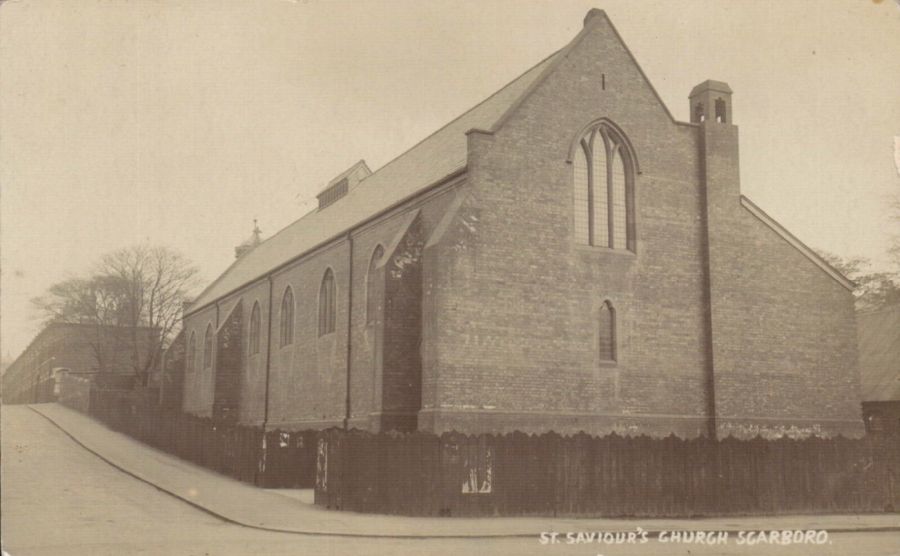
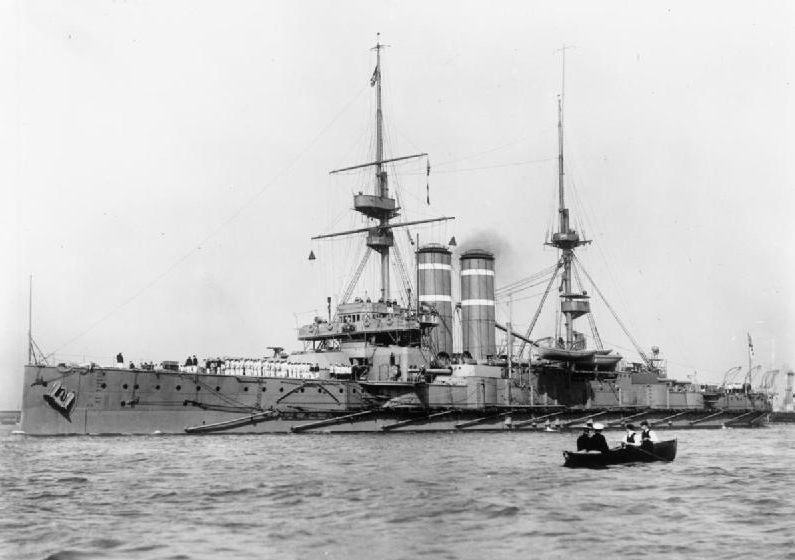
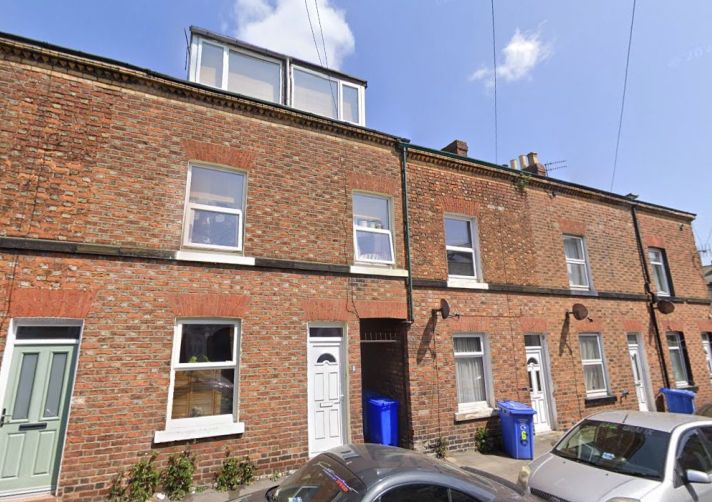
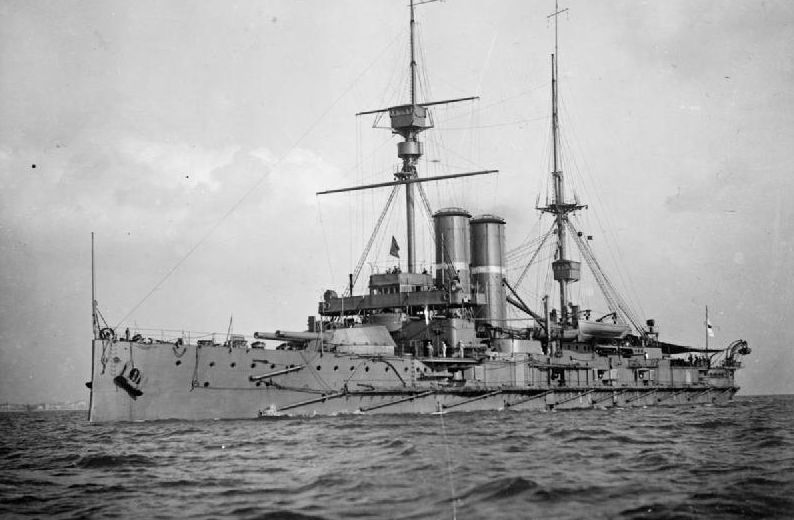
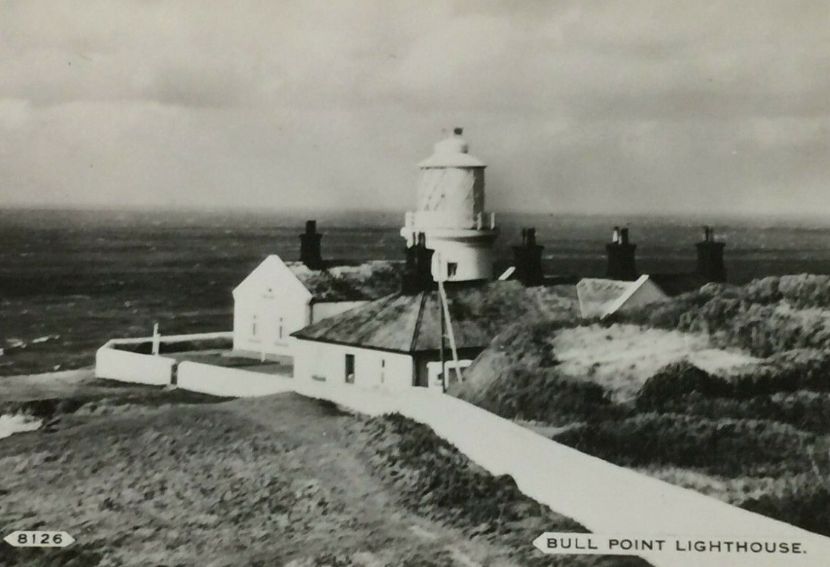
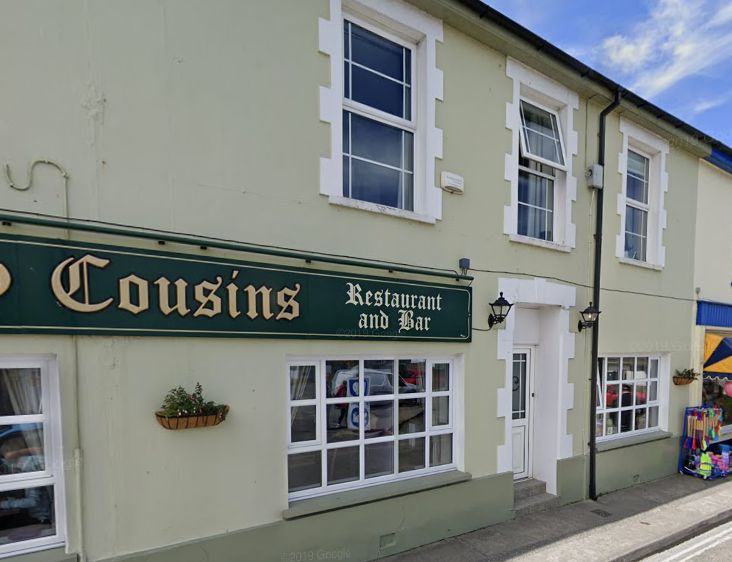
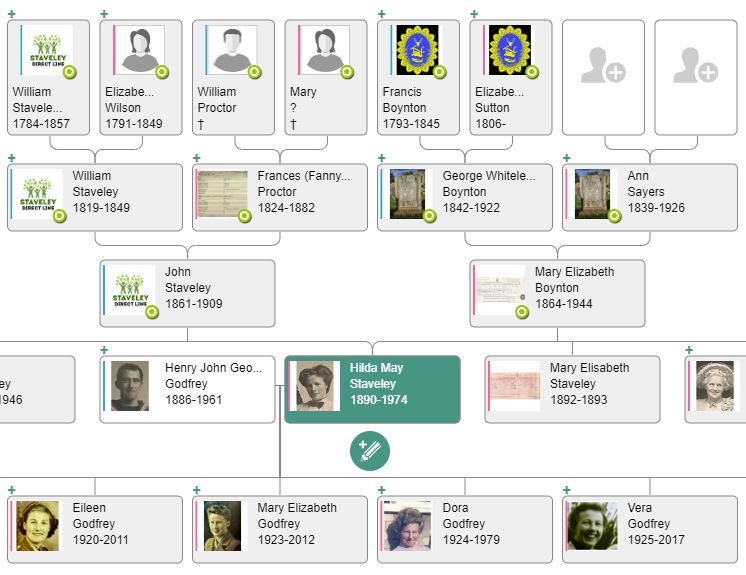
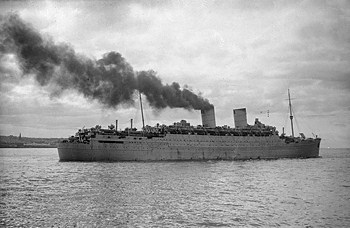
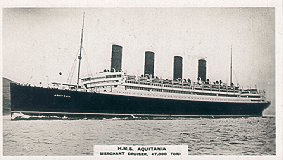
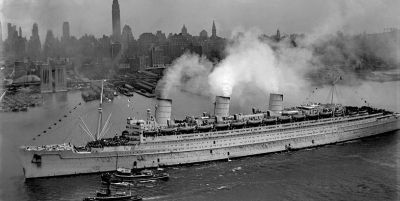
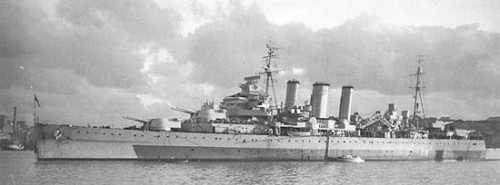
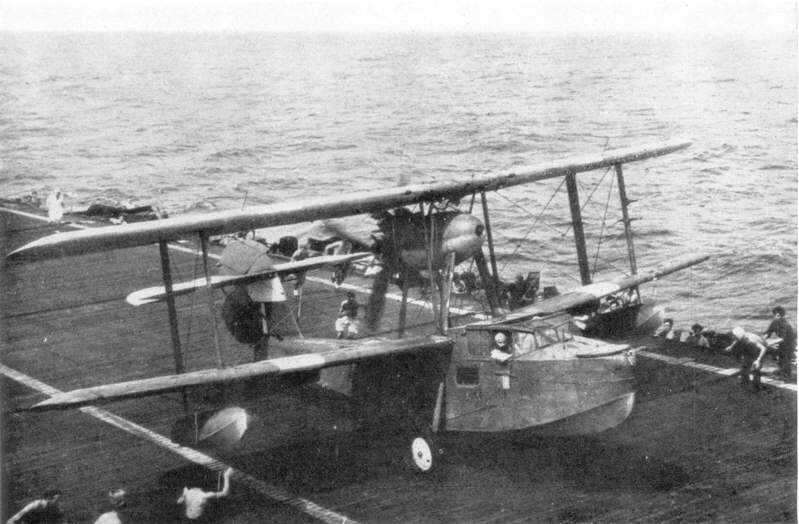
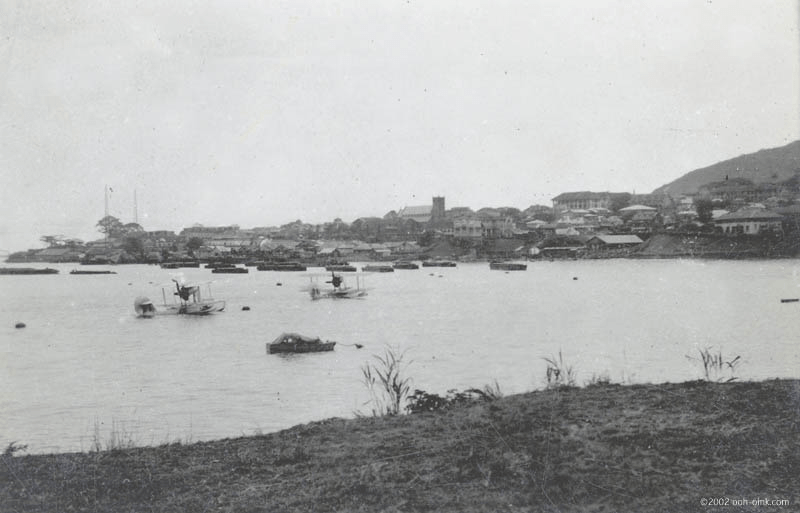
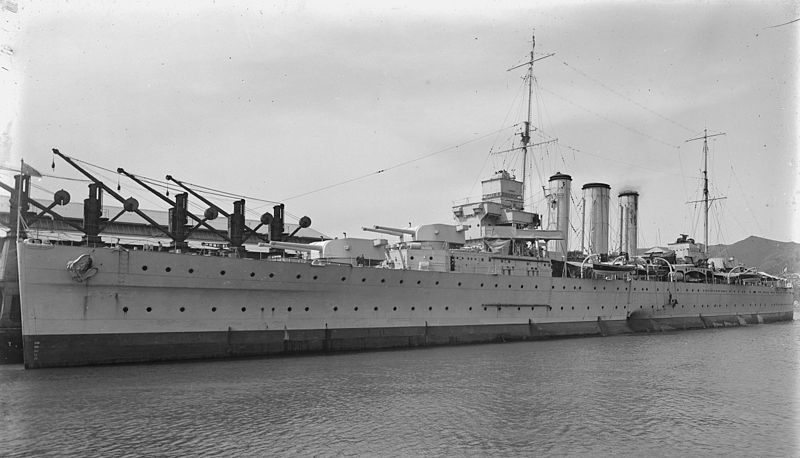
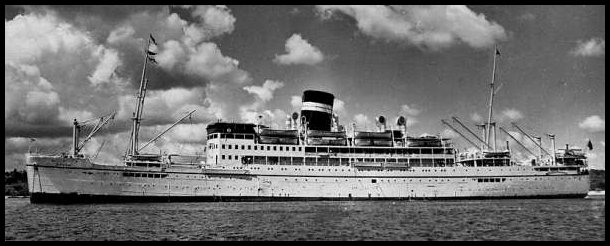
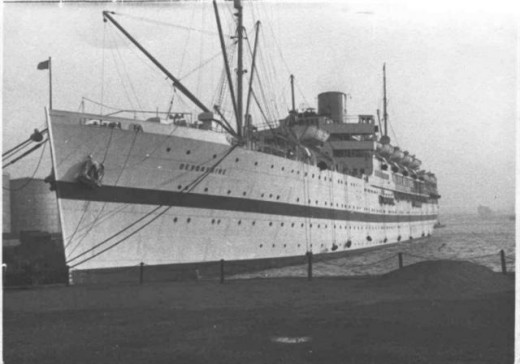

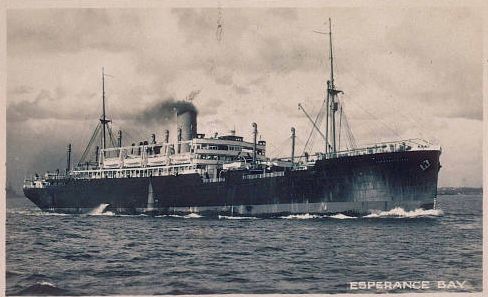
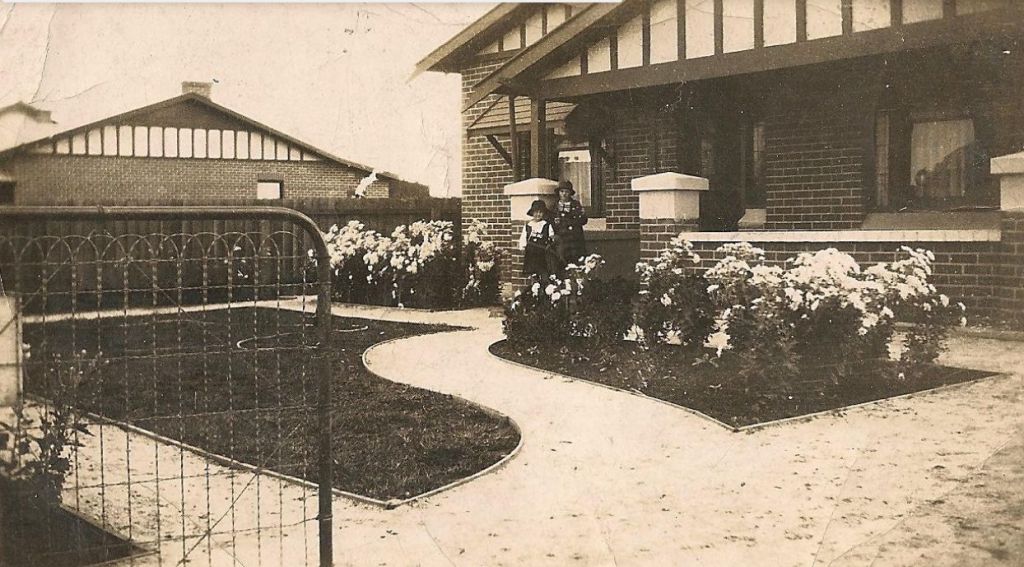
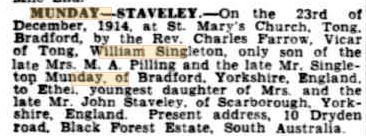
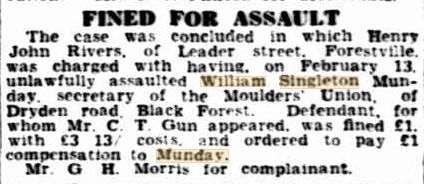
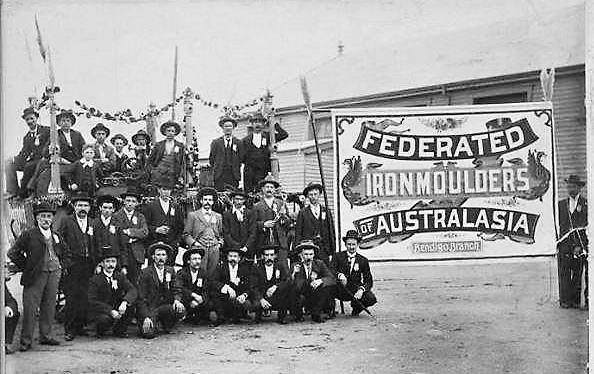
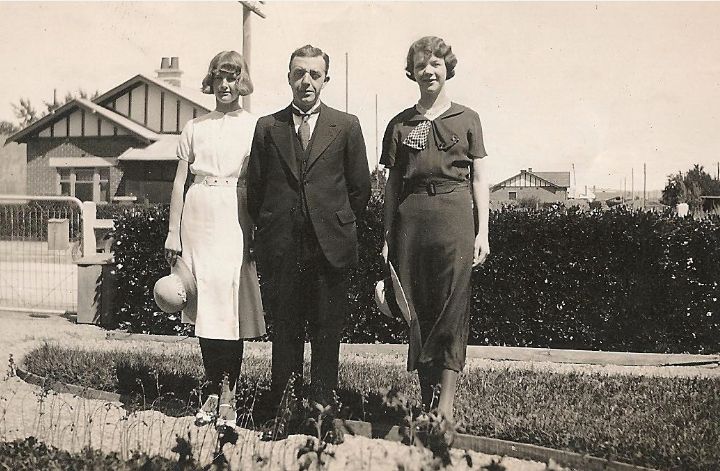
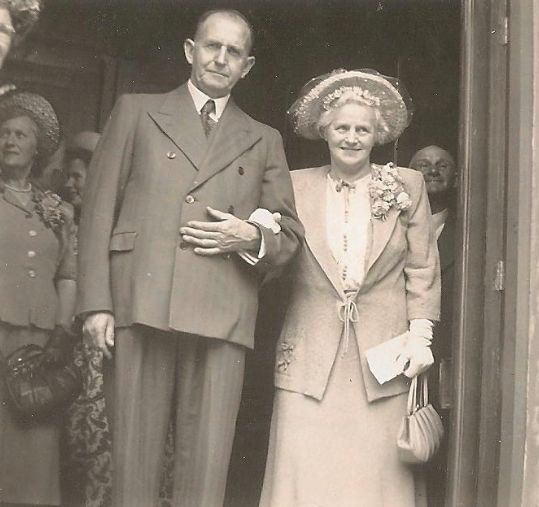
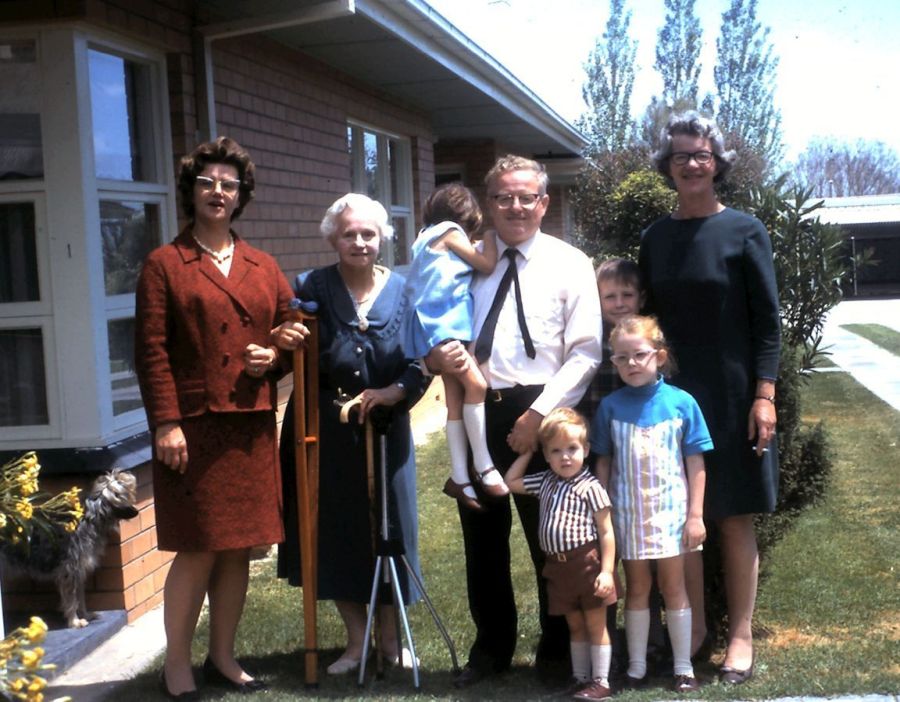
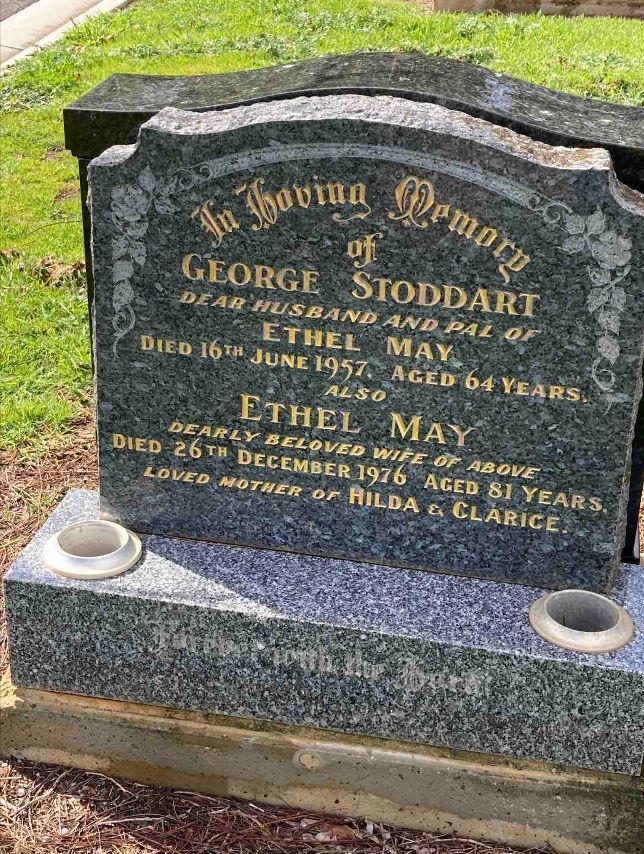
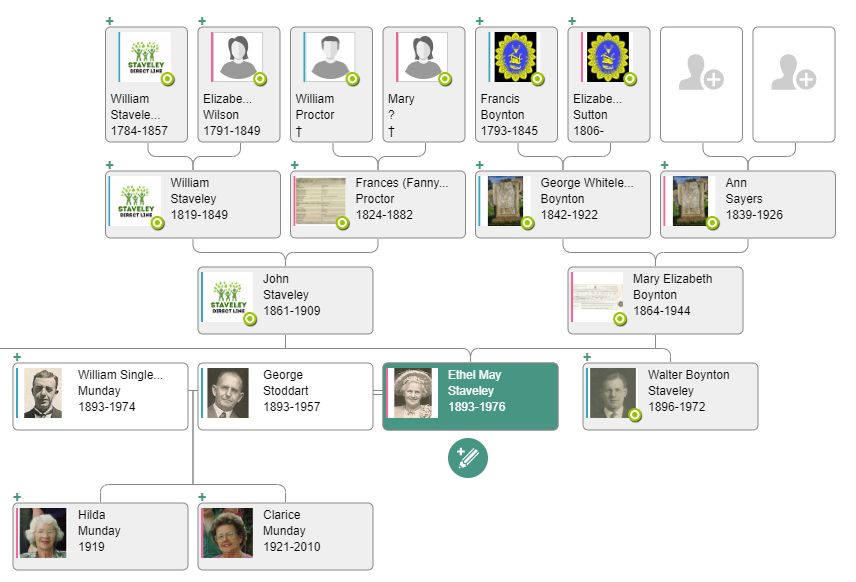
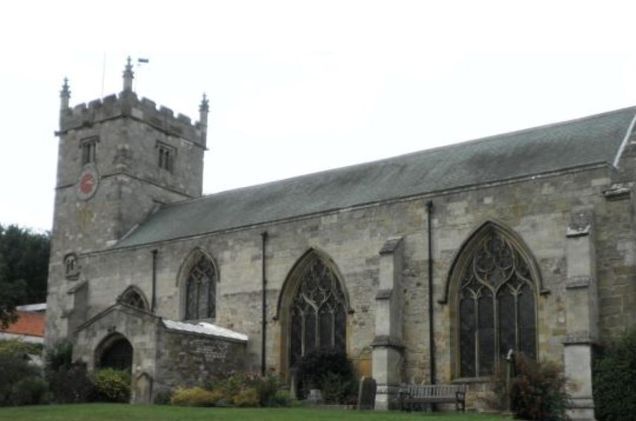
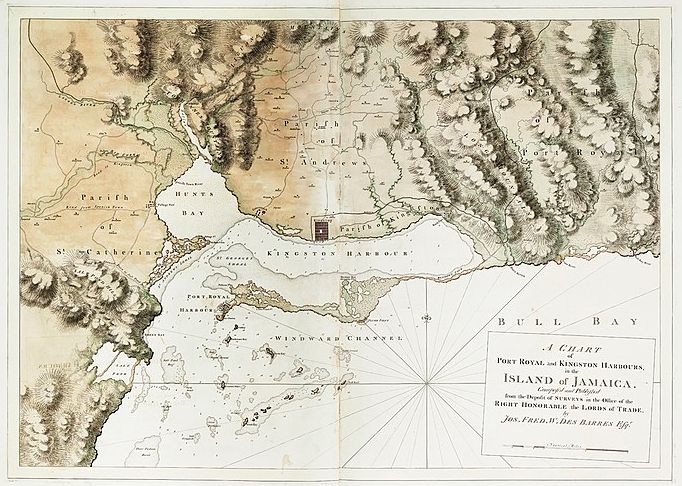


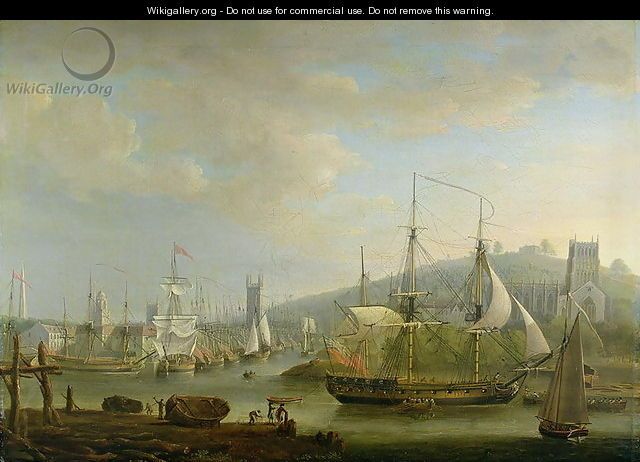
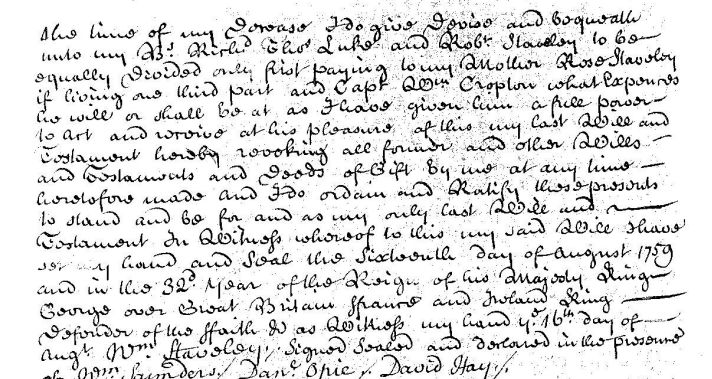
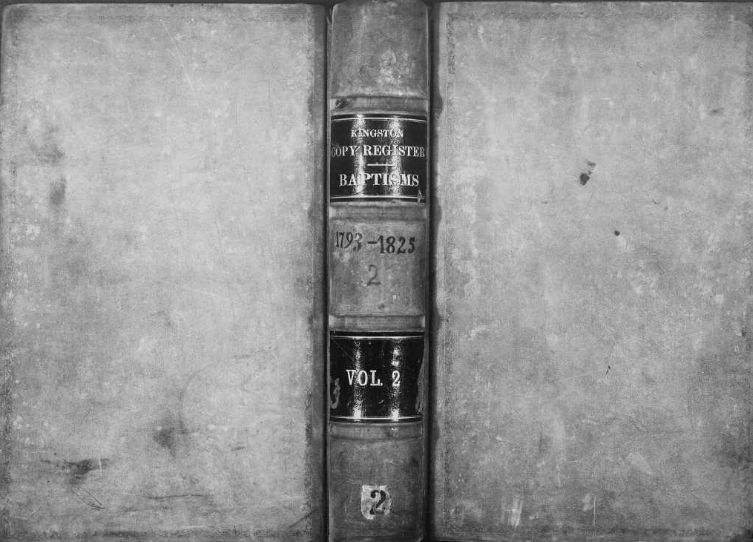
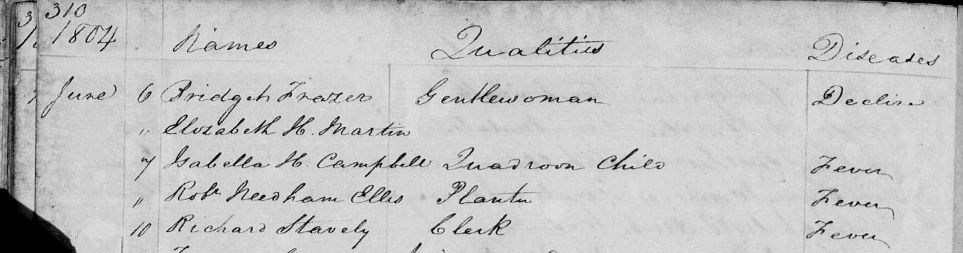


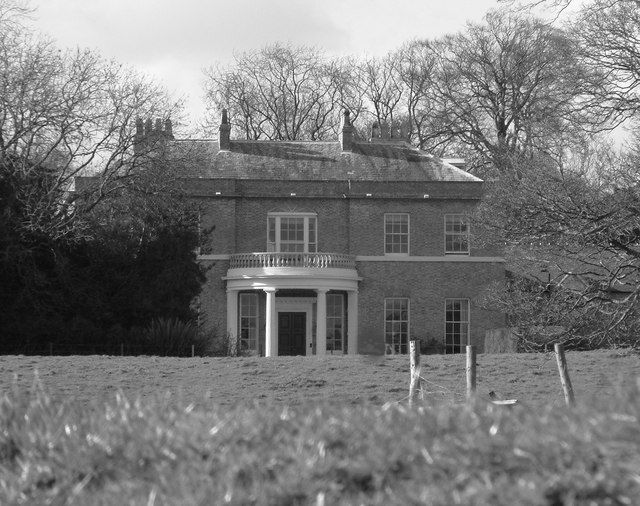
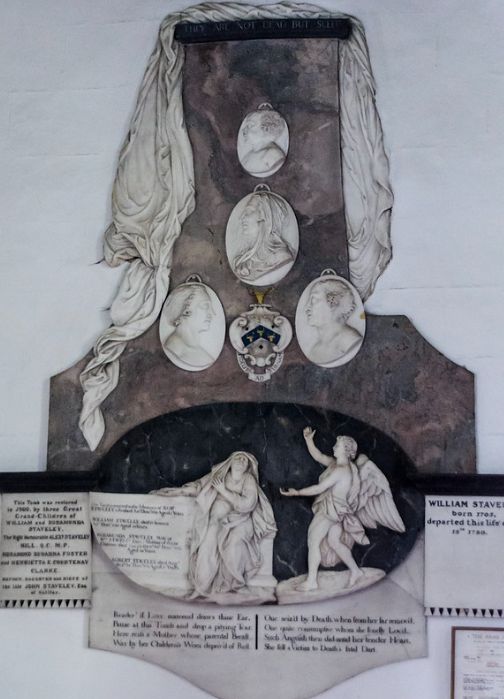

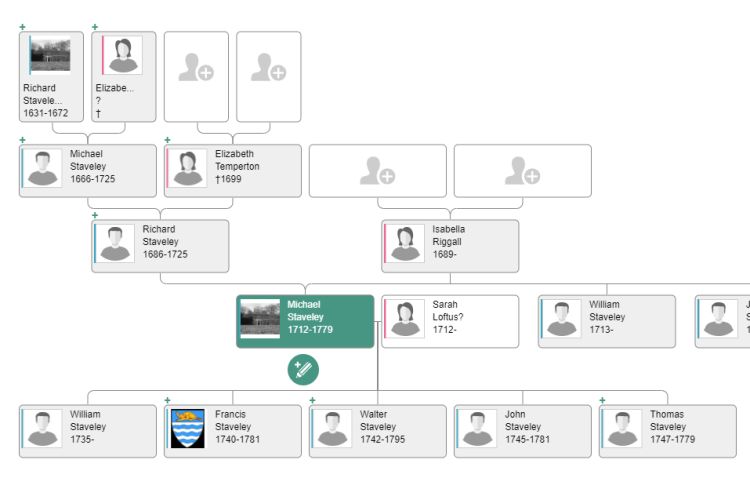

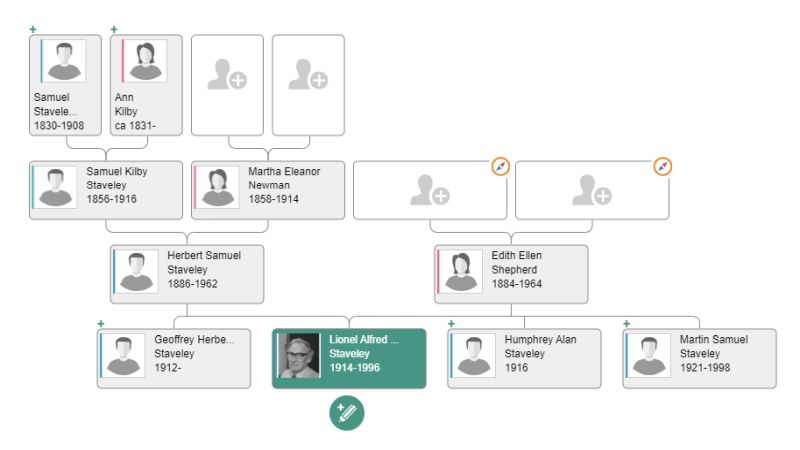
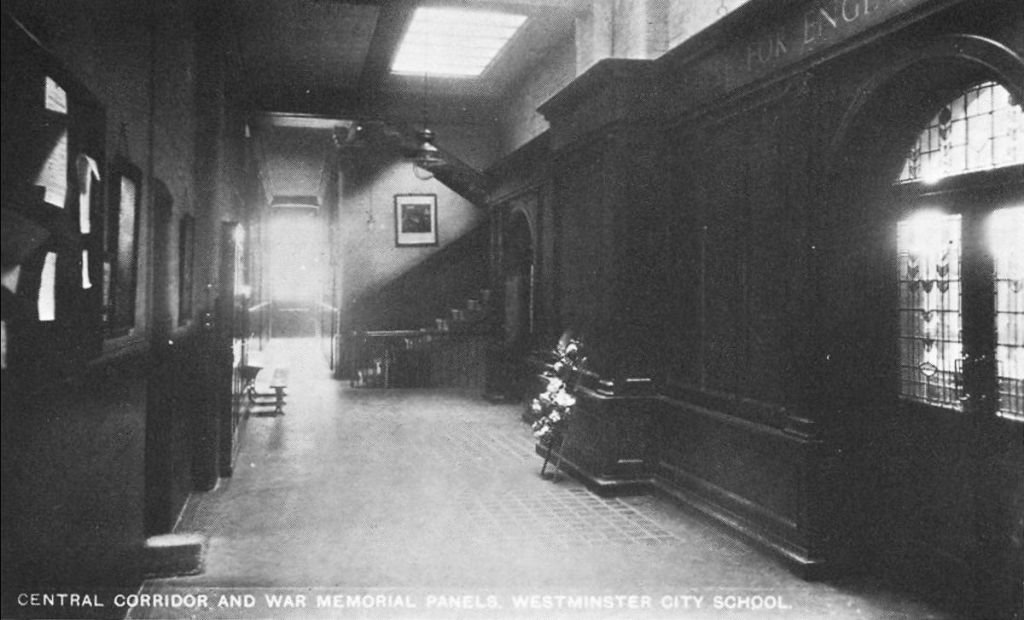
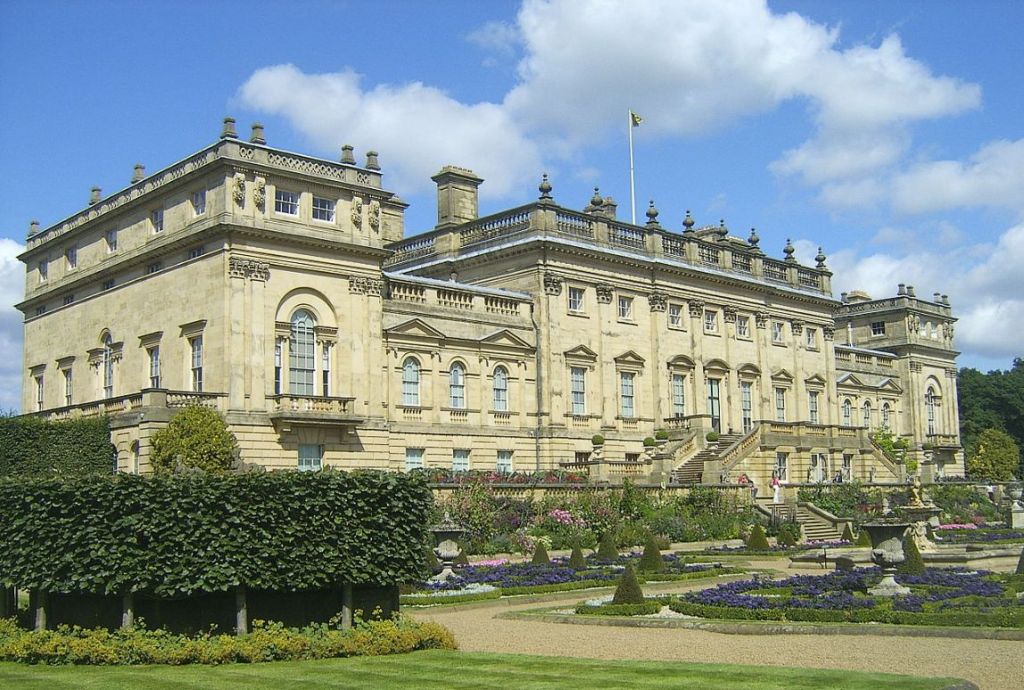

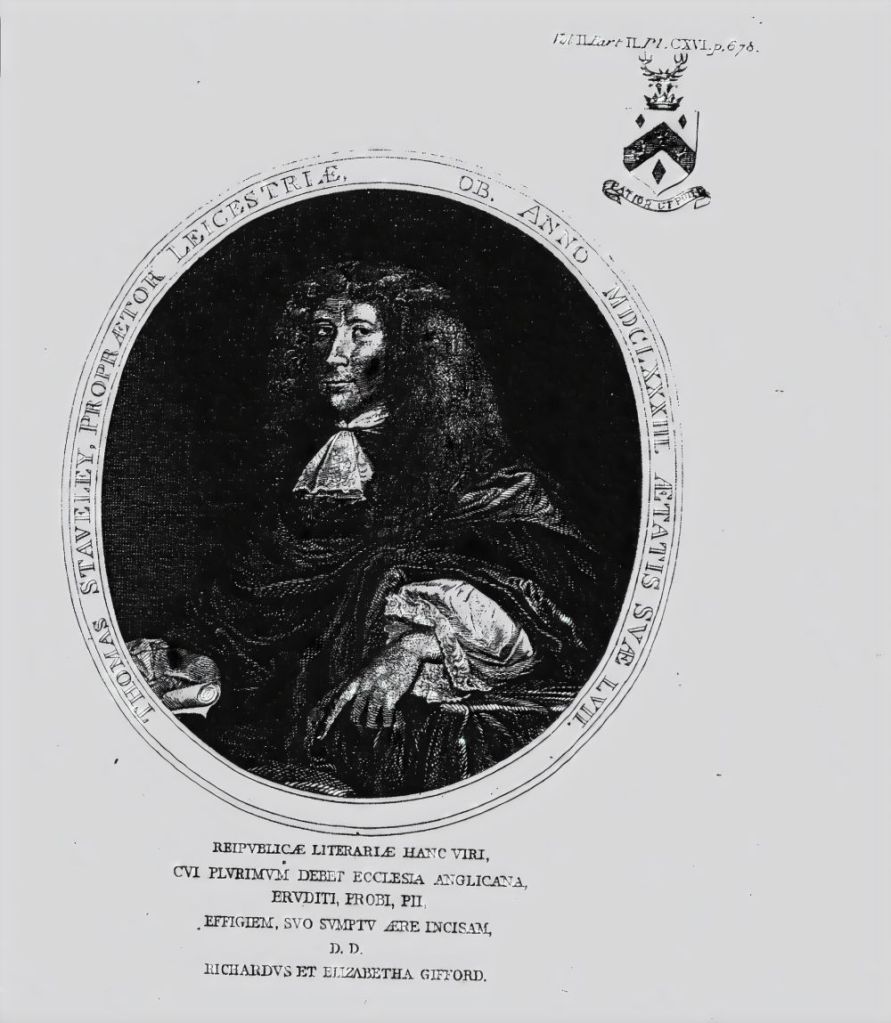
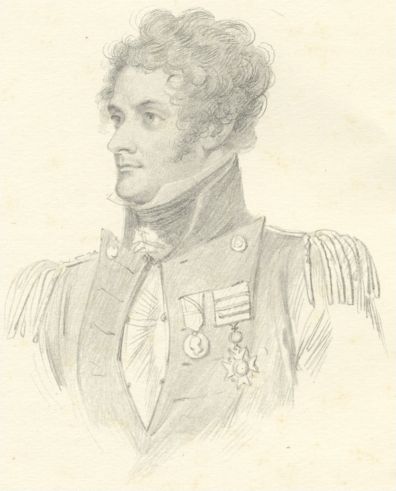
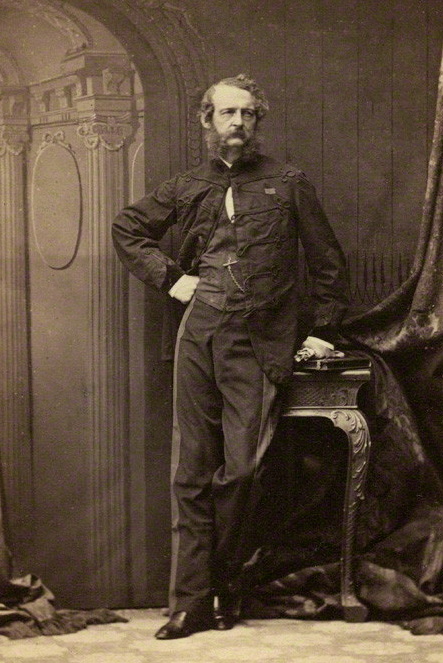
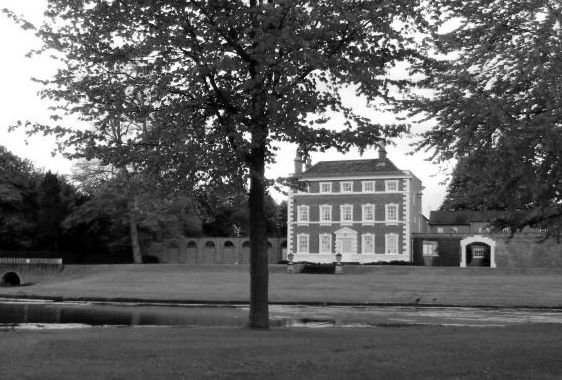
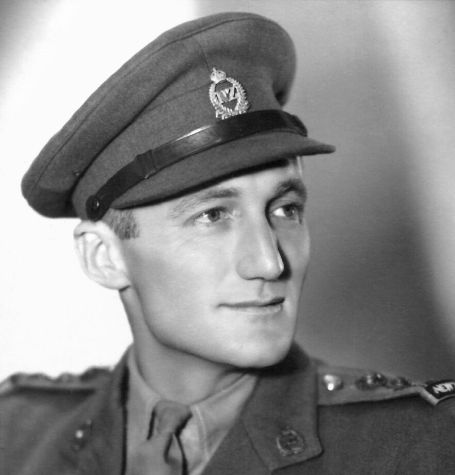
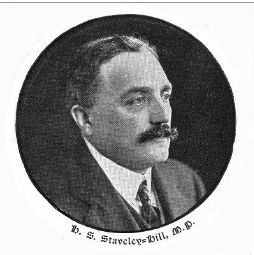
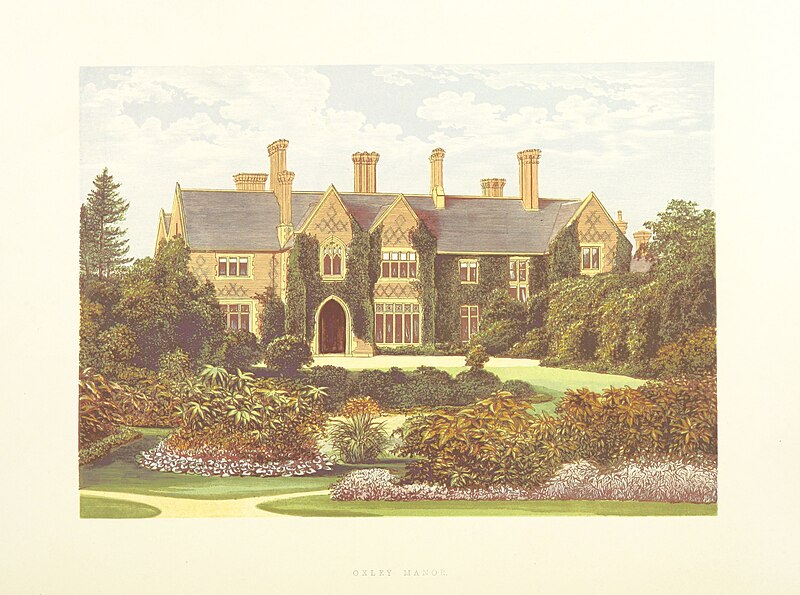

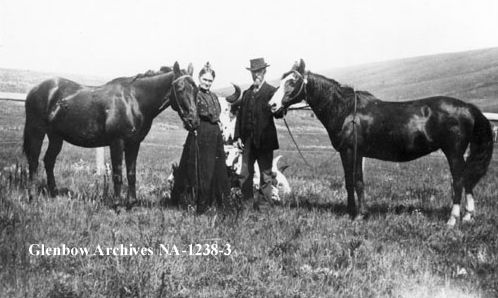

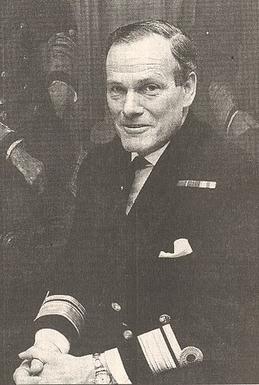
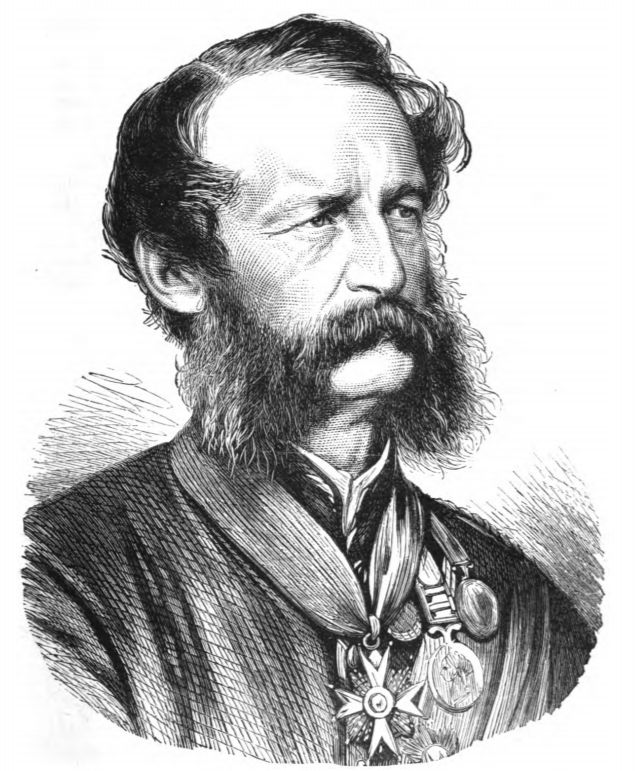
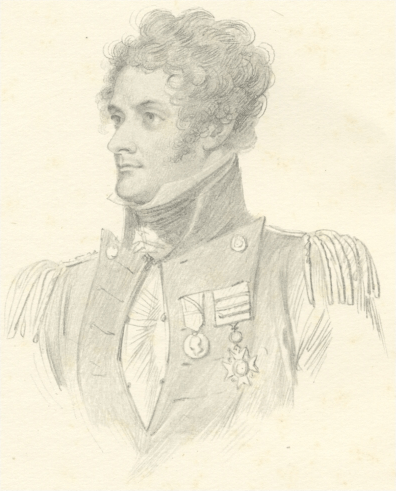
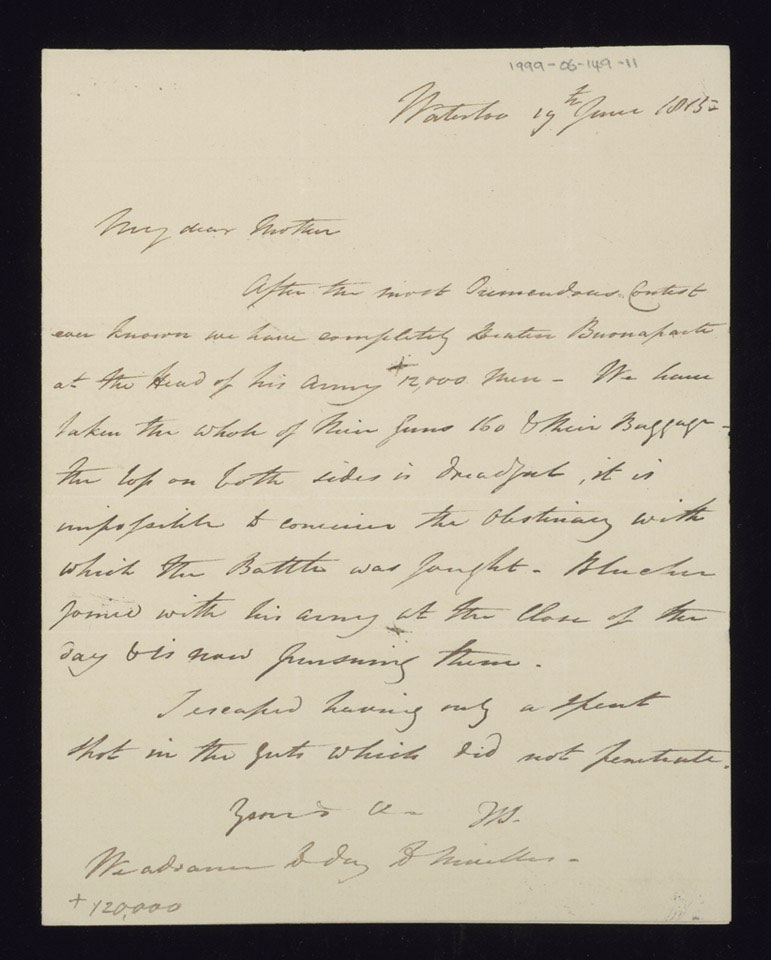
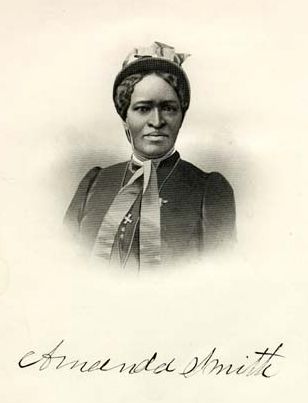
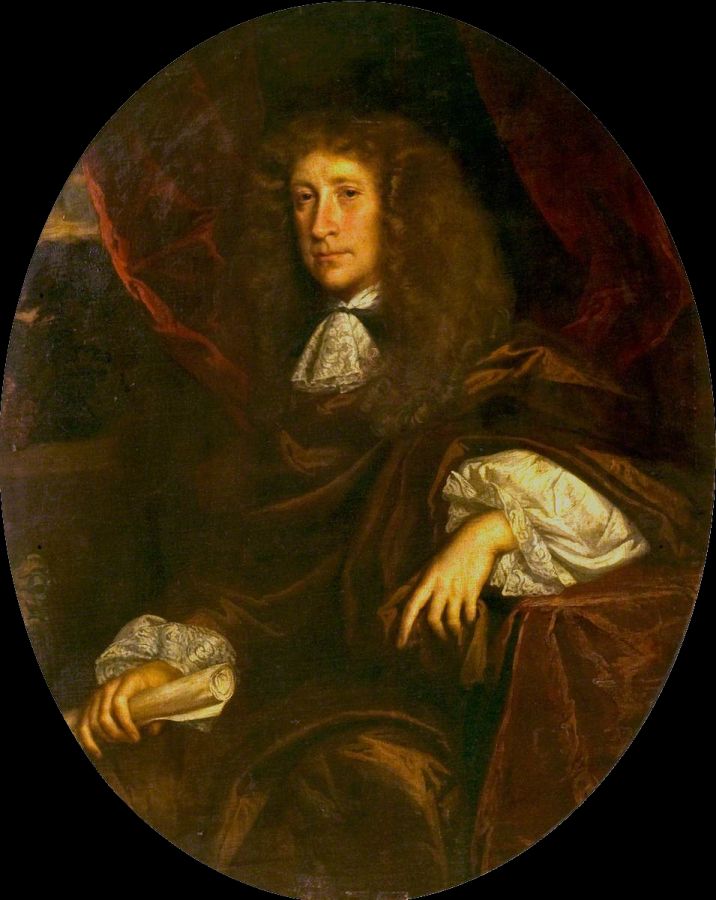
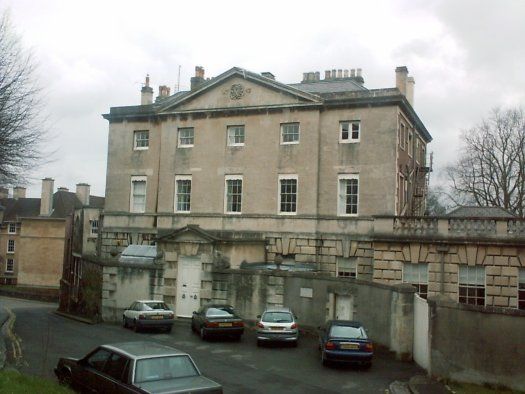

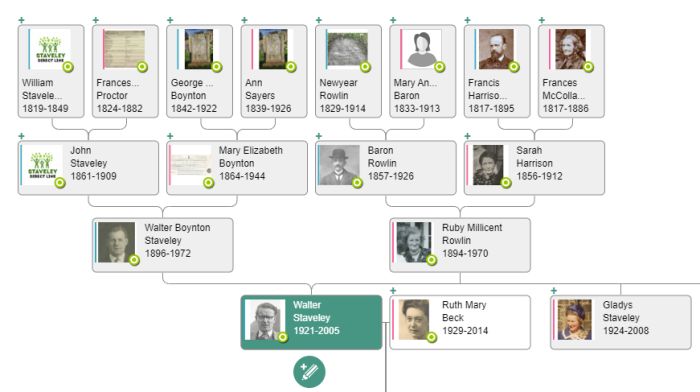


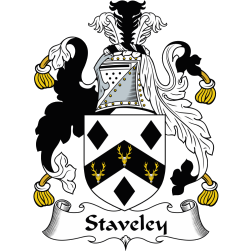


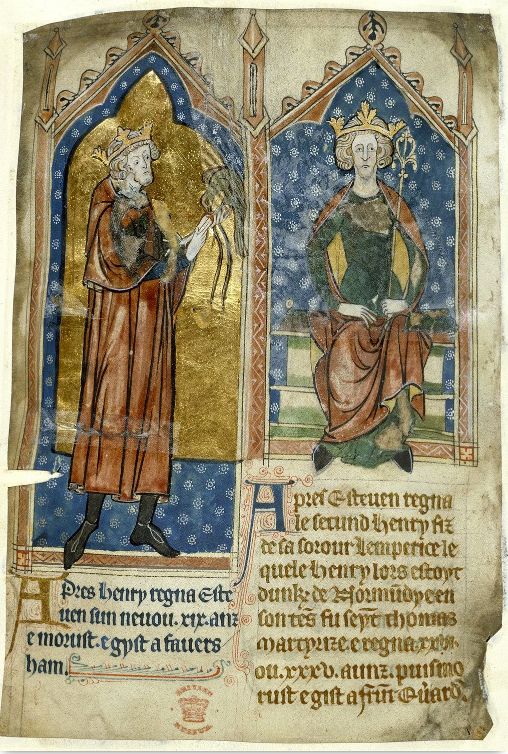

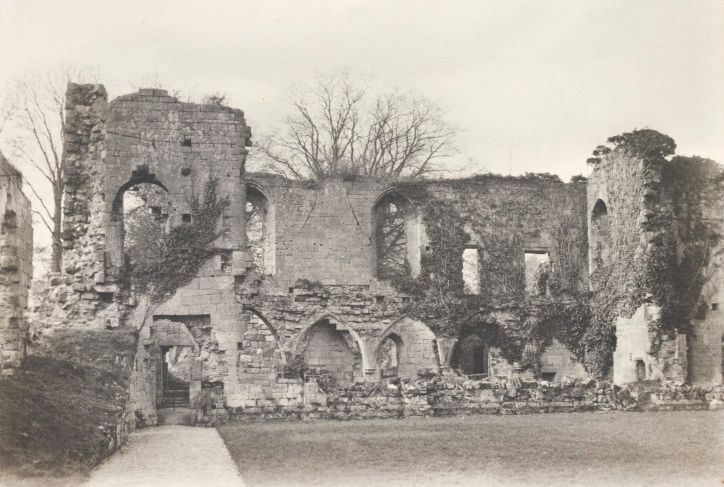

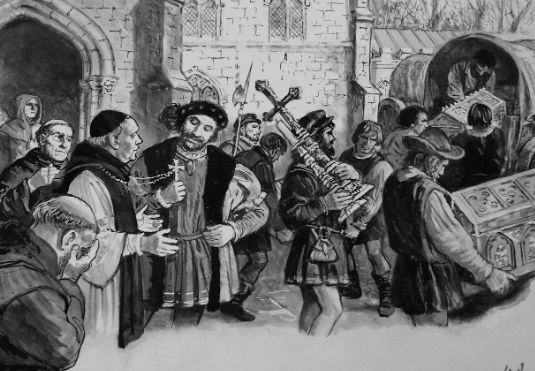
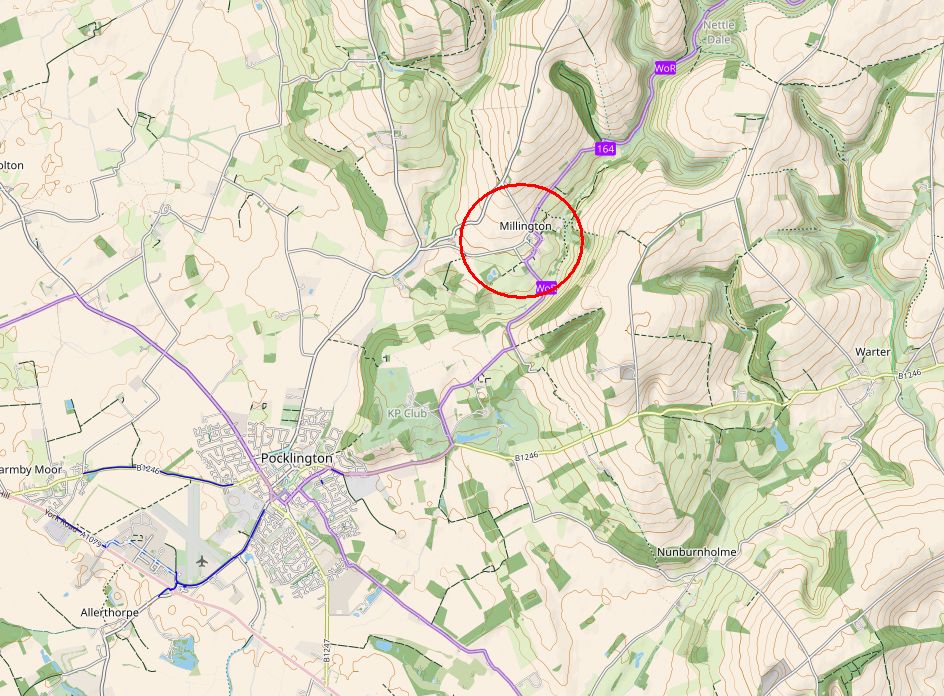

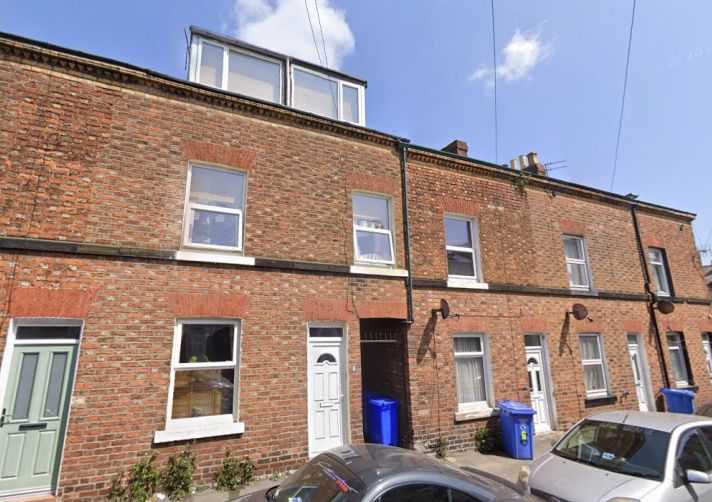
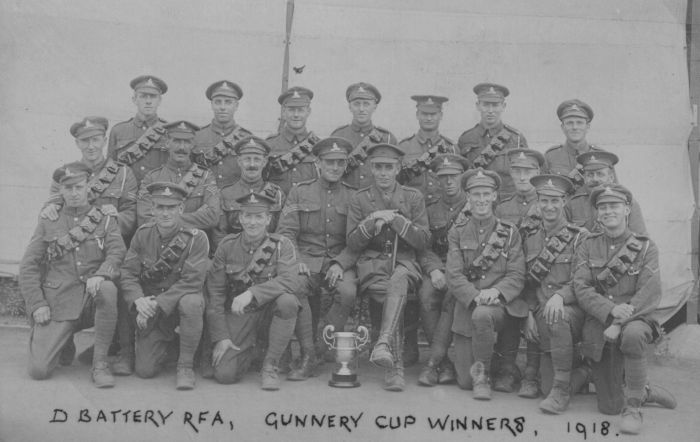
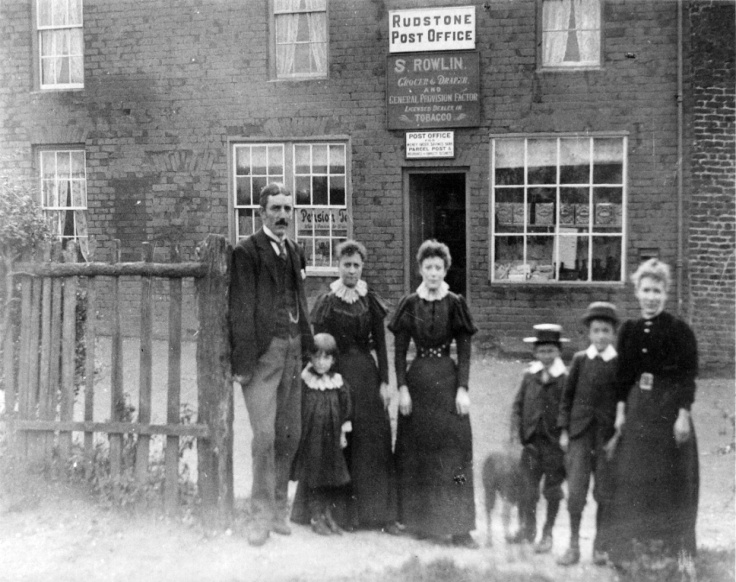
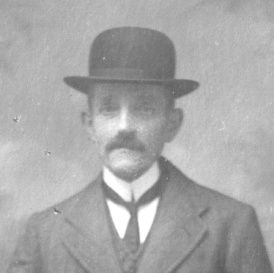
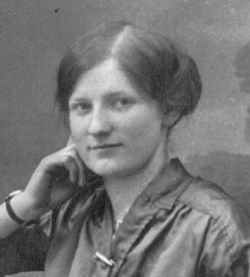
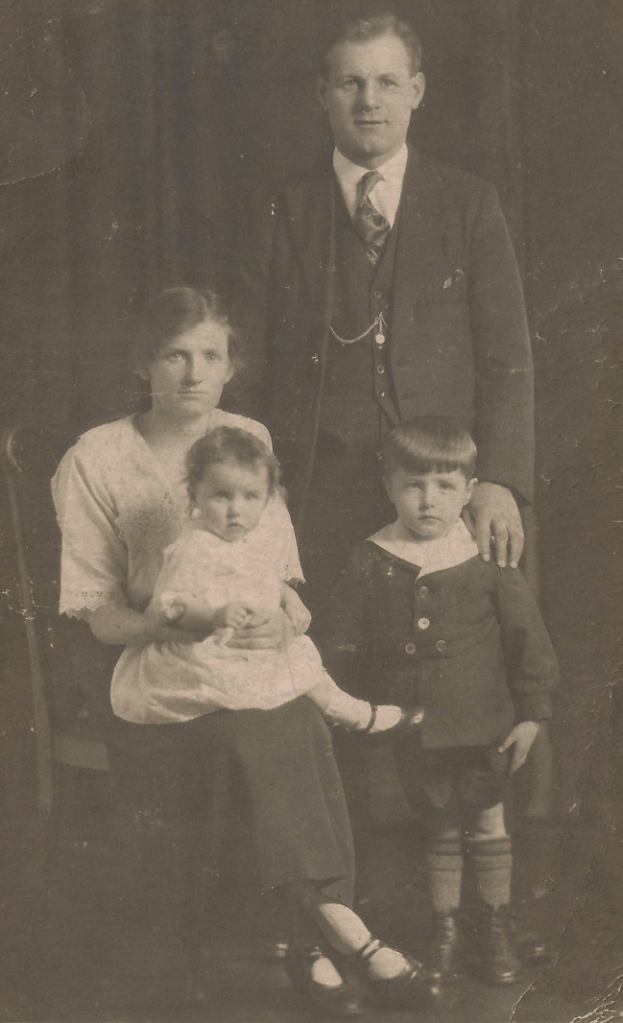

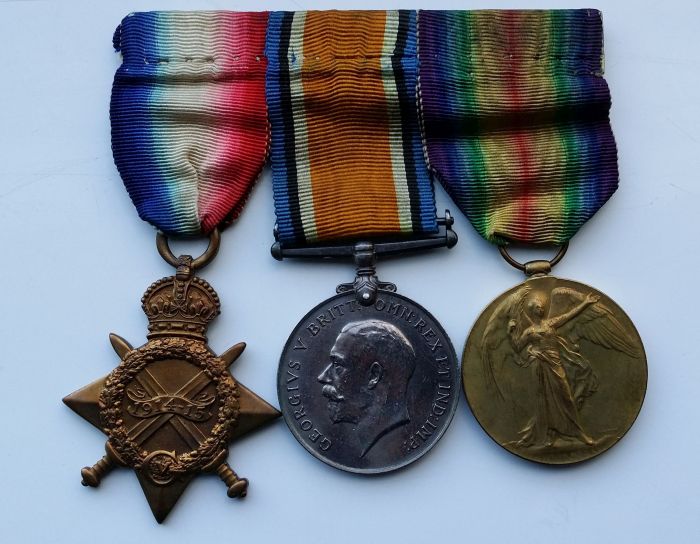
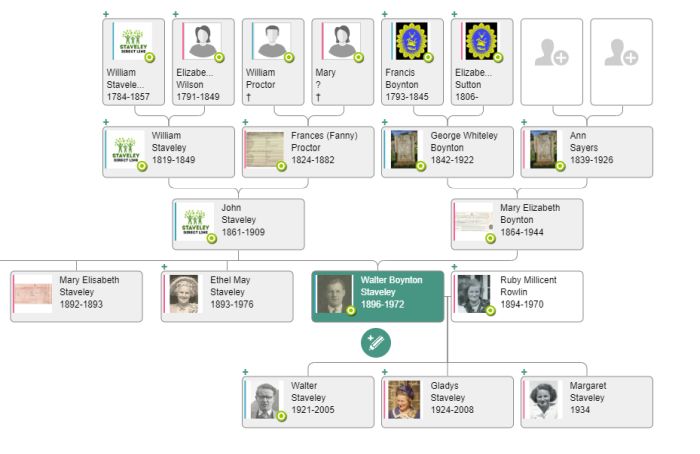
 The Staveley Family