The following is Walter Staveley’s own account from a diary in his own hand writing that was found after his death and which is recorded here so that we can see what he went through in the early years of his posting overseas.
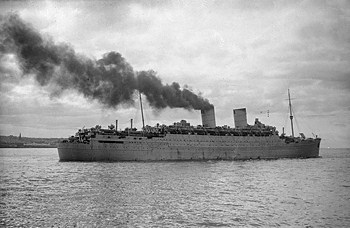
29th June Saturday 1940 aboard the SS Mauretania II
I awoke this morning at 6 o clock and felt the ship moving. I looked out of the porthole and found that we were just moving out into the river mouth, assisted by tugs. Just out of the river mouth the tugs left us and we moved out into the open sea.
An hour or so after the tugs left us, one or two lads were looking pretty green, there was a heavy swell running. Towards the evening we sighted Ireland and we kept it in sight until dark. At one time we could see Douglas on one side and the Scottish coast on the other. I think we were steaming dead north practically all day.
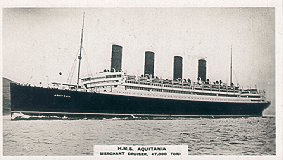
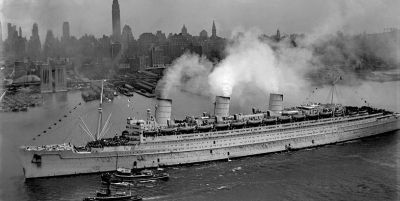
Our convoy consists of the Aquatania on the extreme port bow, The Queen Mary next and then ourselves.
There were two destroyers and the light cruiser Cumberland steaming at the sides in front of us. The crew say we steam at a steady 24 knots.
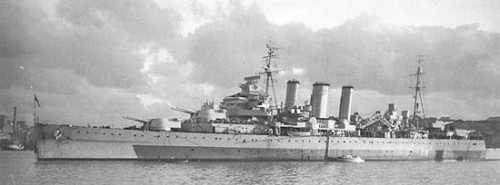
HMS Cumberland was a County class heavy cruiser of the Royal Navy that saw action during the Second World War.
30th June Sunday 1940
I think we have steamed west most of the night and we must be well out in the atlantic now according to the sun. We can get a very good view of the Queen Mary and the Aquatania now, I think they’ve moved closer. I had two breakfasts this morning. One up and down, and we seem to running into heavier weather. We had a pleasant surprise today. Cigarettes are only ½ price as we have left the 3 mile limit. We take our lifebelts with us wherever we go.
1st July Monday 1940
The sea, thank the Lord, is much milder this morning and I think I’ve got over the sickness and found my sea legs. This mornings routine consisted of rifle drill and P.T. The rest of the day I spent walking around the ship.
2nd July Tuesday 1940
The weather is still warm today. We had P.T. and rifle drill again this morning. This afternoon has been uneventful. We have been told that we can write one letter home and it must be handed in to our N.C.O. in the morning, ready for censoring. I wrote it after tea.
3rd July Wednesday 1940
We paraded in K.D. this morning, and handed our letters in. Before P.T. we went down for a swim in the swimming pool. It’s not very big, but is very well made. Each squad has bout ¼ hour in which to swim and get dressed. The weather is slightly warmer and we seem to be travelling S.S.E.
4th July Thursday 1940
The usual routine this morning. I saw a few shoals of flying fish. They fly, or jump over the water similarly to sea gulls. They are about 6” long. Well, for five nights and six days now the ships have been steadily driving along and we havent seen one square inch of land. We are just beginning to get slightly bored. We have a pretty decent concert every other night but the places gets too packed, and the weather is by no means cool. I spend quite a lot of time on deck with Ron. The sea is very calm and very blue now, it is also, no longer necessary to sleep in bed now. We sleep on top.
5th July Friday 1940
The temperature is still rising and we had iced lemonade at dinner today. I was on the fatigue party which carried the cases from the brig to the mess.
Our routine seems pretty well fixed now
Reveille 6.30, Check parade 07.00 am, First sitting for breakfast 07.15. Second sitting 8 am. Parade 9.30am then rifle drill, swimming and P.T. under our own corporal and sometimes a lecture ( by various people ).
We had Pay Parade this afternoon 8/-
The flying fish are more numerous now, there seem to be hundreds all around the ship. Sunset comes very quick, and it is almost dark by 7.45 pm. By the way, I forgot to mention that we put the clocks back ½ hour every day.
6th July Saturday 1940
We had the usual routine again this morning and then a lecture by Major B on RAF and Army co operation. Ron and I went to a concert given by the R.A.M.C. at night, it was very good indeed. In fact, we’ve something on our plate to beat it. The skipper and D.C. troops was there. O.C. is something of a comedian. He gave us a talk about discipline etc and then the skipper gave one too. Captain Ames, the skipper is a fine fellow with white snowy hair. A typical sea captain. I think we changed course to E.N.E. today.
7th July Sunday 1940
Church Parade on Prom Deck. The O.C. and the skipper were there. We had rather an amusing service, as the water from the open air swimming pool kept splashing us with the motion of the ship, and wetting the skpper and padre, etc.
Nothing unusual happened during the day but towards the night we changed formation to in-lin-ahead with Queen Mary in front, Aquatania second and us behind. By the way, out total escort now is one cruiser. However, we have one six inch gun, one 3” a.a. gun and a Lewis gun. The QM and the Aquatania are similarly armed and the cruiser carries two walrus aircraft, so we aren’t badly armed.
There are rumours that we shall see land tomorrow. Its impossible to work out our position for ourselves because we keep zig zagging all the time. So the rumours is not counted on.
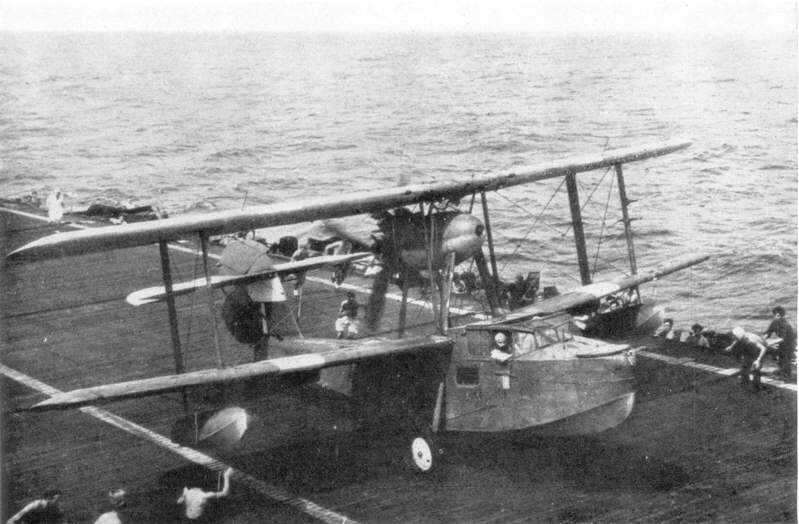
Walruss: In the campaigns in Norway and East Africa it was used as a combat aircraft, even performing some ground attack and bombing sorties.
8th July Monday 1940
This morning was pretty dull, but the rumours proved correct. Just before going down for a swim, there were shouts and cheers. The lads had spotted land, which turned out to be Freetown, Sierra Leone. After the swim we went on deck and practically the whole draft lined the rails while we sailed up the fairway past the boom and dropped anchor in the harbour at 1 pm. The harbour was packed with shipping, tankers, freighters, naval vessels, fishing boats, tugs, pilot boats, yachts and last and least, the natives in their canoes.
Everybody was in high spirits for it was the first bit of land seen for 9 days. Freetown, and all the country around it as far as we can see, is a lovely picture. First of all, coming down the fairway in Freetown you see the lovely wooded hills shrouded in mist, then as you get closer you can see the beach and the palms coming down to the water’s edge. Also, a lighthouse on the starboard side of the river mouth coming nearer still, on of two plantations on the hillside and then round a slight curve, the town.
All around the town, almost lost in the dense vegetation are houses, mostly white, almost lost in the dense vegetation on the hills. Then every 100 yards or so narly all the houses in or around Freetown are white, or cream with red roofs. Just after dropping anchor, the rain started, and how! The real downpour lasted for ¼ of an hour but it drizzled all day on and off.
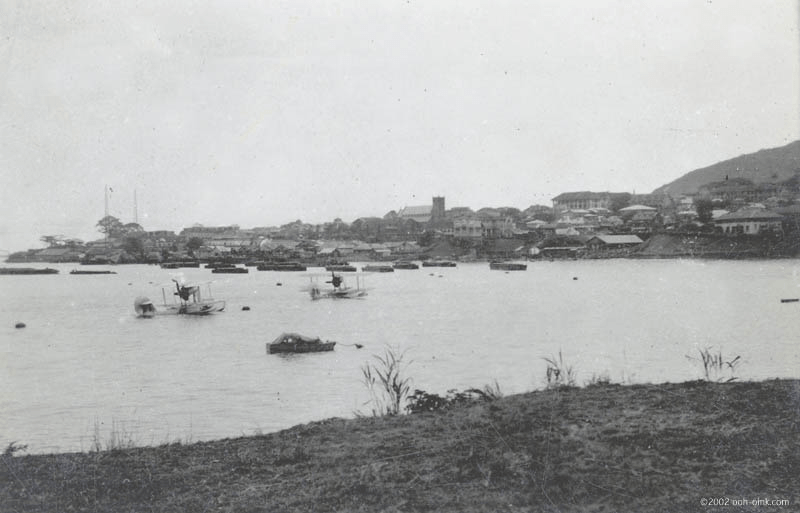
Freetown Harbour circa 1940
I watched the natives in their canoes this afternoon. Some will dive for money, others, the older ones sell fruit, native baskets, monkeys etc. They are marvellously built men. I bought a silk handkerchief from one of them. Cost me 6d and 4 woodbines, but we couldn’t go ashore so it was the only way of getting a souvenir. I went on deck after tea, but soon went below. The atmosphere could be cut with a knife.
Darkness fell about 7 o clock. A tanker came alongside this afternoon and started refuelling us. We can almost touch the men on her from our porthole. She is the Pondilus of London, most of her crew seem to be Japs.
9th July Tuesday 1940
We woke this morning after a night of purgatory owing to all portholes having to be shut, and found ourselves still in the harbour. However, about 8 a.m. we felt the ship shudder and we were off again. Most of the smaller shipping moved with us, but once out of the harbour mouth we opened out and left them standing, as it were.
We speeding faster than ever before now simply tearing through the water. I think we must be behind schedule. It hardly seems possible that all this weight, 35,000 tons, can move so fast. I put my head out of the porthole two mins since and the air rushing past nearly tore it off. My last glimpse of Sierra Leone was the pale blue mount mountains white capped with clouds.
I played Ron at draughts in the afternoon. At night Ron wanted to write up his diary so I went to a sing song in the aft canteen.
10th July Wednesday 1940
Weather has been slightly cooler today, although we crossed the line. We had the usual parades this morning but this afternoon we had a good laugh watching the ceremony of crossing the line. Old Father Neptune and Davy Jones were, I believe, two of the shops company. Besides Davy Jones and Neptune there were 2 bears ( 2 R.A.M.C. blokes ) half a dozen corp’s, also R.A.M.C. A barber, executioner, doctor and a bloke with a black face and a blue dress, I don’t know what he was supposed to be. There were also 6 or 7 sea nymphs (mermaids).
The ceremony consists of subjecting the victim to a mock trial. The victim is always guilty. He is then daubed with slimy paint, his mouth is filled with soap, and he is then sat on a tip up chair on the edge of the open air swimming pool. Daubing him with more slime of various colours, he is then shaved with a wooden razor and finally tipped into the pool to be dealt with by the bears who are floating around all the time. It was very good fun ( although one or two of the victims looked a bit fed up).
The show and make up rather reminded me of Leed’s Rag Day. I went to the pictures tonight in the Grand Hall. It was the Ware base. Actually it was for No2 mess but I managed to get in. I think we are going due south now. Still speeding.
11th July Thursday 1940
The weather is slightly cooler, and we had the usual routine. I played Ron at draughts again, after which we went to a concert in the Sgts mess.
12th July Friday 1940
Weather is cooler still today and we had the usual routine, except that Lt Fletcher instructed our squad on rifle drill and P.T. He certainly knows his stuff, but shouts too much, Henry gave us another concert this afternoon in Ron’s cabin ( Henry is a variety show on his own ). I spent the night playing draughts again with Ron and Sayer. We were paid again today 10/-
There was another sing song in the aft canteen tonight but unfortunately we didn’t go. Unfortunate because Henry gave one of his shows. We had another boat drill today. I was right in the middle of a letter when the alarm went.
13th July Saturday 1940
Lt Fletcher too us for rifle drill again, but not for P.T. The morning passed as usual. Ron and I went to the Grand Hall this afternoon and I saw ‘The Ware base’ again. I spent the evening washing clothes, arguing and playing draughts with Ron. The weather is very cool now and orders say we have to wear S.D. tomorrow.
14th July Sunday 1940
We had church parade on deck again. The weather was rather chilly at times, so it’s a good job we had on our S.D. Ron and I spent the afternoon on deck. We played the usual game at night. I won for a change. According to orders we shall be in Cape Town soon.
15th July Monday 1940
The usual routine, except for baths being stopped indefinetly. We changed course again at night in-line-ahead, so I think we’ll be in Cape Town tomorrow.
16th July Tuesday 1940
We sighted the Cape at about 6.30 this morning. At first we could only see the tips of the mountains. Coming closer we could make out Table Mountain, a really marvelous sight! The rock seems absolutely perpendicular from the sea until you get near enough to see the town.
Gradually the whole town comes into view and the docks and lighthouses as well. There are two lighthouses, one on the eastern side of the bay and one of the west. Cape Town and Table Mountain itself are right at the back of the bay and the mountains, or the mountain, Table Mountain comes gradually down on either side, on the east for about 4 miles on the west for about 1 mile. Also, the west is a very large hill called Green Point, very similar to Olivers Mount at Scarborough. The whole forms a natural harbour about 5 miles square.
Cape Town itself is practically isolated from the rest of the peninsular owing to the terrific mountains surrounding it on three sides. The only ways out are around the cliff and mountain roads and railways cut into the sheer mountain sides. There is also a marvellous rope railway from the centre of town right up to the top of the table. Sometimes the clouds cover just the slope of the Table for all the world like a table cloth. It really is a lovely sight and I’m not much good at describing it so I’ll leave that to the picture postcards. I’m afraid my eloquence won’t do it justice.
Well, we dropped anchor about 10 p.m. and tied up to the harbour. Queen Mary and the Aquatania stayed just outside the harbour. We stood on the deck admiring the view till finally we had our passes issued and we went ashore.
I shall never forget the marvellous time we had ashore. I won’t try to describe it in detail but the Cape Towners gave us a glorious time. As we walked from the docks into town, motorists stopped and took the lads on sightseeing tours all around the district. Afterwards, stopping again at hotels or their private houses, or roadhouses and treating the lads to drinks, ten course dinners, cigars, cigarettes, chocolate, fruit, in fact we were given the run of the town.
The folks were viing with each other as too who could take the most soldiers out. I think most of the people had the day off from work, some had two. There were organized tours the second day in private cars. They have a two minutes silence every morning here when a bugle sounds in memory of the men who fell in the last war.
The native people are very loyal to us, but hate the Dutch, some of whom will not observe the silence. The ceremony however is very impressive. I was very much struck by the way the white people seem to be able to run big cars. Everybody seems to have a big car, most of which are American 30 h.p. 40h.p and 60 are not uncommon.
17th July Wednesday 1940
We were allowed out till 10 o clock today. We had another marvelous day. Ron and I went ashore about 11 a.m. Walked into town, about 5 mins walk and spent an hour or so walking around the town, after which were picked up by a car whilst we stood talking to three of the lads in the street.
We were picked up by a man and woman. The man was an agent for an insurance firm, the lady stayed at the same hotel and he was taking her there from her office. Well, we all went to his hotel met the rest of the people there including his wife. He then gave us two or three drinks and then we had dinner. After dinner we went for a long tour round Table Mountain, the Rhodes Memorial, Hout Bay. In fact all around the place.
We called for a drink at a roadhouse in Hout Bay after which we went back to his hotel for tea. After tea we ended a perfect day playing billiards with the folks in the hotel. We set off back for the boat in the car about 9.40 and arrived back just in nice time. There we left them after promising to write when we arrived where we were going. He also made us promise to call and see him if ever we came back this way.
18th July Thursday 1949
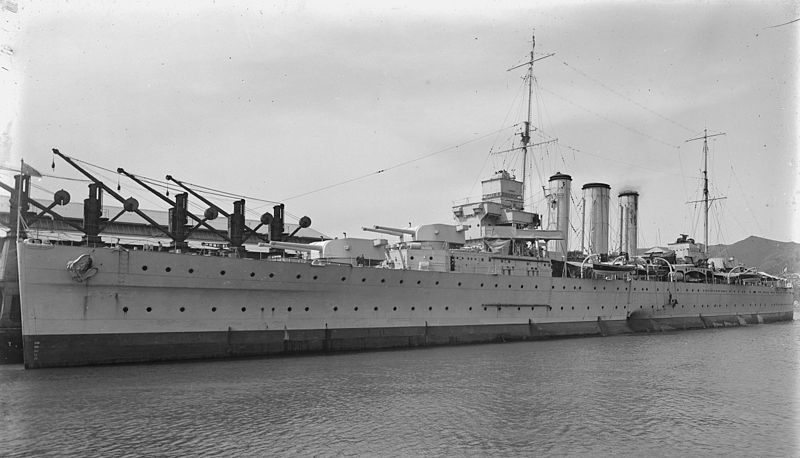
Well, all good things come to an end, and this morning we moved out of the harbour to the accompaniment of many groans of disgust and sailed round the point of the Cape round to Simon’s Town, a naval base near Cape Town about 20 miles away. We arrived about 12 a.m. and dropped anchor alongside the Aquatania and Queen Mary, who, I forgot to mention had sailed round to here yesterday. The cruiser escorting us now is the Australian ship ‘Canberra’.
We left the old Cumberland at Cape Town. At first we thought we might be going ashore because we could see the lads from the other two boats sending lads ashore in tugs. Anyway, we stayed aboard all day.
19th July Friday 1940
A tanker, The British Loyalty of London came alongside this morning and started fuelling us again. Most of us spent the morning fishing, the sea is alive with fish. However, bent pins and cotton aren’t much good for sea fishing and I’m afraid we didn’t exactly get a large haul. I caught some after about 2 hours fishing on a line about 80 ft long. It was a queer fish. When pulling it up the side the thing blew up like a balloon and when we examined it on deck we found it had teeth and croaked like a frog.
The tanker left us about 1 p.m. and then they started preparing to sail again. We set off about 2.30 pm. Whilst we were being paid. I got 10/- again today. We had an extra escort of two coastal command aircrat. I believe they were Avro Anson’s. Once out of the bay we sailed east and spent the rest of the day and night in rough weather in the Indian Ocean.
20th July Saturday 1940
The sea is rather rough today. We have been rolling around all over the place. There were no real parades today so we had practically the whole day free. We had a sad blow this afternoon, we had to move out of our cabin to make room for the offices. I am now sleeping in the 3rd class lounge. I am now sleeping on a dilapidated camp bed instead of a spring bed but there are about 40 of us in here so we should have some fun.
21st July Sunday 1940
It appears that the Cumberland has been with us since we left Cape Town, although she was out of sight. This morning at 9 o clock she came over the horizon, came close to us, flashed a message to us and sped back in the direction she had come. The message was pinned up on the notice boards. It read:
Commodore Convoy Troops and Nursing Staff “ Goodbye and best of Luck” Cumberland
I wish we were going back with them. There was the usual Church parade on deck. Ron and I didn’t go.
22nd July Monday 1940
Nothing unusual happened day. The usual routine.
23rd July Tuesday 1940
We changed back into K.D. Usual routine. The sea is getting slightly rougher. There are hundreds of rumours as to where we are going – Colombo, Aden, Mombase, China. I gave up believing rumours back in dear old England.
24th July Wednesday 1940
The sea is very rough today sometimes we seem to rise clean out of the water. We had an official check parade this morning instead of the usual parade. I spent the afternoon on the foredeck watching the spray coming over the side. I was nearly blown over myself once when the wind blew me from the bows to the f’oclse. I was wet through 3 or 4 times trying to dodge the spray.
25th July Thursday 1940
The sea is still rough today. In fact I believe its rougher than yesterday. The wind is also stronger and we had quite a job trying to walk about without bumping into the walls and door posts. We had half an hour P.T. this morning and the Pay Parade. We got £1 this time. I missed dinner and tea today as I felt slightly off colour and thought I’d feel better if I laid down. I spent the day from 11.30 laying on my bed and taking it easy.
26th July Friday 1940
The sea is still rough. We were dismissed at 9.30 this morning as the preliminary sports were run off this morning. The finals were run this afternoon. I spent the morning on the foredeck watching the sea again. This afternoon and night I spent writing more letters.
27th July Saturday 1940
Nothing unusual except for heavy weather
28th July Sunday 1940
No Church Parade today. Rifle inspection instead. I spent most of the night watching a lighthouse on the starboard. They say we shall be in Colombo in the morning at 11. High spirits tonight.
29th July Monday 1940
We sighted Ceylon at about 9.30. Land is very flat and very difficult to see. I think we had some trouble this morning as we came in, for the cruiser dropped behind and when on the horizon fired four or five salvos. Anyhow, we carried on, and waited outside the harbour for the pilot. The most outstanding thing in Colombo, seen from the sea, is a massive sign “Ceylon for good tea”.
The pilot came out in his launch to the Aquatania first and took her in. Then another pilot came out and gave instructions to our skipper, such as they were. It was rather funny. The pilot in his small launch shouts up to the skipper “ alright come in, are you clear?” the skipper shouts “Have I to ignore the signal FFC” so the pilot shouts back “Aye, this is all right lad, come in” so in we went, dropped anchor about 11.30. We were as usual free for the day so I spent the time watching the natives in their boats. I was twisted out of 3/- for 2 elephants ( ebony )
30th July Tuesday 1940
Went ashore in the tenders at about 10.45 am. We were marched through the town to a point on the sea front and dismissed till 5.30 pm. We were stopped by a lady who offered to take us a lift in her car. First call was the bank where we changed our money. The rate is 6 Ruppees 60 cents for 10/-.
Our next call was the Sundae tea rooms where we had a light lunch of tea and cakes and egg on toast. After a short tour around the town we accompanied her to her house ( we were accompanied by her friend who was also driving some of the lads around ) where we had a drink of pretty good beer.
The house had been built by some of the early Dutch settlers and was very cool. At one o clock our guide brought us back to town and left us as she had an appointment in the afternoon. I spent the afternoon walking around the place for a while and riding around in a rickshaw. I also made a call to the GPO and posted two postcards.
I had a very interesting time bargaining with the natives but they stung me in the end. I bought a ring for 2 ruppees which I could have bought for 6d in Leeds. I spent a very interesting ½ hour as I was walking back to the collecting point talking to an upper class Bengalese man who seemed to want to tell me about Ceylon.
About 5.30 we returned to the ship after a very good day ashore. In the evening the Captain of the “Mauretania” gave a speech of farewell and I spent the rest of the time packing up.
31st July Wednesday 1940
Sad day. About 9.30 we left the old “Mauretania” in lighters and boarded a much smaller ship that was lying about 200 yds away. She was one of the P&O & BI ships. The SS Amra of London.
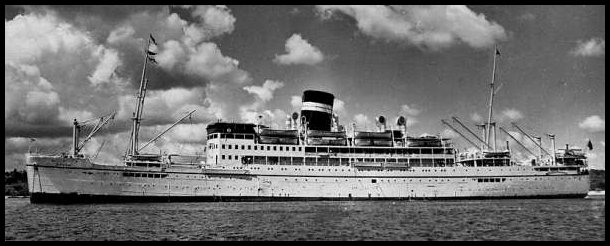
SS Amra of London
Rather a big change from the other. Most of us were bunged down into the hold about water level. The ship stinks. She is manned by Lascars, some of the officers are Lascars, at any rate, brown. Its almost like the Black Hole of Calcutta.
We immediately christened her the “Allmark?” and said that it was a pity we couldn’t sail in her. We eat at messes of 14. In our hold there are 6 tables of 14 men. We were issued with eating utensils this morning. All cooking is done by the natives in their galley. It’s not too bad although everything seems to have a peculiar smell.
We spent the night in hammocks and apart from one or two lads getting nasty bruises and one a fractured wrist we didn’t do so bad. I spent a whole hour adjusting mine so that was impossible to fall out.
1st August Thursday 1940
Reveille 6 a.m. What a mess. Everybody trying to get washed, changed, dressed & cleaned up at once and everyone getting half strangled in his hammock strings whilst trying to untie it. The weather is very sultry. The day passed monotonously and the sooner we get off here the better. I hope we aren’t on longer than a week.
There are four meals a day. Breakfast at 8.0, Dinner at 12.45, tea at 3.15 and supper 6.30. No smoking is allowed in the hold so we have to go on deck. What a life! The troops from the Queen Mary have been arriving in the harbour. Queen Mary is at the Naval Base. Was mess orderly today. Uh!
I nearly forgot to mention that we have plenty of company down here. There are hundreds of cockroaches some of them almost as big as cats.
2nd August Friday 1940
Reveille 6 a.m. Parade at 9.30. We had a lecture how we were to carry on whilst on board and then were dismissed. We sailed from Colombo at 14.15 hrs. I think there are 11 ships in the convoy two of which are auxillary cruisers for escort. The sky is rather overcast and there is a heavy swell on the sea. The ship pitched and tossed quite a bit, although not as much as I’d expected.
3rd August Saturday 1940
Bank Holiday Saturday! Marvellous day! Spent all day from Reveille to bed time lounging around the ship. Wrote one letter home at night.
4th August Sunday 1940
Just sailed on
5th August Monday 1940
Same again
6th August Tuesday 1940
We sighted Bombay at about 9 o clock and were told to be ready to go ashore at any minute. However, we missed the tide or something so we dropped anchor just outside harbour and stayed there all day. I was mess orderly again.
7th August Wednesday 1940
A very disappointing day after looking forward to going ashore and hanging around all day watching the other shops go in then are told we are not going in till the morning. Everyone is fed up just now, nothing to do at all. There was a blackout tonight for some half brained reason, the other shops and the town are lit up but our ship is blacked out.
The army works in a weird and wonderful way! There was a good variety of rumours today, caused, I suppose by our idleness. One is that were not supposed to be on this draft. Another, that we are only here for four months training then going back to England. What a hope! There is also rumour that enemy subs have been sighted outside the harbour. What may, or my not account for the blackout. At any rate I don’t believe any.
We have to be up at 4.45 tomorrow as they say we are going in on the early tide. However, knowing the army as I do, I shouldn’t be surprised if we were still aboard this hooker tomorrow night. I’m afraid if we are, there will be a riot!
8th August Thursday 1940
Paraded with full kit on deck this morning. Reveille 4.45 expected going ashore, as we moved into dock about 7 a.m. However, after hanging around on deckt till 10.30 am we were told to take kit off and parade again. We then paraded again, walked ashore, and were marched to a dismissal point in the centre of Bombay, which was a picture house. We were in our thick shirts and shorts. Very warm.
We were dismissed at 11 and Ron and Goodwin and I went for a walk round. First we went to an insurance place and changed our money. I got 4/- Ruppees 5 annas for 8/6. We then went for dinner to a recommended restaurant. We had a good feed and did we enjoy it!
We then walked around again, I wish I had the space and time to write of the queer things we saw! Snake charmers, beggars, pariahs, fakirs, Buddhists, Brahmn monks, Moslems and Hindus, all sorts of men and customs. Each separate sect have a different distinguishing mark. Some have a star shape burnt into their foreheads, some have a ring, and others just a black dot of paint. Everyone seems to have a different marking.
About an hour after dinner we met three more of our lads and finally we decided to go for a bus ride. We caught the first bus and each gave the conductor 2 annas and told him to tell us to get off when we’d had our 2 annas worth . As it happened, we were lucky and our ride finished just outside the Victoria and Albert Museum.
The museum is in the middle of the Zoological Gardens. First all we went round the museum and then around the gardens. Actually, it was a museum, garden and zoo combined so as we walked around the garden we also saw the animals.
The weather was very hot but there were occasional heavy showers. However, after a very enjoyable walk around we caught a bus back to town and went to the pictures. Saps at Sea was the title and Laurel and Hardy were the actors. I thought it too daft to laugh at and was almost bored to tears. The seats were half price ( 9 annas ).
The picture house was a pretty modern one. The only difference from an English picture house was the numerous electric fans around the place. A very noticeable thing when the show was over the “The King” was played was that ¾ of the audience comprised mostly of natives, walked straight out ( By the way, today is the day that Britain offered India her independence ). Also I forgot to say that the natives have been celebrating the feast of the Sun God and we saw several processions through the streets.
After the show we went to the café again for tea. I had the same as I had for dinner, egg and chips etc. We then went for a general walk around the native quarter and then back to the ship. There was a check parade at 10 o clock. We just got back in nice time. As we had handed our hammocks in we had to make the best of it and sleep on the deck or the tables.
9th August Friday 1940
The vibration of the ships engines woke me this morning and when I looked out I found that we had moved to another part of the docks. At about 9.30 we paraded in full marching order and disembarked to the quayside. After standing there for the usual ½ hour while the officers checked up, we embarked on another ship. This was the “HMT Devonshire”, a regular troopship which had moved into dock an hour earlier and moored next berth to us.
The Devonshire is a proper troopship and has only been built 12 months. Everything is spick and span and run to a fixed system, a big contrast to the “Amra”. I should imagine she is a 20,000 tonner. We spent the day watching th loading up of the supplies etc and walking around the docks. We were allowed ashore within the dock boundary for about 4 hours. I turned in about 9.30 but about ½ hour afterwards went on deck as I felt the ship moving. However, it turned out to be a short move to the entrance of the harbour where we tied up in readiness to move straight off in the morning.
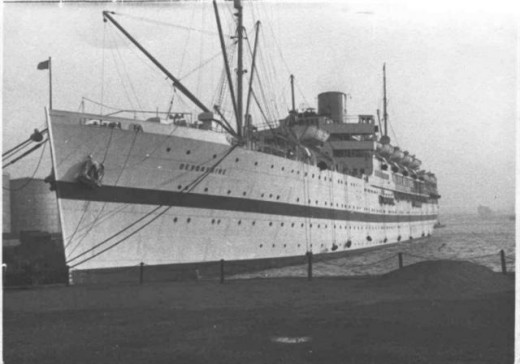
HMT Devonshire ( Troopship )
10th August Saturday 1940
We left Bombay this morning about 7.30. The weather was pretty rough and we seem to be having rough going. Our convoy consists of 11 troopships, 1 cargo ship and 2 auxillary cruisers. I don’t think we are doing above 10 knots. The Deovnshire armaments consists of two A.A. guns and two Lewis guns.
I reported this morning for special duty at 9 a.m. There are 10 of us who have to sweep the decks 3 times a day. 9 a.m., 1 p.m. and 4.30 p.m. I think it’s a permanent job. Worst luck! Anyhow, we get out of parades. The job takes about ¾ hour each time and the rest of the day is our own. There are one or two duties to do aboard this ship so we may have landed a good job.
11th August Sunday 1940
I had some trouble dropping off to sleep last night and since we weighed anchor the portholes have been closed. Our mess is right forward and the water comes well abouve our portholes when it’s rough. The room is very hot.
12th August Monday 1940
Sea very rough today. Weather pretty dull. Nothing particular happened today. I slept on deck at night.
13th August Tuesday 1940
Sea rougher still. The ship almost stands up vertical. The weather is still cool and dull. We had and air raid practice this morning. I think they are expecting a bit of trouble. The crew say this ship has been bombed every time she has been on this route before.
I spent the evening on deck listening to the wireless speaker ( records ) and practising shorthand with H.Riley. We are still going west.
14th August Wednesday 1940
The sea is still rough, but not quite as bad as yesterday. Still heading due west. We had another practice this morning and nothing unusual has happened during the day, except that we had our lemonade ration stopped owing to the fact that someone smashed the padlock off the ice box and won’t own up. Sad day! Most of the lads seem to be getting over the sea-sickness now.
The current rumour is that we are going to Aden. I think its very likely, and according to my reckoning we should be either Saturday or Sunday. The distance by regular trade route is 1600 miles approx.
15th August Thursday 1940
Sea not quite as rough. Our escort was strengthened this morning by a cruiser of the Leander class at about 11 o clock. She patrols up and down in a zig zag direction across the front of the convoy. I found out this morning how deceptive distance is at sea. When the shops blow the foghorns the steam coming from the whistles stops tow or three seconds before the sound. So, by calculating the distance the shops are away from us, I generally found they are about 4 times as far away as they look.
16th August Friday 1940
The sea became smoother during the night, and this morning it was just like a sheet of glass. It was a marvellous sight. The sun was very hot. From today until we land, we have to carry our respirators and tin hats, lifebelts around with us wherever we go, Also from, and starting tomorrow morning reveilled is at 4.30 and we must parade at 5 on the main deck with lifebelt etc and stand by till sunrise.
They mounted a couple of extra Lewis guns on the bridge this morning. I guess we shall be seeing some action soon. We had another addition to our escort this morning when we were joined by another naval vessel. I don’t know if she is a destroyer or cruiser as she is too far away. I spent most of the day watching the sea as it was very easy to see the fish with it being calm.
There were all sorts of fish around this morning, sun fish, dolphins, flying fish and others I can’t name. Some are coloured every colour in the rainbow. We were paid again this afternoon, the usual ten bob. I also washed a few socks etc. I spent the evening on deck with Ron watching the washing dry. The sea had by the evening become slightly rougher.
We slept on deck tonight as it was covered with the canvas awnings this morning and so we were safe from rain. We had to sleep on the top deck as they filled two small collapsible swimming pools on the main deck today and consequently the deck is soaked.
17th August Saturday 1940
This morning the sea was as smooth as glass again. We stood by at 4.30 till sunrise. We had a lecture on deck at 10.30, after which we were joined by another convoy of 5 ships and a naval sloop. Our convoy now consists of about 16 shops and 5 naval vessels. Earlier this morning 2 of our original convoy left us and turned inland. I think they are going to Aden with some R.A.F aboard.
We heard some rumbling noises like gunfire this morning and when the news was read out tonight it appears that It was our navy off Somaliland which was firing on the advancing Italians.
We sighted land this evening on each side of the ships. There were mountains, one of which had a lighthouse on top. I think we are now in the Red Sea as we are told that this is the most dangerous part of the trip.
18th August Sunday 1940
Stand by again this morning. Sea smooth as glass. Direction NNW. Ships steaming in two lines now. I met a lad from Meanwood on deck in the morning. Smith is his moniker and he is in the RASC.
The weather was much warmer today. The temperature on our mess deck averages about 95 degrees. I slept on deck at night.
19th August Monday 1940
There was no official stand by this morning, but just after Reveille a plane was sighted and all took cover. However, after 5 mins the ‘all clear’ was blown and we resumed our duties. It was a Blenheim of ours. Later in the morning we also saw an Avro Anson but no alarm was given, nothing unusual happened during the rest of day. Weather, sweltering.
Slept on deck. I was sick in the afternoon. Think it is the after effects of the rough sea.
20th August Tuesday 1940
HO stand by. I reported sick. Go for treatment 3 times a day for 2 days. Don’t feel very good. Excused duties so I took it easy all day. Nothing unusual occurred, except that the navy plane got into slight difficulties whilst landing, which caused the cruiser a slight delay.
I think we have passed Port Sudan so I expect we are going to Cairo. I think we should be there by Friday.
21st August Wednesday 1940
Orders to be ready for disembark
22nd August Thursday 1940
Disembarked at Port Suez. Went by train to Maadi Camp, 10 miles south of Cairo.
Additional Information
Queen Mary troop movements. War records show the Captain as Captain Irving. This convoy was recorded and confirms the actual dates of W.Staveley’s account. The Queen Mary was in convoy with the other ships.
| June 29, 1940 to July 8, 1940 | Clyde to Freetown | 4,233 | 9 days, 0 hours, 42 minutes | 19.60k | WW #3 | Irving |
| July 9, 1940 to July 16, 1940 | Freetown to Cape Town | 3,507 | 6 days, 19 hours, 36 minutes | 21.43k | WW #3 | Irving | |
| July 17, 1940 | Cape Town to Simonstown | 85 | 0 days, 4 hours, 13 minutes | 20.19k | WW #3 | Irving |
“Reveille” is a bugle call most often associated with the military; it is chiefly used to wake military personnel at sunrise.
More information about Walter Staveley












 The Staveley Family