
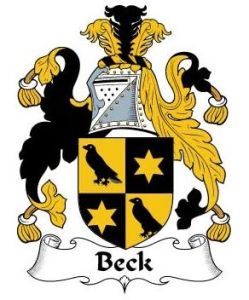
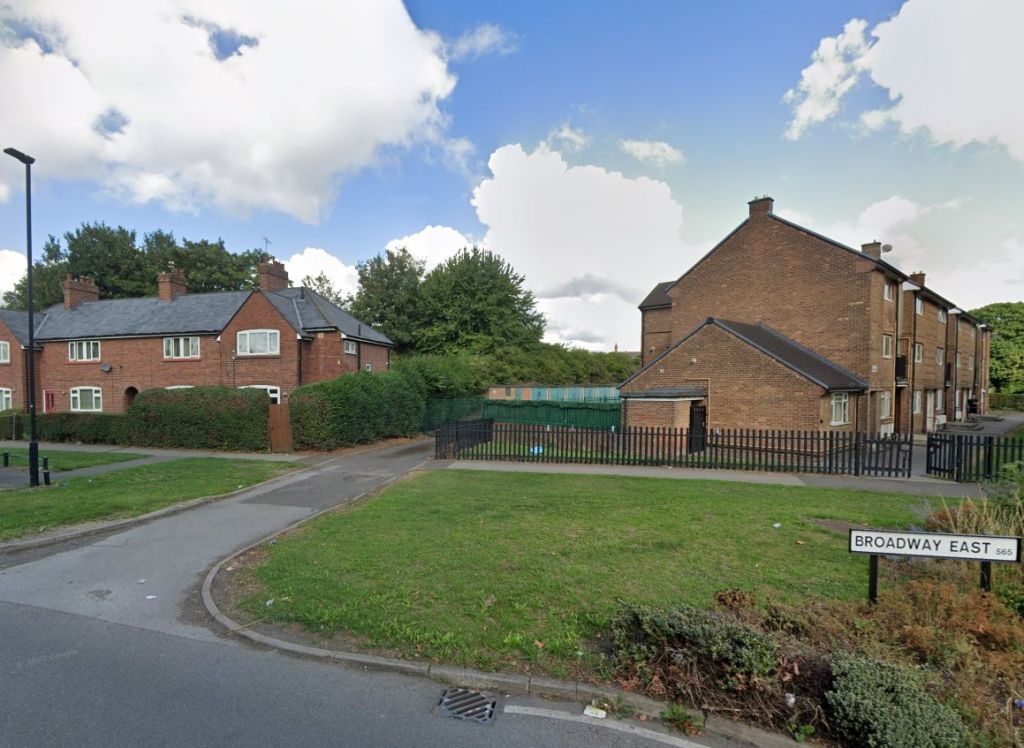
Our research into the Beck ancestry began with this information: Ruth Mary Beck was born at 95 Broadway East, Rotherham, on 18th April 1929 and married Walter Staveley at Cheltenham Parish Church, Gloucestershire, on 24th August 1957.
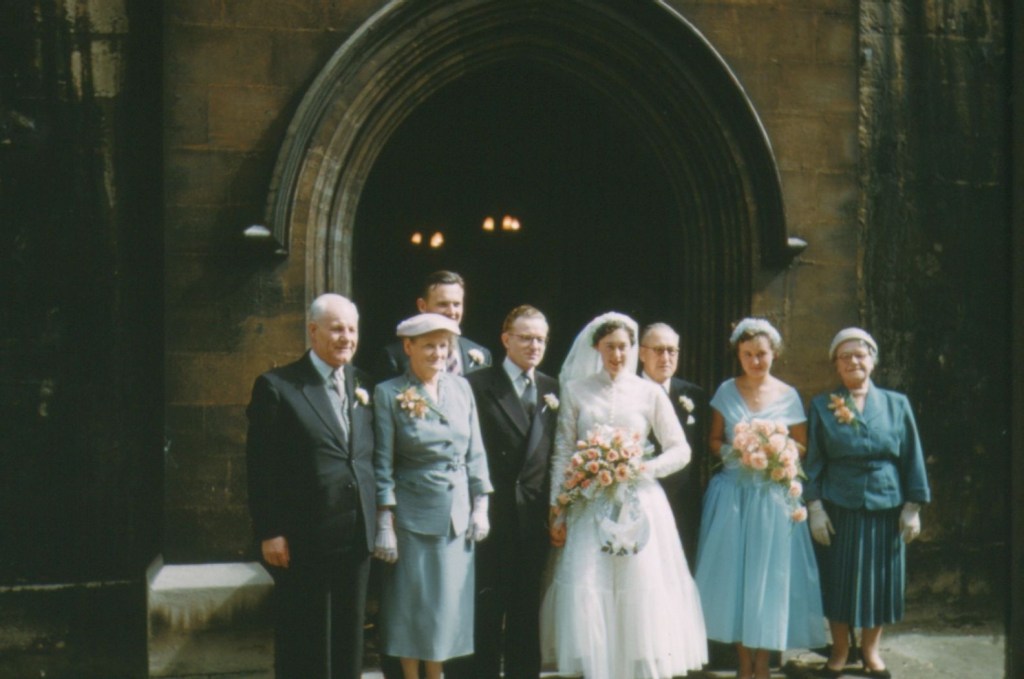
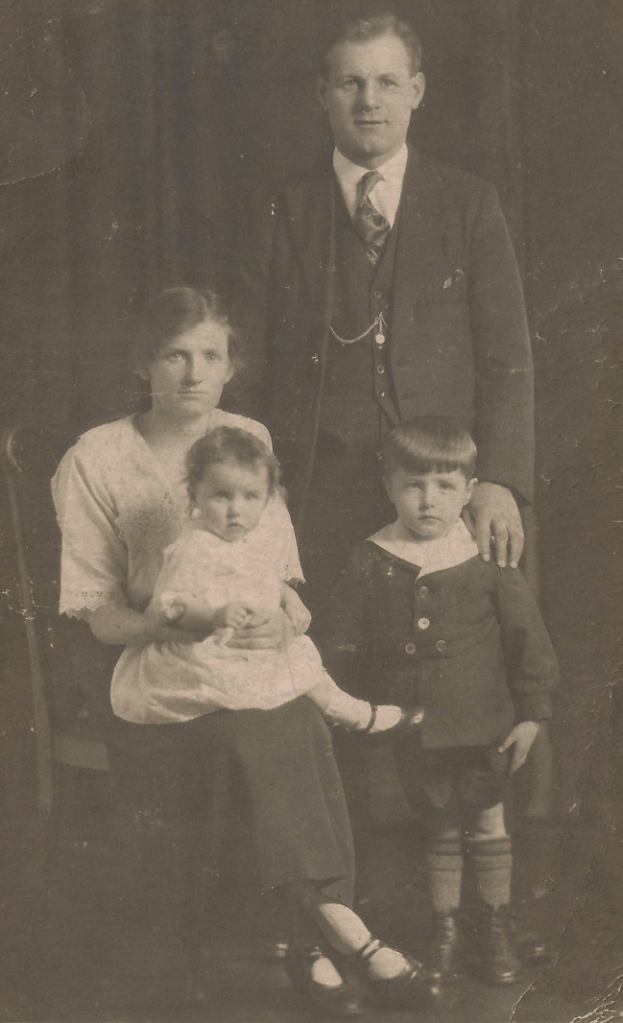
Ruth Mary Staveley née Beck is the daughter of Wilfred Beck and Edith Beck née Marshall, who married at Wincobank Parish Church on 9th February 1922.
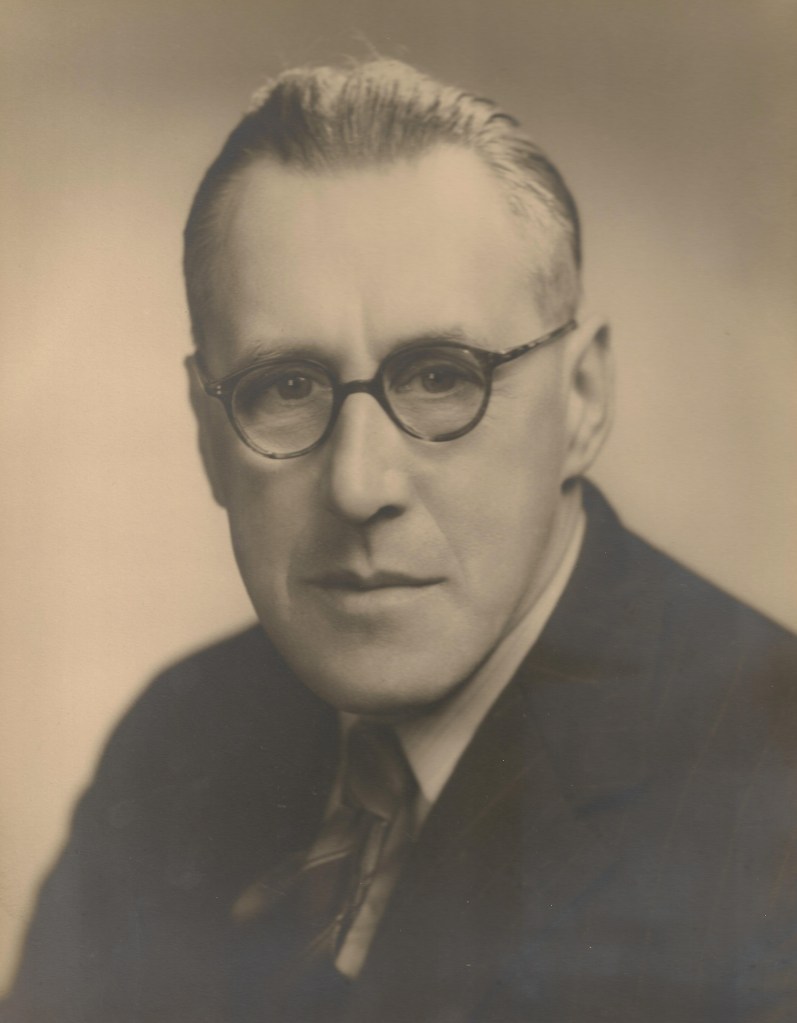
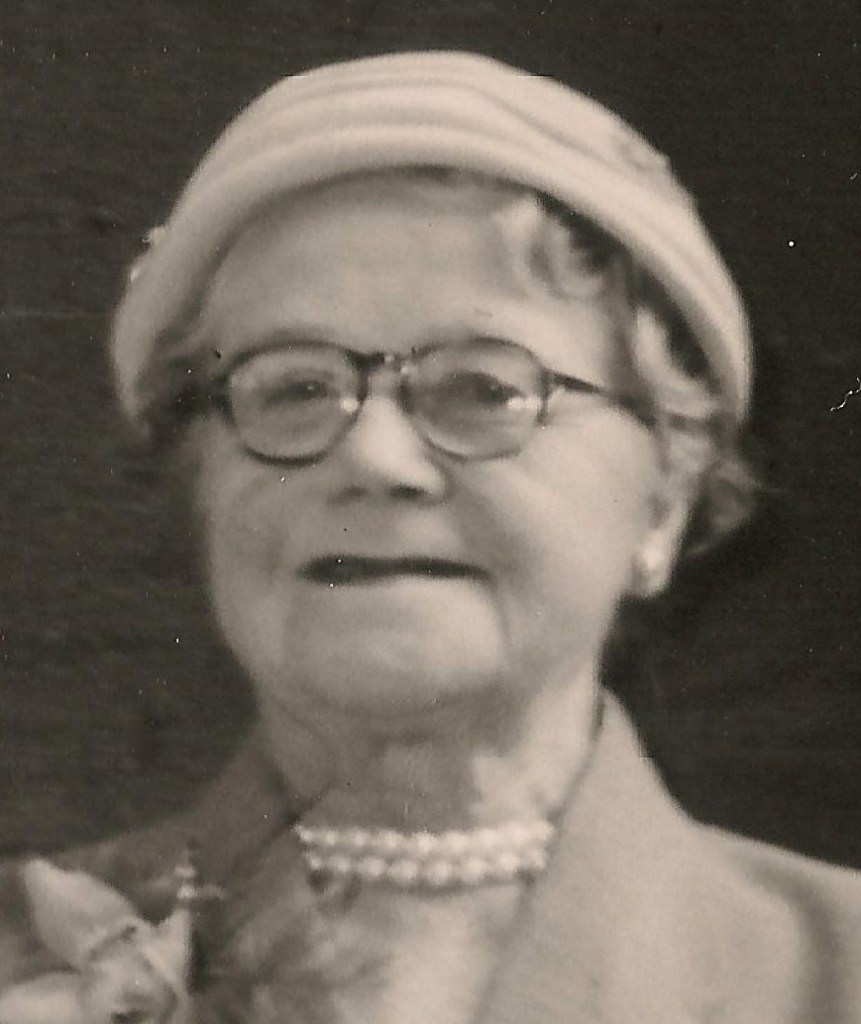
Wilfred Beck was born at 16 Neville Street, Brightside Bierton, on 29th October 1894 and died at 20 Grosvenor Place South, Cheltenham, on 12th February 1968. Edith Beck née Marshall was born at Bradfield, Wortley, on 25th April 1890 and died at Delancey Hospital, Cheltenham, on 24th April 1962.
Wilfred Beck was the son of John Samuel Beck, an engine fitter, and Mary Beck née Hart, who divorced him in 1904. She would later marry a Henry Wells Brookfield.

John Samuel Beck remarried a second wife named Alice Maude Osborne. John Samuel Beck was born at Chapel Yard, Duke Street, Sheffield, on 6th November 1871 and After Alice’s death he lived with his son Donald Beck and died at 55 High Storrs Crescent, Sheffield, on 13th October 1947. He is buried at Shire Green Cemetary, Sheffield. John was in the Sheffield Silver Band and used to play the flute and Piccolo
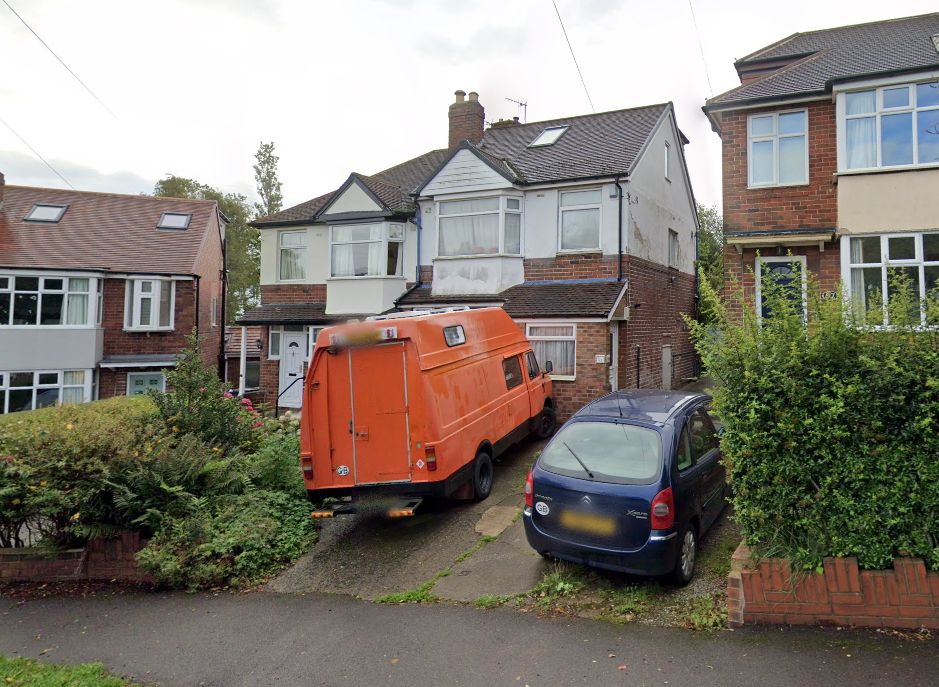
John Samuel Beck was the son of John Beck, a chapel keeper, and Hannah Beck née Fox, who married at the Norfolk Street Wesleyan Methodist Chapel, Sheffield, on 5th September 1861.
At the time of his marriage John Beck stated that he was a twenty-six year old bachelor, the son of the later Augustine Beck, a farmer. Augustine Beck died at Hainford, Norfolk, on 6th March 1854 aged fifty-six years, and was therefore born around 1797-98.
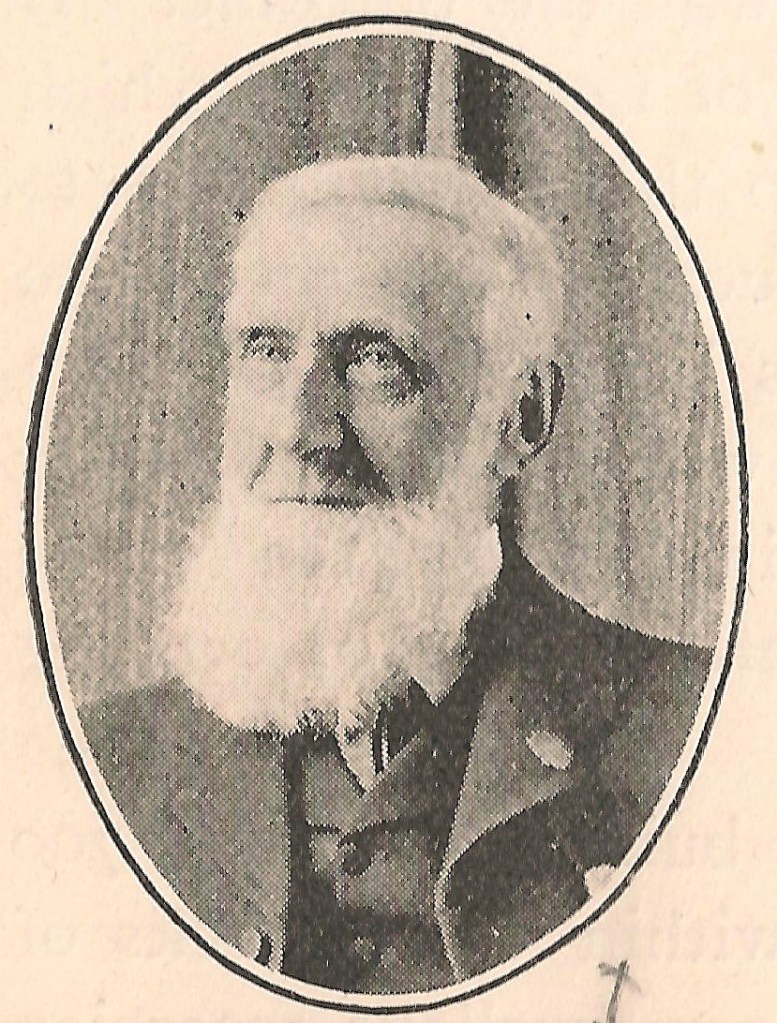
We calculated that John Beck had been born around 1834-35. This was before the introduction of civil registration in England and Wales.
The main sources for ancestry research before the beginning of civil registration are the local parish registers of baptisms, marriages and burials. There is no complete index to English parish registers and it is essential to discover which parish or parishes to search for evidence of the earlier ancestry.
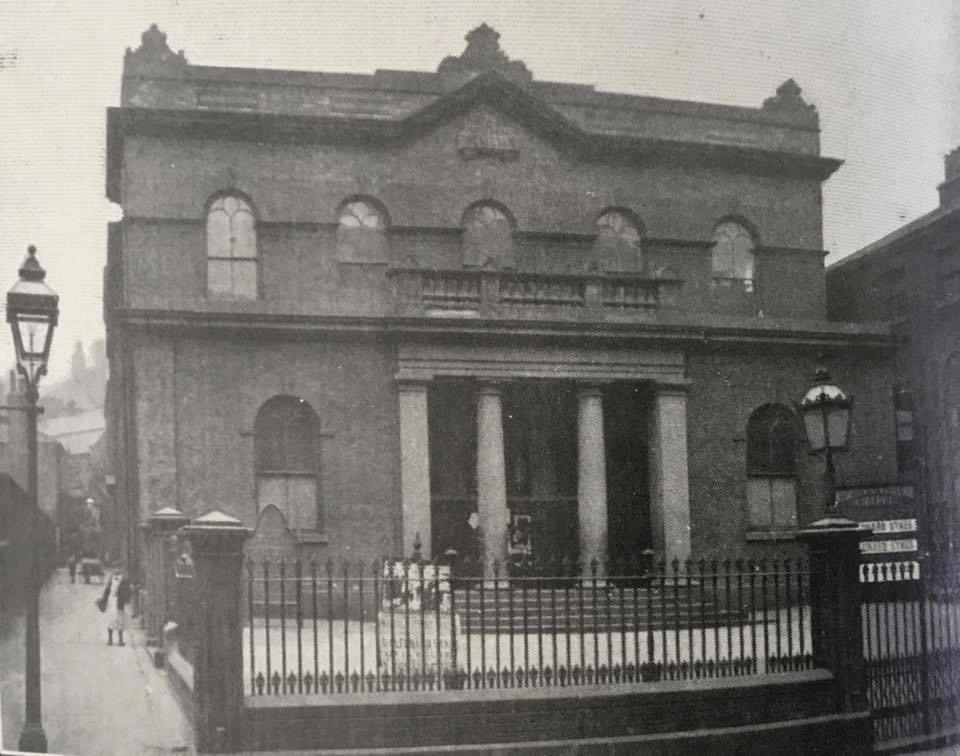
Norfolk Street Chapel where John and Hannah got married was built in 1780, one of the largest in the Kingdom and opened by the founder of Methodism himself, who to the end of his long laborious life loved it and its people…Methodism in Sheffield Park by J J Graham which does not appear to be available online. You can however read about The History of Methodism in Sheffield by Rev T Alexander Seed.
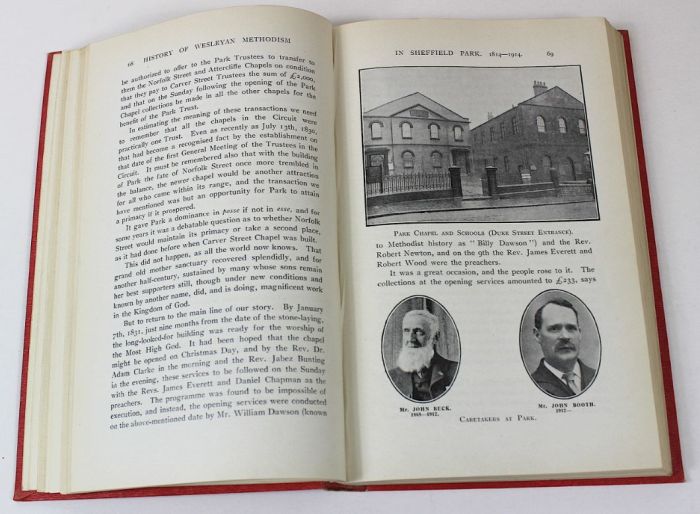
The Methodism in Sheffield Park records on page 124 that John became a teacher for the chapel Sunday school in 1859. In January 1912 Mr John Beck retired from the position of caretaker after 43 years service in that capacity (Page 256). An extract from the book:
“At the end of 1913 there passed from the scene of his labours, in more senses than one, John Beck, a veteran who had become almost one with the church. Spared to the age of nearly four-score years, fifty-three of which were spent in connection with the Park Church and forty-three of those in the position of caretaker.
In addition to his care of the fabric he endeavoured to do other Christian work, serving in connection with the Cottage, Prayer Leaders’, and Tract Societies, and as a visitor.
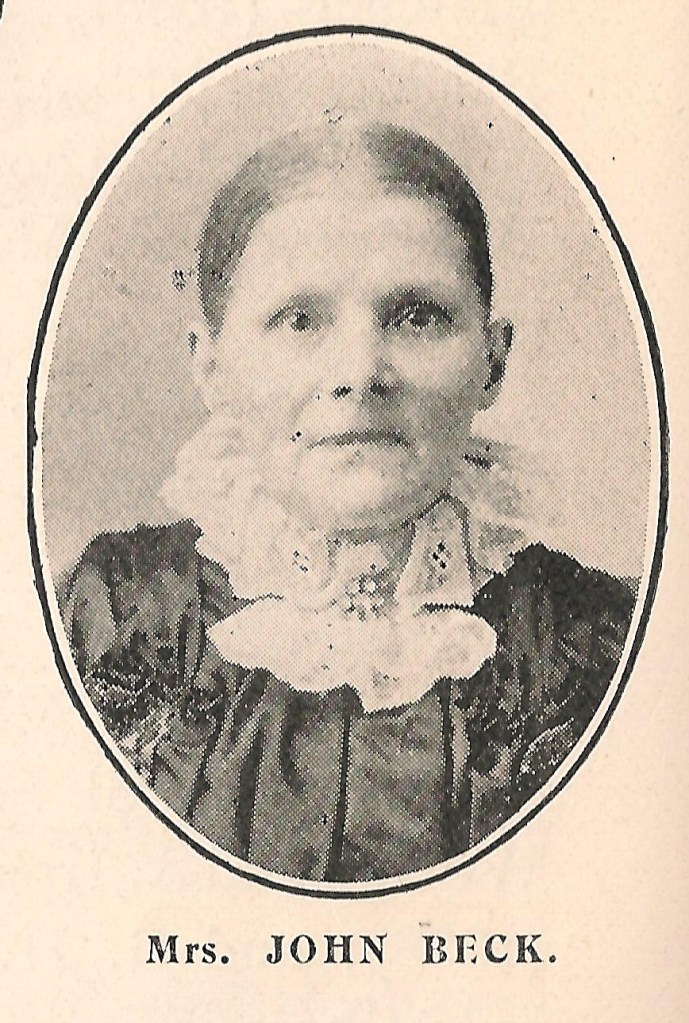
His wife, Hannah, was a diligent worker in the church from her youth, as we have noted in various connections, pre-deceased him in 1907. The last longing of this veteran was that he might live to see the Centenary Celebrations of the School, he being one of the few who were present at the Jubilee. It was not to be, however, for God took him”.
By all accounts and from information passed down by Wilfred Beck, John was quite a jovial character and was forever playing tricks on the family much to the disapproval of his son John Samuel who was very straight laced by comparison.
John’s baptism had not been found at Sheffield. We therefore began our investigations by searching an index to the 1881 census returns for Yorkshire, hoping to find the Beck family for details of their ages and birthplaces.Censuses of the population of England and Wales have been taken every ten years since 1801. These early national headcounts helped the Government to predict the level of income from taxes, for example, and to estimate the potential size of an army in times of war.
The 1841 census was the first to include personal details, recording each person’s name, approximate age, occupation and whether or not they were born in their county of residence. From 1851 onwards the censuses give a more detailed description of the population, including precise ages and specific birthplaces.
The Staveley family come from a traditional Yorkshire farming background. It would appear that the Beck family also have their origins in farming albeit in Norfolk. The census of 1881 provided us with the following information.
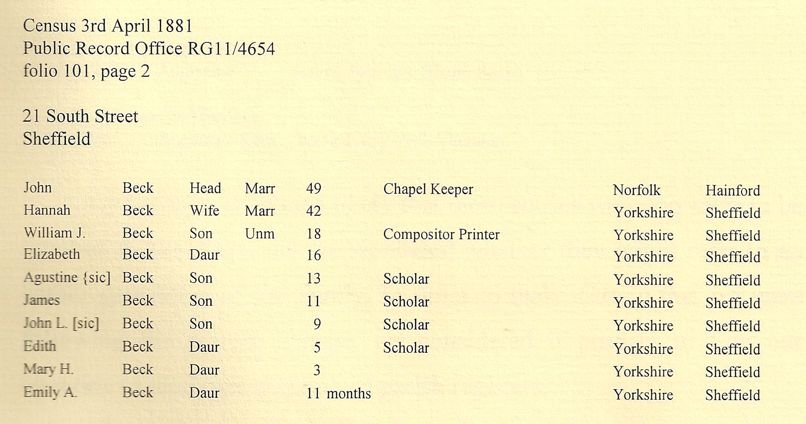
We were very pleased to have found this entry, which provided much useful information concerning the ancestral John Samuel Beck’s siblings in addition to telling us that his father John senior had been born at Hainford in Norfolk. We sought John’s baptism in an index to Norfolk parish registers called the International Genealogical Index.
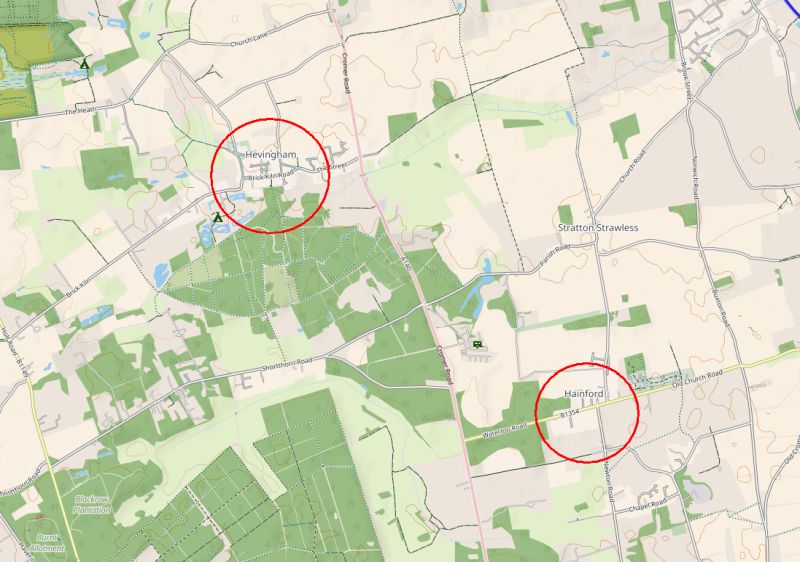
Hainford is situated close to the A140. The village is bordered by Hevingham to the north. Buxton to the northeast. Frettenham to the east. Spixworth to the southeast. Newton & Horsham St Faith to the south. Horsford to the west and Stratton Strawless to the northwest.
The International Genealogical Index is the nearest approach to a comprehensive index to English parish registers. It includes a large proportion of entries from the local parish baptism and marriage registers from the sixteenth up to the later nineteenth centuries, indexed alphabetically on a county basis. Some entries have also been collected from various sources apart from parish registers: for instance, there are also some inclusions, notably those from wills, family histories and other documents, which cannot altogether be relied upon. The IGI is therefore more of a location aid than a specific index, and naturally all references should be checked against the original records for authenticity.
We searched the section for Norfolk. There were no entries for the baptism of John Beck in the early to mid-1830s, but two possible entries for his father Augustine:

On balance, it seemed likely that these entries were too early to be relevant at this stage, but we wondered whether they might refer to an earlier generation of the family. In order to make certain that we were following the correct lineage, we considered it prudent to turn our attention to the original Hainford parish registers.
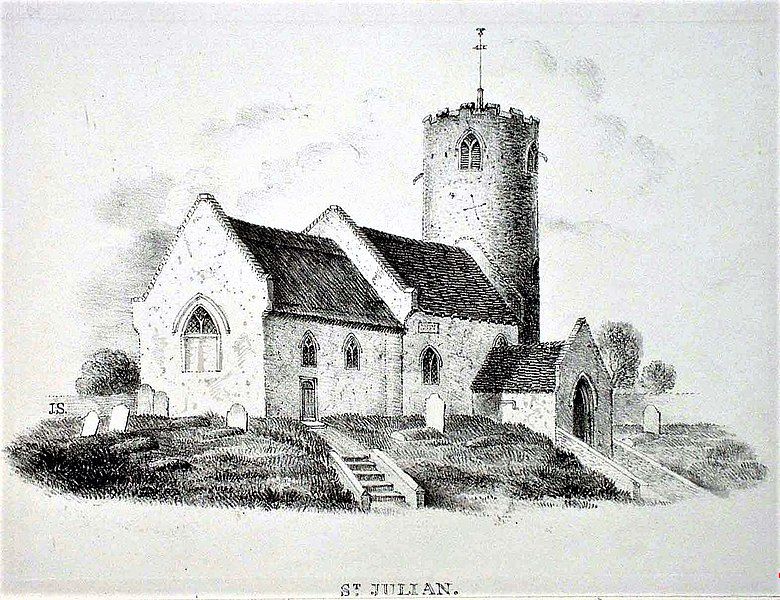
The earliest parish registers in England and Wales date from 1538, when legislation was introduced by Thomas Cromwell on behalf of Henry VIII to the effect that all baptisms, marriages and burials occurring within each parish should be recorded by the incumbent in a weekly register. The earliest entries were recorded mainly on paper, and it was not until 1597 that these were ordered to be copied and henceforth kept on parchment. Unfortunately, the wording of this Act included the phrase that records should begin “especially from the first year of Her Majesty [Queen Elizabeth I]’s reign” so occasionally one finds that the first twelve years of entries are missing.
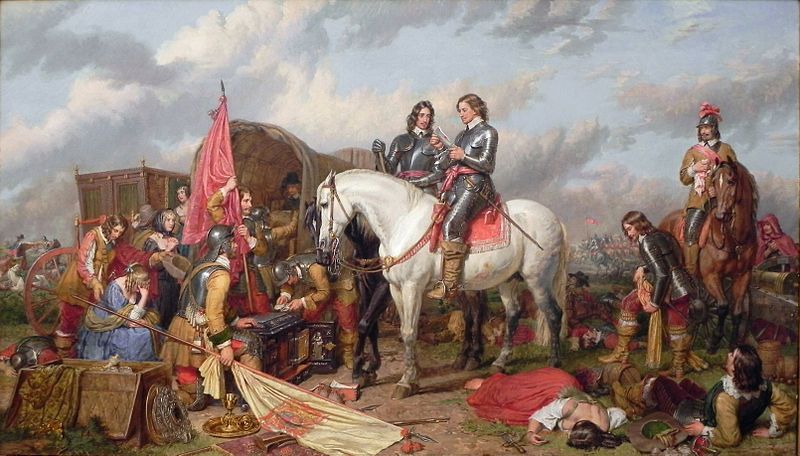
Other gaps in continuity do occur, notably around the time of the English Civil War, and of course the natural passage of time has also sometimes resulted in loss. Furthermore, the content of parish registers can vary greatly, from brief or partial lists of names, to comments on the morality and religious orthodoxy of the parishioners. We searched the Hainford baptismal registers from 1813 to 1850, noting the following Beck entries:

William son of Austin and Elizabeth Beck, Hainford, Labr. Orson son of Orson and Elizabeth Beck, Hainford, Lab. George illeg. son of Charlotte Beck, Hainford. Augustin(e) was described as a labourer, but may have acquired some land himself by 1837, when he is first described as a farmer. The marriage of Augustin(e) Beck was not found at Hainford, although he had acted as a witness to other marriages in the parish:
Hainford Parish Registers – Marriages
Robert Ulph of this Parish, Single Man, and Maria Beck of this Parish, Single Woman, were Married in this Church by Banns the 18th Day of October in the Year 1820.
This Marriage was solemnized between Us: x the mark of Robert Ulph x the mark of Maria Beck. In the Presence of: John Bunbrey. x the mark of Mary Anne Beck
Robert Howard of this Parish, Single Man, and Mary Beck residing in this Parish, Spinster, were Married in this Church by Banns the 12th Day of October in the Year 1824. This Marriage was solemnized between Us: x the mark of Robert Howard x the mark of Mary Beck. In the Presence of: x the mark of Augustin Beck. x the mark of Mary Ulph
William Beck of this Parish, Single Man, and Elizabeth Watson of this Parish, Single Woman, were Married in this Church by Banns the 13th Day of November in the Year 1829. This Marriage was solemnized between Us: x the mark of William Beck x the mark of Elizabeth Watson. In the Presence of:x the mark of Augustin Beck x the mark of Anne Watson
We searched the Hainford burial registers, noting the following Beck entries:
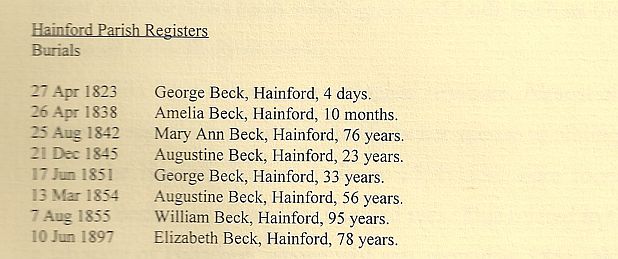
The ancestral Augustine Beck was buried on 13th March 1854. The 1851 census returns for Hainford revealed that the William Beck who was buried in 1855 aged ninety-five years was Augustine’s father:
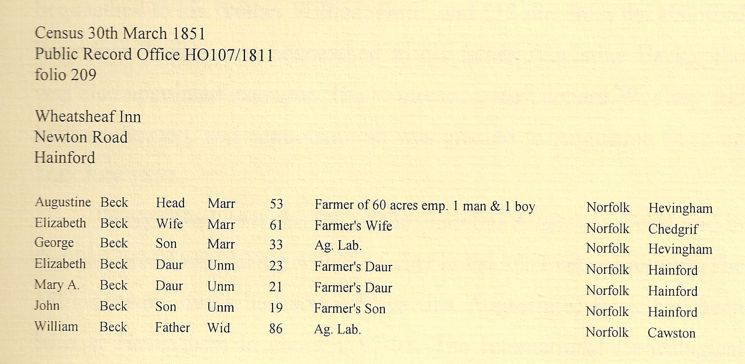
We searched to see whether either Augustine Beck or his father William Beck left a will.
Up until 1857 the proving of wills came under the jurisdiction of the Church. This was because for many hundreds of years it was here that the most literate classes were to be found. In addition, it was of course the responsibility of the priests to remind the dying to put their affairs in order before they passed on. Wills were proved in some three hundred ecclesiastical courts throughout the land. If a person owned property in more than one jurisdiction, his will would be proved in a higher ecclesiastical court which governed both, such as the Prerogative Courts of Canterbury or York.
Wills are a valuable genealogical resource. Almost all refer to the testator’s successors or at least to his or her spouse or siblings.
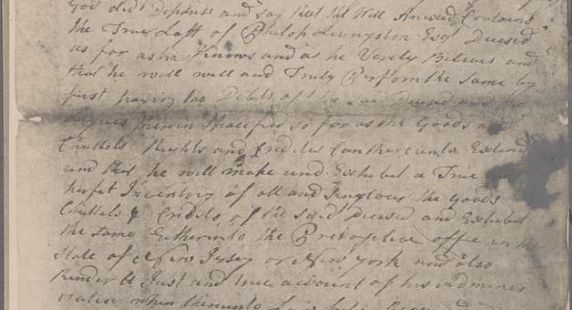
The Norfolk Probate Indexes 1751-1857 were found to contain just one Beck entry from the Hainford area. This related to George Beck, a labourer of Hainford, whose will was proved in 1851 (NCC 376). We examined the will, finding that it was made on 3rd February 1851 and proved at Norwich on 28th June 1851, after the testator had died on 9th June 1851. George left effects under the value of £100. His watch was bequeathed to his brother William Beck, and £12 due from the Hainford Provident Society was bequeathed to his father Augustine Beck, who was also appointed executor. The witnesses were Leonard Woolsey and William Sexton, and administration was granted to Augustine Beck on 16th July 1851.

George Beck was the son of the ancestral Augustine Beck, and in fact had been found living with his father in the 1851 census returns. The 1851 census returns had also told us that Augustin(e) Beck had been born at Hevingham in about 1797-98. The International Genealogical Index entries therefore could not be relevant after all, and we turned our attention to the original Hevingham parish registers for details concerning the earlier ancestry. We first noted the marriage of Austin Beck in 1816:
Hevingham Parish Registers – Marriages
John Lovick of this Parish, Single Man, and Ann Beck of this Parish, Spinster, were Married in this Church by Banns the 12th Day of September in the Year 1810. This Marriage was solemnized between Us: x the mark of John Lovick x the mark of Ann Beck. In the Presence of:Robert Willmott Henry Crane.
Samuel Seely of this Parish, Single Man, and Elizabeth Beck of this Parish, Spinster, were Married in this Church by Banns the 20th Day of May in the Year 1812. This Marriage was solemnized between Us: Samuel Seely. In the Presence of: James Raven Henry Crane. x the mark of Elizabeth Beck
John Beck of this Parish, Single Man, and Elizabeth Greenwood of this Parish, Spinster, were Married in this Church by Banns the 26th Day of October in the Year 1812. This Marriage was solemnized between Us: x the mark of John Beck x the mark of Elizabeth Greenwood. In the Presence of: x the mark of John Levick Henry Crane
Austin Beck of this Parish and Elizabeth Fish of this Parish were Married in this Church by Banns the 26th Day of November in the Year 1816. This Marriage was solemnized between Us: x the mark of Austin Beck. In the Presence of: James Abbs Henry Crane. x the mark of Elizabeth Fish. It appeared that “Austin” was a variant of “Augustin(e)” at this stage. Augustine’s baptism was noted at Hevingham in 1795:

Augustine’s parents had had one child named Elizabeth born before they had actually married. Elizabeth Beck may have been baptized again in December 1790 after her parents’ marriage. There were no Beck burials at Hevingham between 1790 and 1812 suggesting that a first daughter had not died in infancy. This information focused our searches for the marriage of William Beck and Mary Green, and the event was noted at Hevingham in September 1790:
Hevingham Parish Registers – Marriages
William Beck of this Parish, Single Man, and Mary Green of this Parish, Single Woman, were Married in this Church by Banns the 29th Day of September in the Year 1790.
This Marriage was solemnized between Us: x the mark of William Beck x the mark of Mary Green. In the Presence of: [?] Orgul [?] Joseph Warnes
John Codling of this Parish, Single Man, and Ann Beck of the Parish of Aylsham, Single Woman, were Married in this Church by Banns the 10th Day of October in the Year 1797. This Marriage was solemnized between Us: x the mark of John Codling x the mark of Ann Beck. In the Presence of: John Watts Henry Crane
We knew from the 1851 census returns and the burial registers at Hainford that William Beck had been born at Cawston in about 1759-65. Turning our attention to the Cawston parish registers, we were very pleased to locate William’s baptism there in 1760:

Marriages
John Beck of this Parish, Widower, and Elizabeth Sendall of this Parish, Widow, were Married in this Church by Banns the 18th Day of November in the Year 1777.
This Marriage was solemnized between Us: x the mark of John Beck. In the Presence of: x the mark of Elizabeth Sendall
Joseph Harman. x the mark of David Sendall. John Beck of this Parish, Widower, and Elizabeth Vout of this Parish, Single Woman, were Married in this Church by Banns the 15th Day of September in the Year 1794. This Marriage was solemnized between Us: x the mark of John Beck x the mark of Elizabeth Vout. In the Presence of: Samuel Drake William Hall
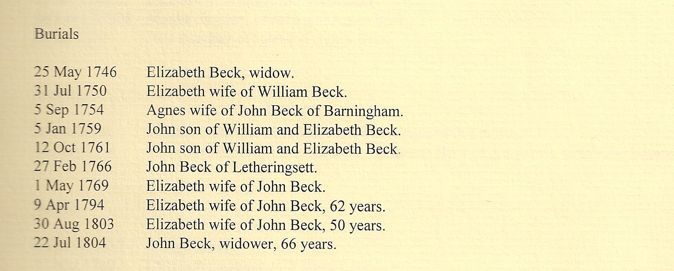
William Beck, Single Man, and Elizabeth Dewing, Single Woman, both of the Parish of Caston [sic] in Norfolk, with license.
We searched the earlier Cawston parish registers. We noted that Elizabeth Dewing was baptized there on 13th July 1728, the daughter of Augustine and Hannah Dewing. It thus appeared that the Christian name “Augustine” had originated from the Dewing family. However, the Cawston parish registers were also found to contain no less than two possible baptisms for the ancestral William Beck:
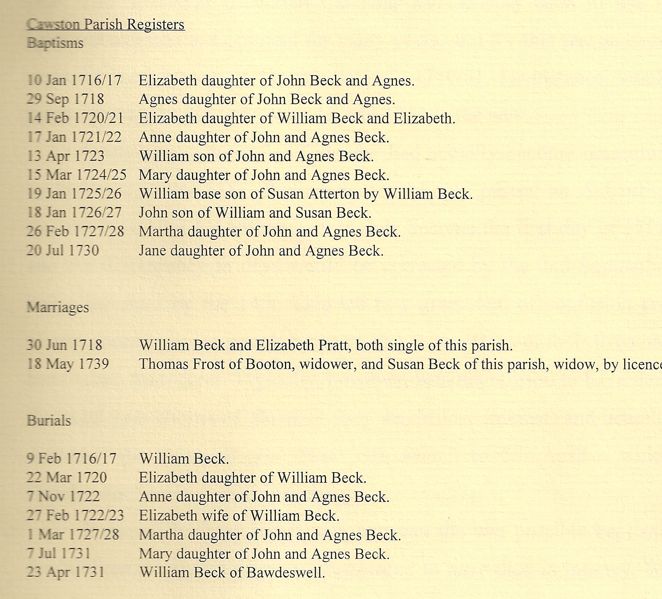
We also searched the Bawdeswell parish registers, given the residence of William Beck in the final burial entry, but no further Beck entries were noted between 1723 and 1731.
The ancestral William Beck could have been baptized at Cawston on 13th April 1723, the son of John and Agnes Beck, or on 19th January 1725/26, the illegitimate son of William Beck by Susan Atterton. The fact that two years are given for the date of the latter event does not indicate that the exact year is unknown, but can rather be explained by the use of a different calendar up to 1751. Up to this time England still used the old-style Julian Calendar which started on Lady Day (25th March) rather than 1st January. Thus all entries between 1st January and 25th March are shown as relating to what we would call the “previous” year. The new-style Gregorian Calendar had actually been in use in Scotland and on the Continent for many years, and for this reason some registers use a system of “double-dating”; 1750/51, for instance, would mean 1750 in the old-style calendar and 1751 in the new.
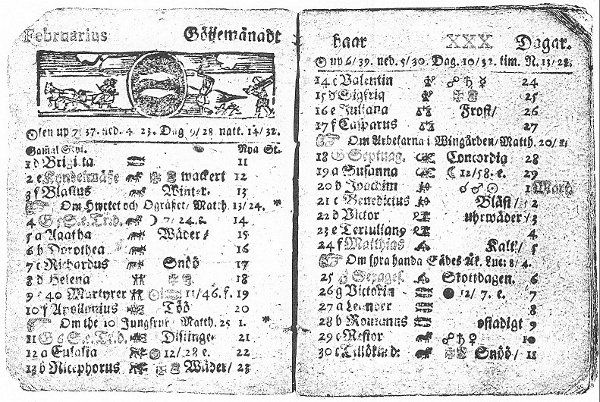
Furthermore, the Julian Calendar had actually become inaccurate by eleven days by 1751. Parliament accordingly passed an Act ruling that the following 1st January would duly become the first day of 1752, and the discrepancy in days would be corrected by the 2nd September being followed by the 14th. This led to a great deal of confusion and almost caused riots as people believed that twelve days of their lives had been taken from them. Typically, however, bankers refused to have their financial year shortened (because they would lose interest) and actually extended the financial year from 25th March to 5th April – which remains the financial year to this day.
It was difficult to distinguish between the two possible baptisms for William Beck as neither child appeared to have died in infancy. We therefore again turned our attention to probate records. The Norfolk Probate Indexes 1687-1750 were found to contain two Beck entries from Cawston:
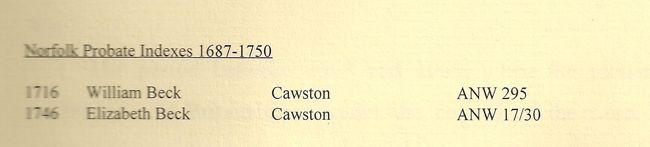
We examined both documents. William Beck’s will was made on 5th February 1716/17, and he signed his name with a mark. William left his son John Beck five shillings and his son William Beck thirty pounds. His wife Elizabeth was appointed executrix, and the will was witnessed by Joseph Furrsse, John Munday and Susan Atterton.
This would appear to suggest that John and William Beck, the respective fathers for the two possible baptisms for the ancestral William, were themselves brothers. Their mother Elizabeth was found to have made the other will, dated 15th May 1746 and proved 31st May 1746. John Beck was appointed executor and was left his mother’s “houses & lands & place called Segale in Cawston”. Elizabeth’s grandson John (the son of William Beck) was left her “houses & lands late Earls, now in the possession of William Roberts” when he attained the age of twenty-one years. The witnesses were William Dewing, Dorcas Dewing and Thomas Thorpe, and Elizabeth signed her name with a mark.
Although it is disappointing that we have been unable to distinguish between the two possible baptisms for William Beck in the 1720s, the wills have shown that their respective fathers John and William were themselves brothers, being the sons of William and Elizabeth Beck.
This suggests that further progress should be possible as both John and William Beck share a common ancestry. Unfortunately, however, the Cawston parish registers prior to 1711 back to the 1660s and 1670s are missing, perhaps due to losses around the time of the Civil War.
The period between 1642 and 1660, when the monarchy was suspended and Britain came under the control of the Lord Protector Oliver Cromwell, is often referred to as the “Interregnum” or “Commonwealth Gap” by genealogists. During this period, an Act of the Barebones Parliament in 1653 divested the church of many of its powers and a local civilian registrar – known as the “Parish Register” appointed to record the births, marriages and deaths in each area. The old registers were supposed to be handed over to the new official but the inhabitants of most parishes still embraced the established faith and would have little to do with the magistrates who were charged with conducting the civil ceremonies, with the result that the survival of parish records from this period can be extremely patchy. Further losses occurred when the office of Parish Register was in turn abolished upon the Restoration of the monarchy in 1660.
Our next step, therefore, would be to search an alternative source such as the Cawston Bishop’s Transcripts or Register Bills. Bishop’s Transcripts result from a 1598 Act of Parliament, requiring that a transcript of the original parish register entries for the previous year be sent to the Bishop. The earliest Bishop’s Transcripts thus date from 1597. They are important because they provide a second record should the original registers have been destroyed or mislaid. They also frequently contain different or additional material to the original.
In addition, Cawston manor court records may provide details concerning the property belonging to the Beck family and its descent, especially to help with earlier generations. The prospects for further research are most intriguing.








 The Staveley Family