During Saxon and Viking times our Staveley farmers would have been working on an open field system which centered around the ‘Lord of the Manor’ owning the land and dividing it into strips for his tenant farmers. The farmers paid rent for each strip of land that they farmed and the land was not fenced off at all. Land ownership was the privilege of the wealthy.
During the 16th century this would change and much of the land would fall into private ownership. A system of four-crop rotation changed the way that people farmed and farming became much more productive. In order to ensure that the land would not be exhausted of its nutrients the farmers would leave their land fallow every four years. The land would then rebalance and be able to sustain the crop rotation. This was a time when our Staveley ancestors would be growing mostly wheat, turnips, barley and clover.
Wheat was an essential and staple diet for the population and used for making bread whilst turnips were used to feed the animals. Barley would have been used in porridge, cereals, and for beer making and clover as a natural fertilizer.
Between 1750 and 1850 the population in England tripled. Food became cheaper due to more efficient farming production and higher yields. Barley was replaced with rye since it is more hardy than winter barley and many farms were now owned by hard working farmers. Farming provided much needed local employment but by the 1830’s machines were starting to reduce the need for manual labour.
The Swing Riots in 1830 caused the destruction of over 400 threshing machines and included threats to farm owners and the gentry, with cases of arson and livestock destruction being reported. These were desperate times and farm labourers needed work. No one wanted to end up in the workhouse or having to rely on handouts as a pauper.
Farm labourers were starting to struggle to find jobs in an ever decreasing labour market. Many would end up leaving the villages and countryside and migrate to the bigger cities in an effort to find work. In 1829 there had been a disastrous harvest and the farming community were fighting for survival. Many families were familiar with going short of food and being cold and hungry during the winter months. Life could be miserable if you were out of work for any extended period of time.
Foreign food products were now entering Britain and the Corn Laws which imposed tariffs on imported grain were repealed in 1846. This caused British farming to fall into a great depression. The government was trying to increase free trade by removing tariffs but by doing this they caused a great depression in British agriculture, the repercussions of which, would continue until after the Second World War.
Farming paid badly. Farm labourers were no longer needed in large numbers and foreign food imports flooded into the country.
Although machinery, and later steam engines, would automate much of the farming processes, it is important to note that up until this time much of the countryside and farming practices would have changed little since the 1700’s.
A farm labourer did not have an easy life. Growing food is hard work. It was even harder before we had tractors and the kind of machinery that we have today – and being a farmer is still hard work even in modern times!. The rural peasants were moving to the cities to become the working class that would fuel the industrial revolution.
From 1870 onwards things got worse. Many of our Staveley ancestors would find that ploughmen, shepherds and skilled farm labourers were in demand overseas and a great number of them would emigrate to the United States, Canada, Australia and New Zealand.
We have to remember that our ancestors did not benefit from social security. Their children would often die during child birth or at an early age through tuberculosis ( consumption ), pneumonia or diptheria. A farmer might experience the death of a wife during childbirth so it was not uncommon that he might marry again soon afterwards.
If disease didn’t get you, a career in the military might claim you instead. The British Empire needed soldiers. Many of them came from the rural farming communities. WWI claimed a good number of our ancestors.
Newyear Rowlin ( 1829 – 1914 ), the father of Baron Rowlin was featured in the local press over a particularly bad incident involving one of his wives two half brothers. You did read that correctly, one of his wives!
Fortunately for the brothers, Newyear Rowlin survived, and they got a 6 month jail sentence each. They would both end up leaving England and died in Illinois in the United States
However, our story really begins with Baron Rowlin ( 1857 – 1926 ). At age 22 when he gets married he is a butcher and his father is a farmer. Later he would change his profession to that of a coachman. The family history of the Rowlins has not been extensively covered but our own branch lived in Rudston, a village situated between Driffield and Bridlington. The Rudston Monolith, from which the village gets its name, is the tallest standing stone in England at over 25 feet ( 7.5 m ) tall.
In 1901 we find the family running a post office in Rudston where Beatrice, who is now married to Emmanuel Butcher, is the assistant post mistress at her fathers shop.
Photo: Baron Rowlin, Ruby Millicent Rowlin, Beatrice Rowlin, Maud Rowlin. Smaller of two boys believed to be Sydney Rowlin killed 1st World War. ( Sgt in West Yorkshire Regiment ). Sarah Rowlin ( nee Harrison ) at the Post Office in Rudstone ( Rudston )
Walter Staveley ( 1921 – 2005 ) remembered Baron Rowlin proudly showing off his horse whip, which he once took to the children’s school after one of the girls ( possibly Ruby ) came home crying after being roughly punished. Baron Rowlin told the teacher that if it happened again he would be back with the whip and he would use it! As he got older he began to see strange faces and creatures crawling around, probably because of heavy drinking.
Baron Rowlin and his horse trap
In hindsight, if I had paid more attention to who was who back in the days when my grandfather was alive, I might have been able to offer more information about them. Ruby Millicent Rowlin was born in Rudston on 20th February 1894. This would have been shortly after her mother and father returned to England from a three year stay in Hamilton, Ontario in Canada. Baron Rowlin’s brother, Francis ( Frank ) Rowlin ( 1843 – 1912 ) is our connection with Canada. He emigrated to Canada, initially Quebec, before settling in Hamilton, Ontario. Baron Rowlin would have been staying with his family. There are quite a few Staveleys in and around the Hamilton area in Canada, and this line and connection is worth further study.
The home in Hamilton, Ontario, Canada – Canadian Staveleys
Walter Boynton Staveley ( 1862 – 1927 ) in our family tree was married to Ruby Millicent Rowlin in 1917 when she was 23 years old. Ruby is the youngest of seven children by Baron Rowlin & Sarah Rowlin ( nee Harrison ). Of her two brothers, Sidney Baron Rowlin died in WWI and Frederick Charles Rowlin would marry a Mary Jane Dawson. Of her four sisters, Isabella Frances died as an infant and is buried in Hamilton, Ontario, Canada.
Eastgate Cottage, Rudston with George, Aunt Maud and two of the children.
She remained close to Beatrice who married Emmanuel Butcher and also to her sister Francis Maud who would go on to marry George Pudsey. They lived in at Eastgate Cottage in Rudston and details of their family can be found on our family tree. The Rowlins, Butcher family, and their relatives, would all have known each other at a time when families were more closely knit than they are today.
When Ruby Millicent Rowlin married Walter Boynton Staveley on 24th October 1917 in Burley, Leeds, the marriage certificate is witnessed by Emmanuel Butcher and Jessie Monkman. Baron Rowlin at this point is listed as a munitions worker. Both Walter Boynton Staveley and Ruby Millicent Staveley are listed at the address 47 Cardigan Crescent.
To view the family tree of Baron Rowlin click here.
The surname Butcher is of occupational origin, derived from the Old English word ‘boucher’ or ‘bochier’, which in turn comes from the Anglo-Norman French term ‘bouchier’. These words all mean a person who slaughters and sells meat, indicating that the original bearer of the name was likely someone who worked a a butcher.
The Butcher Family connection in our family tree is through the Rowlin Family. The wife of Walter Boynton Staveley was Ruby Millicent Rowlin. Her sister, Beatrice Mary Butcher married Emmanuel Butcher.
Emmanuel Butcher is the son of Benjamin Butcher (1830 – 1903 ) and Elizabeth Butcher ( born Barnes, 1829 – 1906 ). He was born in Tingewick, Buckinghamshire on 29th October 1865.
At the age of 16 in the 1881 census, Emmanuel was boarding in Burill with Cowling, a small village near Bedale, about 15km southwest of Northallerton in Yorkshire. There is a 17th century manor house in Burrill and the houses stand along either side of the road, with the small Victorian church among them. Emmanuel was living there with two of his brothers Joseph & Jacob. They were employed as Iron Miners. Emmanuel is listed as a servant of the Manor House at Burrill.
York St Cuthbert’s Church in York.
Emmanuel married Louise Burton on 25th March 1890 at York St Cuthbert’s Church in York. They had one daughter named Laura Elizabeth who was born in 1890. He separated from Louise around 1905.
Emmanuel served with 2nd West Yorkshire Regiment and the 15th Leeds Pals during Great War. Ex Colour Sergeant. Served in Africa (Boar War) awarded Ashanti Star (1895-96), The Queens South africa medal and the Good Conduct Medal. Emmanuel served in France for about 18 months and invalided out as medically unfit. Joined Corps of Commissionaires in 1909 and was stationed at one of Messrs Price’s (Tailors) factories in Kirkstall ( photo ).
Messrs Price’s (Tailors) factories in Kirkstall
Prior to meeting Emmanuel, Beatrice was assistant postmistress in Rudston in 1901 (in her fathers shop). In the 1901 census her address was 7 Church Hill Street, Bridlington. For a time Beatrice was a secretary to Charles Laughton’s (well know actor) father. She had small pox when friends of Charles Laughton came to visit from the far east. She was the manager of the bar in the Grand Hotel, Scarborough then ran the pub on the sea front called the ‘Golden Ball’.
In the 1911 census Beatrice is listed as living at 17 Leeming Square in Leeds, age 28 and single. She is listed as a domestic servant with Emmanuel Butcher, age 45, who is head of the house and an army pensioner with his sons Emanuel Rowlin Butcher age 3 and Sidney Rowlin Butcher age 1. Since Emmanuel has separated from his first partner Louise in 1905 we can assume that Beatrice is the mother of his two sons and subsequent children, many of whom also share her family surname. Interestingly the records show Ruby Millicent Rowlin, her sister, who is aged 17 at the time, and visiting the house during the census.
Beatrice Rowlin, Emmanuel Butcher and daughter in law Alice
Beatrice Mary Rowlin, was born on July 2, 1881, in Hamilton, Ontario, Canada ( See Rowlin Family for more details ). Together, they had ten children: Emanuel Rowlin, Sidney Rowlin, George Rowlin, Beatrice Rowlin, Ruby Rowlin, Major Rowin, Walter Rowlin, Albert, Joan, and Doris Maud.
St Stephen’s Church Kirkstall, Leeds
Emmanuel died on 8th November 1931 and was buried at St Stephen’s Church Kirkstall, Leeds, on 11th November.
Emmanuel Butcher’s birth in 1865 occurred during the reign of Queen Victoria. This was a period of industrial expansion, social reform and strict moral codes. His family life would have been typical for a person with a rural English background, with large families being commonplace. Apart from his ten children by Beatrice and one child by his first partner Louise, he also had nine siblings.
Emmanuel’s military record at various locations as a Sergeant in the infantry took him to conflicts which resulted in his injury and subsequent army pension. Leeds was expanding rapidly and gaining importance as an industrial hub, a place where his sons and daughters could find employment.
The sons and daughters of Emmanuel and Beatrice would continue the Butcher family line until the present day. Their son Walter Butcher would give his life serving HMS Glorious the Aircraft Carrier which went down near Scapa Flow in 1940 with the loss of 1,200 lives. Emanuel Rowlin Butcher, Sidney Rowlin Butcher, Major Rowlin Butcher and Albert Butcher would all serve in the armed forces during WWII but they survived. In 1939 George Rowlin Butcher is living next door to Walter Boynton Staveley at 17 Monksbridge Avenue in Leeds. The Staveleys and Butchers were were well connected in those days.
HMS Glorious aircraft carrier – sunk by the German battleships Scharnhorst and Gneisenau
There is still a lot of work to be done on this family line to ascertain what happened to Louise Butcher and other family members. Did Beatrice eventually marry Emmanuel? So far I have not located any evidence that she did. In fact his probate record refers to him leaving Effects worth £110 14 shillings to Beatrice Rowlin spinster.
Further details of the sons and daughters of Emmanuel Butcher and Beatrice Mary Rowlin can be found on the family tree.
The Manor of Bridlington had been confiscated by Henry VIII from the monks of Bridlington Priory during the Dissolution of the Monasteries in 1537. The country was divided and it was inevitable that problems would occur in the future. The English Civil Wars occurred from 1642 through 1651. The fighting during this period is traditionally broken into three wars: the first happened from 1642 to 1646, the second in 1648, and the third from 1650 to 1651.
The government tried to raise taxes with all kinds of wonderful and ingenious ways to extract money from the working population. Times were tough and there was a lot of sympathy for the smugglers and traders who brought cheap goods onto the market place.
Bridlington Priory Church
The Staveleys of Bridlington can be traced back to the birth of Robert Stayfley who was born around 1500. He originated from the village of Bempton. Upon his death in 1558 his surname was recorded as Stafeley. He is listed in 1557 as being an inn keeper along with his wife Agnes. This whole area would under the ownership of the Bridlington Priory prior to its Dissolution of the Monasteries. For a period of around 30 years the manor was under the ownership of the crown.
In 1566, Queen Elizabeth I leased the manor to 12 key inhabitants who became known as Lord Feofees. In turn they had 12 assistants. They paid rent to the Crown and it was their job to maintain and upkeep the piers and harbour and administer the lands and manors. Interestingly enough this society is still in existence today. Further information can be found here: https://www.lordsfeoffees.co.uk/
This is where our story really begins. One of the very first leases was in 1595, when one of the Lords was a certain William Staveley ( 1568-1596 ) who was married to an Agnes Law ( his second wife ). Unfortunately he died just a year after his appointment.
In 1623 James I broke what should have been a 40 year least and devolved the Manor to a certain John Ramsey the Earl of Holderness. It was in payment and a reward for his defending the King and saving his life during an assassination attempt. When Ramsey died in 1629 the Manor was sold to the 12 Lord Feoffees which was formed by the townsfolk as a body of men to place the manor ‘in trust for the majority’. They were back in control again and this group of twelve people would now rule Bridlington for the next two hundred and fifty years!
Our story continues with Richard Staveley ( 1591 – 1651 ) who was born in Bridlington in July 1591 and died in 1651. He was just an infant when his father died aged only 28 but he looks to have elder sisters. One was seemingly at least 18 and another may have been slightly older. They were probably looked after by his widowed mother until he came of age.
Richard Staveley was appointed in 1630 as one of the 12 Lords of the Manor of Bridlington Priory. His children were all born in the village of Bessingby which was just 2 miles from Bridlington town centre in those days. The Manor House at Bessingby was home to the Staveley family during this period.
After Richard died his son William Staveley ( 1626 – 1696 ) would also become a Lord Feoffee. This is recorded in 1655. He married an Ursula Copeland an is recorded as still being a Lord Feoffee in 1684. The connection with Staveleys then ceases to exist after the death of William in 1696. Did the family move into trade with Jamaica? Possibly smuggling or the slave trade? This seemingly innocent line of Staveley farmers may have taken a more lucrative occupation.
William’s brother Richard ( 1631 – 1672 ) is recorded as having purchased the manor house in 1659 from a Thomas Syring. He died intestate but a letter of administration covering the estate ensured that the property was left to his wife Elisabeth and her five children.
It is a very valid suspicion of Peter Staveley, who did an enormous amount of work on the Staveley ancestry, that his son Richard, with quite likely some position in society and money behind him, could possibly have moved into the smuggling business. This dangerous and elicit trade was about to take off along the Filey to Bridlington coastline and in fact throughout the whole of England.
There is a very clear link with Jamaica that certainly deserves further investigation. I have not found any direct evidence of what this particular branch of the Staveley family were up to in Jamaica but perhaps someone can shed more light on this?
There is a reference to a Stavley Park in Jamaica on the Legacies of British Slavery website of the University College London. It reads: John Miller, merchant, born circa 1778 in Glasgow, Lanarkshire, husband of Mary Robinson McCook, born Jamaica. Described also as a merchant in Kingston, Jamaica. Awarded compensation as co-owner of 3 enslaved persons in Kingston, Jamaica, and for 19 enslaved persons on Stavely Park in Jamaica as executor of Robert Hamilton.
Tomb erected to the memory of Robert Staveley, died 1742, age 2. William Staveley died in Jamaica 1765 age 36 ( 1729 – 1765 ). This tomb was restored in 1900 by two great grandchildren and one great-great granddaughter of William and Rosamund Staveley. They being:- The Right Hon. Alexander Staveley Hill Q.C. M.P.
The above is the alabaster tomb of this line of Staveley’s. It can be found on the wall of the church in Hunmanby.
*Michael Staveley ( 1712 – 1779 ), the son of Richard who died in 1672, sold Bessingby manor in 1729 when aged only 17, to a Thomas Goulton. There is probably a lot more to this family tie over three generations than meets the eye and it would be interesting to get more details if possible from a Goulton family researcher. Michael and his family moved to Beverley near Bridlington. The were grocery traders of some means.
Richard Staveley ( 1684 – 1721 ), the son of William ( 1626 – 1693 ), was a well known grocer in the area and he had one son and three daughters with is wife Ann Newton. His son, William Staveley ( 1705 – 1780 ) who is mentioned on the tomb in Hunmanby Church and who married Rosamund Cattles, would to on to have many children who would have dealings with Jamaica. They were clearly a very wealthy and influential family.
Luke Staveley ( 1740 – 1835 ), William and Rosamunda’s son, married twice and would still be producing children at the age of 55. He would outlive his younger second wife and died at the age of 95 after participating in radical politics in London and having lived in Halifax.
Luke held positions in London having been elected to the Common Council of the City Corporation between 1770 until 1777. Records show that in 1769 his occupation was that of a business merchant and linen draper at 27 Ironmonger Lane. He was also the Governor of the London Workhouse for a period of thirty years.
*Michael’s grandson William became the assistant Governor after marrying the York Castle Prison Governor’s daughter Martha Clayton. He would go on to take over the position of of Governor when his father in law retired.
The association with politics would continue through Luke’s son, Henry Hill who was the father of the famous politician Alexander Staveley Hill and through his son, Henry Staveley Hill. But that is another story! This family line continues on our family tree and includes the branch of the Staveley Hill ancestors and their involvement in government.
For a full and very detailed account of the intricate story of the Staveleys of Bridlington please contact Peter Staveley directly via the Staveley Genealogy website.
Find out more about the Bridlington Staveleys. Click here. ( No login required )
In 1991 I purchased a custom made World Book of Staveleys from *Halbert’s Family Heritage. This book provided the list of hundreds of Staveley families and their home addresses. I prepared a questionnaire with an accompanying letter to over 350 Staveley family addresses in the UK. This was more than enough to kick start my interest in Staveley genealogy.
The replies started to arrive and I would spend the next two years finding out as much as I could from researchers who replied and general information from people who were helpful. Myself and my family, accompanied by my mother and father, would spend some time around Filey, Hunmanby, Muston and Scarborough in an effort to piece things together.
In those days the internet was fairly new. To gain information you would need to visit a main library that was able to offer micro fiche records of the data collected by the The Church of Jesus Christ of Latter-day Saints. International Genealogical Index (IGI).
Letters flowed between myself and interested parties and I collected around 4 large A4 folders of documentation and purchased a large number of Birth Certificates, Marriage Certificates and Death Certificates. I was able, with a lot of help, to trace my family tree back to the 1600’s.
I tried to concentrate on the Staveley line in Yorkshire but admit to being led astray with interesting details of other Staveley family members. The collection of information was slow and often confusing. People would move around. They might use a nickname or shortened version of their birth name. Piecing things together was not easy but helped by work that other researchers had done. Often the Staveley name was spelt differently and first names and second names omitted or noted incorrectly.
After a period of three years I had done what I could and I published my first Staveley family tree on My Heritage in 2009. How things have changed since then. Some time later I had a visit from a Peter Staveley who collated much of the data that I had collected and turned it into the most comprehensive Staveley research that exists, his efforts culminating in a CD packed with so much information and history that it will take you several weeks to digest it.
I cannot over emphasize the amount of time, effort, detail and diligence that went into the production of the Staveley Clan document that Peter Staveley put together. There are nearly 600 pages of text and illustrations which take the Staveley family back to the middle ages. Additionally, the book is supported by a large amount of documentation including interesting anecdotes involving smuggling, the mystery of Lascelles and even a possible connection to Robin Hood. Click here for more details.
After a period of around 25 years I have returned to my Family Tree to try in an attempt to put right any errors and explore it further. I make no guarantees about the accuracy of the family tree and there will inevitably be mistakes. I hope that it will continue to be a useful resource for others.
If you have any additional information about individuals in our family tree please do not hesitate to contact me via My Heritage, Ancestry, Geneanet or other Genealogy websites where I am registered. I would be particularly interested in more photographs of individuals and any interesting stories about members of the Staveley family and their life experiences.
At the time of writing in 2024 this is all very much work in progress.
Special thanks to Irene Newham of Scarborough, John Watson of Milton Keynes, Mac Staveley from Hull, Dr L A K Staveley, Peter Staveley of Teddington, Middlesex, and all the individual Staveleys involved that I have met or communicated with.
*I only used Halberts for the directory of names and addresses. They have received criticism for poor genealogy reports and there was a court case in the USA brought against them by the US Postal Service in 1995. I can only assume that this is the same firm.
MyHeritage stands out as a leading platform for family tree research, boasting popularity among genealogy enthusiasts. While it offers DNA tests like many of its counterparts, its strength lies in providing a wealth of information particularly beneficial for British researchers, including access to large datasets and the 1939 Census Records. However, it’s worth noting that these records are linked to sources rather than directly providing images.
Pros:
Smart Matches Technology: MyHeritage utilizes innovative smart matches technology, simplifying the process of connecting with other researchers and sharing valuable insights effortlessly.
Extensive Record Collection: The platform hosts a diverse collection of records, encompassing crucial data such as immigration records.
Newspaper Inclusions: For an additional premium, users can access newspaper archives, enriching their research experience with historical context.
Instant Discoveries: Offering instant discoveries, MyHeritage can rapidly expand your family tree with automated branch additions, providing quick wins for genealogical pursuits.
Responsive Customer Service: Despite occasional hiccups, the platform’s customer service generally resolves issues effectively, ensuring a smoother user experience.
Cons:
Costly Membership: MyHeritage tends to be among the pricier options in the genealogy market, with a multi-tiered payment system that can be confusing, coupled with aggressive marketing tactics upon renewal.
Auto-Renewal Concerns: The inclusion of auto-renewal in subscription plans may lead to unexpected charges, prompting users to exercise caution and disable this feature for better financial control.
High Price Tag: At present, opting for the complete package could set you back over £200 annually, making it a substantial investment for dedicated researchers.
Clarity on Charges: Transparency regarding subscription charges is lacking on the website, necessitating clearer communication to help users make informed decisions.
Duplication and Accuracy Issues: MyHeritage suffers from occasional duplication of family trees, leading to smart matches that cite sources already provided by users. Moreover, while its smart matching and search functionalities are robust, they may occasionally yield inaccurate results, requiring users to rectify errors over time.
In summary, MyHeritage serves as a valuable resource for individuals seeking to delve into their family history, offering a range of features and datasets tailored to meet diverse research needs. While its pricing structure and occasional inaccuracies may pose challenges, its innovative tools and responsive support contribute to a fulfilling genealogical journey.
Ancestry stands as the undisputed titan of family history websites, reigning supreme as the market leader in genealogical research. With its headquarters in the USA, Ancestry boasts an impressive repository of over 20 billion records, making it a veritable treasure trove for enthusiasts worldwide. Particularly noteworthy is its robust collection catering to UK researchers, with many libraries offering access to its vast database free of charge.
Pros:
Intuitive Family Tree Builder: Ancestry’s family tree builder sets the gold standard for genealogical software. Its user-friendly interface, clear layout, and thoughtful design make it a breeze to navigate and master.
Smart Hint System: Ancestry’s hint system is a game-changer, guiding users to relevant records and documents with remarkable accuracy. This feature streamlines the research process, saving time and effort in the quest for ancestral connections.
Seamless Record Integration: One of Ancestry’s strengths lies in its seamless integration of records into individual family tree entries. Users can easily access and review relevant documents, enhancing the depth and accuracy of their research.
Extensive UK Coverage: Ancestry’s commitment to providing comprehensive UK coverage ensures that researchers have access to a wealth of vital records, census data, and historical documents, facilitating discoveries across generations.
Clear and Transparent Pricing: Ancestry offers a straightforward pricing structure, with options ranging from premium to worldwide access. Unlike some competitors, Ancestry’s pricing model is easy to understand, empowering users to choose the plan that best suits their needs.
Cons:
Room for Search Function Improvement: While Ancestry’s search functionality is generally robust, there is room for improvement in its accuracy and efficiency. Users may encounter instances where the search fails to locate desired records, leading to frustration and delays in research.
Additional Charges: Like many genealogy websites, Ancestry imposes additional charges for certain features and services. However, the higher price point is justified by the unparalleled breadth and depth of its record collection compared to competitors.
Intermittent Technical Glitches: Ancestry’s occasional failure to load hint pages can be a source of frustration for users, with error messages citing temporary unavailability. While these glitches are relatively rare, they disrupt the research flow and detract from the overall user experience.
In conclusion, Ancestry remains the go-to destination for individuals eager to unlock the secrets of their family history. With its unparalleled database, user-friendly tools, and commitment to innovation, Ancestry earns its reputation as the premier platform for genealogical research.
Geneanet: A Solid Option for Genealogical Research
Geneanet, although ultimately owned by Ancestry, stands as an independent player in the genealogy sphere, offering access to nearly 7 billion data points sourced from members, partners, and collaborative projects. With a focus on building family trees, it appeals to users seeking simplicity and ease of use, albeit with some limitations compared to its larger competitors. Despite its drawbacks, Geneanet earns a middling rating of 5 out of 10 for its contributions to the genealogical community.
Pros:
Community Atmosphere: Geneanet fosters a sense of community among its users, with a welcoming environment and minimal pressure to subscribe. The absence of aggressive subscription prompts is a refreshing change compared to other platforms.
User-Friendly Layout: The website boasts a clear and concise layout, making it easy for users to create and navigate family trees. With all the essential tools at your fingertips, producing a well-structured family tree is a straightforward process.
Visitor Access: Geneanet offers direct access for visitors, allowing them to explore family trees without requiring active participation or membership. This feature facilitates the sharing of genealogical information with a broader audience.
Supportive Forum: An active help and support forum provides users with a platform to seek assistance, share insights, and connect with fellow genealogists. The collaborative nature of the forum enhances the overall user experience.
Immediate Tree Access: Geneanet enables users to grant guests immediate access to their family trees via a dedicated website, facilitating collaboration and knowledge sharing among family members and researchers.
Cons:
Limited Features: Geneanet lacks the advanced features and functionality associated with larger competitors, such as robust hint systems and automated data integration. This can be a deterrent for users accustomed to more comprehensive genealogy platforms.
Outdated Hint System: The hint system on Geneanet is outdated and manual, requiring users to manually add information rather than auto-populating their family trees. This antiquated approach can be time-consuming and less efficient compared to modern systems.
Clunky Interface: Some users may find Geneanet’s interface to be clunky and archaic, with navigation and usability issues hindering the overall user experience. Improvements in user interface design could enhance the platform’s appeal and usability.
Limited Resources: Despite offering paid membership options, Geneanet’s full membership does not provide access to the same breadth and depth of resources as other genealogy websites. Users may find themselves lacking access to essential records and databases.
In summary, Geneanet serves as a viable option for individuals seeking to build simple family trees and engage with a supportive genealogical community. While it may lack the bells and whistles of its larger competitors, its user-friendly interface and inclusive atmosphere make it a respectable choice for genealogical research.
FamilySearch: Your Gateway to Ancestral Discoveries
FamilySearch stands out as a beacon of accessibility and inclusivity in the world of genealogy, offering a vast repository of records and resources free of charge to users worldwide. With its expansive database and commitment to democratizing access to genealogical information, FamilySearch earns a solid rating of 8 out of 10 for its invaluable contributions to the genealogy community.
Pros:
Free Access: Perhaps the most compelling aspect of FamilySearch is its commitment to providing free access to its extensive database of records and resources. Unlike many competitors that require paid subscriptions, FamilySearch opens the doors to ancestral discoveries for users of all backgrounds and financial means.
Huge Database: FamilySearch boasts a staggering database comprising millions of records spanning centuries of human history. From vital records and census data to historical documents and beyond, the wealth of information available empowers users to uncover long-lost relatives and piece together their family history with ease.
Global Reach: With a worldwide user base and partnerships with archives and organizations across the globe, FamilySearch offers unparalleled access to genealogical resources from diverse cultures and regions. This global perspective enriches the genealogical journey and fosters connections across borders and generations.
Collaborative Platform: FamilySearch’s collaborative platform encourages users to share knowledge, collaborate on research, and build upon each other’s discoveries. This spirit of collaboration fosters a sense of community among users and facilitates the exchange of information and insights.
Cons:
Tangled Interface: While FamilySearch’s vast database is undeniably impressive, its interface can be a bit overwhelming and disjointed. Navigating through the multitude of records and resources may feel like navigating a tangled web at times, requiring patience and perseverance on the part of users.
Risk of Inaccuracies: One potential drawback of FamilySearch’s collaborative nature is the risk of incorrect information being introduced into family trees and records by other users. Allowing others to alter your records without proper verification may result in inaccuracies, requiring users to exercise caution and diligence in their research.
Comparison with Competitors:
In comparison to its paid counterparts, FamilySearch stands out for its commitment to providing free access to its vast database of records and resources. While other genealogy websites may offer more advanced features and a polished user interface, FamilySearch’s status as a free and immensely useful online resource sets it apart in the genealogy landscape.
In summary, FamilySearch serves as a beacon of accessibility and inclusivity in the genealogy community, providing users with free access to a wealth of genealogical records and resources from around the world. While its interface may be a bit tangled at times, and users must be cautious of inaccuracies introduced by others, its status as a free and invaluable resource earns it a solid rating of 8 out of 10. Whether you’re a seasoned researcher or just beginning your genealogical journey, FamilySearch offers something for everyone.
BillionGraves vs. FindAGrave: A Comparative Review
BillionGraves and FindAGrave are two prominent platforms dedicated to documenting and preserving cemetery records, gravestones, and genealogical information. While they share a common goal, each platform offers unique features and experiences for users. Let’s explore the strengths and weaknesses of each, along with a rating out of 10 based on their respective merits.
BillionGraves:
Pros:
Focused Approach: BillionGraves specializes in the digitization of cemetery records and gravestone images, providing users with a comprehensive database of burial information. Its singular focus on this niche aspect of genealogy ensures a high level of accuracy and depth in its records.
Crowdsourced Data Collection: BillionGraves relies on a global network of volunteers to photograph and transcribe gravestones, resulting in a rapidly growing database of cemetery records. This collaborative approach enables users to access a diverse range of burial information from around the world.
GPS Tagging: One of BillionGraves’ standout features is its use of GPS technology to accurately geotag grave locations. This feature enhances the usability of the platform, allowing users to pinpoint the exact location of gravesites with precision.
Cons:
Limited Coverage: While BillionGraves has made significant strides in digitizing cemetery records, its coverage may be limited in certain regions or cemeteries, particularly outside of urban areas. Users may encounter gaps in coverage depending on their geographic location.
Paid Subscription for Advanced Features: Some of BillionGraves’ advanced features, such as access to additional search filters and analytics tools, require a paid subscription. While the basic functionality is available for free, users seeking more robust tools may need to invest in a subscription plan.
Comprehensive Database: FindAGrave boasts a vast database of cemetery records, gravestone images, and memorials, making it one of the largest repositories of burial information online. Its extensive coverage includes cemeteries from around the world, providing users with access to a wealth of genealogical data.
Longevity and Established Community: With roots dating back to the late 1990s, FindAGrave has built a loyal user base and established itself as a trusted resource for genealogists and researchers. Its longevity speaks to its enduring relevance and usefulness in the genealogy community.
Memorial Pages: FindAGrave allows users to create memorial pages for deceased individuals, complete with biographical information, photos, and virtual flowers. This feature enables users to pay tribute to their loved ones and contribute to the preservation of their legacies.
Cons:
User-Contributed Content: While FindAGrave’s user-contributed model facilitates the rapid expansion of its database, it also introduces the risk of inaccuracies and inconsistencies in the information provided. Users should exercise caution and verify the accuracy of data before relying on it for research purposes.
Limited Search Functionality: FindAGrave’s search functionality may be somewhat basic compared to other genealogy platforms, lacking advanced filters and sorting options. Users may find it challenging to narrow down search results effectively, especially when dealing with common names or densely populated cemeteries.
Rating: 8/10
Conclusion:
Both BillionGraves and FindAGrave offer valuable resources for genealogists and researchers seeking to explore cemetery records and gravestone information. While BillionGraves excels in its focused approach and innovative use of GPS tagging, FindAGrave stands out for its comprehensive database and established community. Depending on your specific needs and preferences, either platform can serve as a valuable tool in your genealogical endeavors.
Ultimately, FindAGrave earns a slightly higher rating of 8 out of 10 for its extensive database and established reputation within the genealogy community. However, both platforms offer unique strengths and contributions to the field of genealogical research, making them worthy resources for anyone exploring their family history.
To visit the British Newspaper Archive click here.
British Newspaper Archive: A Comprehensive Review
The British Newspaper Archive stands as a cornerstone resource for individuals delving into British history and genealogy through the lens of newspaper publications. Owned by Findmypast, it offers a vast collection of digitized newspapers spanning centuries of British life. Let’s delve into the pros and cons of this archive, alongside a comparison with its competitors.
Pros:
Extensive Collection: The British Newspaper Archive houses an extensive collection of millions of digitized newspaper pages, providing invaluable insights into British society, culture, and events from bygone eras. Its breadth and depth make it a treasure trove for historians, researchers, and genealogists alike.
Easy Accessibility: The archive’s user-friendly interface and intuitive search tools make it easy for users to navigate and explore its vast collection. Whether you’re searching for specific articles, browsing by date, or exploring thematic topics, finding relevant content is a seamless experience.
High-Quality Scans: The archive prides itself on providing high-quality scans of newspaper pages, ensuring legibility and clarity for users examining historical documents. This attention to detail enhances the research process and enables users to engage with primary sources in their original form.
Advanced Search Options: Advanced search filters and options allow users to refine their queries and pinpoint specific articles or publications of interest. From date ranges and publication titles to keyword searches and article types, the archive offers versatile tools for conducting in-depth research.
Cons:
Subscription-Based Model: Access to the British Newspaper Archive is subscription-based, requiring users to pay for a membership to view content beyond the limited free access offered. While this model helps sustain the archive and ensure ongoing digitization efforts, it may pose a barrier to entry for some users.
Limited Coverage Periods: While the archive boasts a vast collection, coverage periods for individual newspapers may be limited, with some titles only available for specific date ranges. Users seeking information from less prominent or historically significant publications may encounter gaps in coverage.
Comparison with Competitors:
In comparison to its competitors, such as Newspapers.com and Gale Historical Newspapers, the British Newspaper Archive offers a unique focus on British publications, providing a comprehensive repository of historical newspapers from the region. While other platforms may offer broader geographical coverage or additional features, the British Newspaper Archive stands out for its depth of coverage and specialization in British history and genealogy.
Rating: 9/10
Conclusion:
The British Newspaper Archive emerges as a vital resource for anyone interested in exploring British history and genealogy through the lens of newspaper publications. With its extensive collection, user-friendly interface, and advanced search capabilities, it provides a valuable window into the past. While its subscription-based model and occasional coverage limitations may present challenges, its overall contribution to historical research and preservation merits a solid rating of 9 out of 10. Whether you’re tracing your family history or conducting scholarly research, the British Newspaper Archive offers a wealth of knowledge waiting to be discovered.
Forever.com Review: Safeguarding Family Memories with Ease
In the digital age, preserving precious family memories has become paramount. Forever.com emerges as a beacon in this endeavor, offering a comprehensive platform for storing and sharing family photos, documents, and videos. With a keen focus on security and accessibility, Forever.com proves to be a vital tool for creating and maintaining a rich family legacy. Here’s a breakdown of its pros and cons, highlighting its significance in safeguarding cherished memories:
Pros:
Secure Storage: Forever.com prioritizes the security of your family memories. With robust encryption and advanced security measures, users can trust that their photos, documents, and videos are safeguarded against loss or unauthorized access.
Easy Organization: Organizing family memories has never been simpler. Forever.com provides intuitive tools for categorizing and tagging photos, making it effortless to create albums and navigate through your collection.
Versatile Content Support: One of Forever.com’s standout features is its support for various types of content beyond just photos. Users can upload and store PDF documents, images, and even videos, enriching their family history with diverse media formats.
Family Tree Integration: Seamlessly integrate your family history into a comprehensive family tree website. Forever.com facilitates the addition of downloadable content to your family tree, ensuring a dynamic and engaging exploration of your ancestry.
Long-Term Preservation: Unlike other cloud storage solutions, Forever.com is committed to preserving your family memories for generations to come. With their promise of permanent storage, you can rest assured that your legacy will endure beyond your lifetime.
Cons:
Learning Curve: While Forever.com offers a user-friendly interface, some users may encounter a learning curve when exploring its advanced features, such as family tree integration and content organization.
Subscription-Based Model: Access to Forever.com’s full suite of features requires a subscription, which may deter budget-conscious users. However, considering the value it provides in preserving family memories, the investment is well justified for many.
Score: 8/10
Forever.com earns a commendable score of 8 out of 10 for its exceptional contribution to preserving family memories. Its robust security measures, versatile content support, and seamless integration with family tree websites make it an indispensable tool for anyone seeking to safeguard their heritage. While there may be minor hurdles to overcome, the benefits far outweigh the drawbacks, making Forever.com a worthy investment for preserving your family’s legacy.
This article has been written with two aims in mind. The first was to summarize what is known about my forbears, on both my father’s and my mother’s side. The information presented derives partly from notes which my parents either inherited or wrote themselves, and partly from memorized conversations with them. The second objective was more broadly based.
The surname Staveley cannot be described as fairly The surname Staveley cannot be described as fairly common on the one hand, or as very rare on the other. But there seems to be a sufficient number of Staveleys in existence to regard them as forming a group analogous to a clan, though lacking the ancentral or patriarchal head who presides over a Scottish clan. A Staveley might well wonder if there is any connection between his own family and one or more of other branches or families of the clan. The chance of achieving some success in seeking such connections would largely depend on how lucky the seeker was in discovering new facts, but at least the total number of members of the clan should not be so great as to make such an investigation ridiculous. I therefore thought it worthwhile to collate and present what information I could muster about Staveleys in general. Some of this has come from published works, but a substantial portion – which perhaps provided the more interesting facts – has really reached me just by chance.
With regard to my mother’s lineage, almost nothing is known about her father. Her mother’s maiden name was Cleobury, pronounced Clibbery, and relatively little is known about the Cleobury family. Accordingly, the reason why the treatment of this family, which follows that of the Staveleys, occupies less space is simply that there is less to say about the Cleoburys. There has been absolutely no question of discrimination.
I hope that what follows will be of some interest to some present and future members of the family, and perhaps even of some slight help to any one of them contemplating a serious genealogical study.
The origin of the name Staveley
Staveley is a place-name. There are four places so named in England. The largest is that in Derbyshire, a few miles north-west of Chesterfield and not far from the Yorkshire border. There is a Staveley to the south of Ripon, a mile or so from the A6055, which puts it quite near places with Staveley associations, as we shall see. Another is that in Cumbria Gn the part which used to be Westmorland), familiar to many visitors to the Lake District as it lies a few miles to the east of Windermere on the A591. Finally, there is Staveley-in-Cartmel, north-west from Grange-over-Sands and near the junction of the A590 and A592.
All four places are settlements of considerable age. They are all to be found in thirteenth century records, and the Derbyshire and Yorkshire Staveleys appear in the Domesday Book (1086). As is to be expected, a variety of spellings turns up. The Concise Oxford Dictionary of English Place Names gives the following (besides the ‘correct’ version):- Stavelie, Staveleia, Stavelay, Stavele, Stanlei, Staflea and Staveleie. Rather surprisingly, the Stavely so often inflicted on modern bearers of the name is not in this list. All forms of the name have their origin in the Old English ‘staef-leah’, ‘a wood where staves were got’.
The geographical distribution of Staveleys in England
All four places having the name are in northern counties. Since for most people in earlier times life was relatively localized, no doubt for a long while Staveleys tended to be concentrated in the north. Indeed, this still seems to be true. The pedigree of our branch of the family, as far as it is known, starts in the eighteenth century in north-east Yorkshire, a county where the surname is more common to this day than in, say, southern England. Thus, there are only ten Staveley entries in the current edition of the London telephone directory, whereas there are twenty in the directory covering York and its immediate neighbourhood, and seven in
the corresponding directory for Harrogate. In the directory which covers Oxfordshire and part of Berkshire there are three Staveley entries (including mine), plus one example of Staveley contributing half of a double-barrelled name, in this case Staveley-Parker.”
Even though the Staveleys were concentrated in the north, and in spite of the difficulties in travelling in medieval times, some enterprising Staveleys must have moved south. In the church at Bicester, 13 miles from Oxford, there is a memorial brass (on the left of the altar) to William Staveley, dated 1498. (We shall see that William has been a popular choice of a Christian name for a Staveley). Later on, I shall have a little to say about Staveleys in the seventeenth century in London and. Leicestershire. Some must have emigrated. There have been Staveleys for some time, for example, in Ireland, New Zealand, and the U.S.A.
Our own branch of the Staveleys
You can view the family tree of L.A.K Staveley on Geneanet. Click here.
Our certain knowledge of this begins with Samuel Staveley, born in 1788 in the village of Harpham, which is roughly midway between Bridlington and Great Driffield, and a little south of the A166 which joins these two towns. It is remarkable that although
It may be noted that telephone directories could be used, with a little effort, to make an approximate estimate of the size of the Staveley clan, i.e. of the total number of people in England with this surname. It would be a matter of finding the total number of entries in the directories covering a suitably large region (e.g. by multiplying the total number of pages by the average number of entries per page), and combining this with the appropriate population statistid to give the average number of individuals per entry, and then multiplying the total number of Staveley entries by this factor.
Samuel Staveley fathered nine children, only one of these continued the male line, and then just one son continued the succession in each of the next two stages. It is at once obvious that anyone seeking a connection between our branch of the family and another must begin the backward search in the second half of the eighteenth century. The frequency of the name of Samuel is noteworthy, and this might be of some help in attempts to discover who preceded Samuel Staveley of Harpham.
This Samuel Staveley, who heads the family tree in Appendix 1, died at the age of 47, leaving six small children. It is believed that the widow and her children left the Great Driffield district and settled in London, effectively losing touch with any Yorkshire relations. It would certainly seem that the son Samuel, who was to continue the male line, was far from the north when he married Ann Kilby, as she was generally known in the family as Ann of Woodstock. (Ann, the source of my own third Christian name, was the fourth of the eight children of Edward and Charlotte Kilby, who were married in Oxford in 1824).
My parents seemed to regard Great Driffield as the centre of the region associated with the family in time past, but it appears that the local Staveleys resided in nearby villages rather than in Driffield itself, and still do. There are Staveleys now living in the villages of Wetwang, Nafferton and Tibthorpe (or at least there were quite recently), which are all within a few miles of Great Driffield. In the eighteenth century, and perhaps earlier, there appear to have been Staveleys residing in Market Weighton, which is a little further from Driffield, being west of Beverley on the A1079.
My parents
I have no intention of presenting potted biographies of any living Staveleys, but it might perhaps be of some interest to younger members of the family to know a little about my parents. Both were ‘only children’, and both grew up in London. in fact, in the City of Westminster.
I imagine that their homes, especially that of my mother, ran on a fairly tight budget. Her own mother was widowed when my mother was about five, and although my grandmother received a pension I believe this was rather meagre, and had to be supplemented by her earnings from a part-time job with a local church.
The schools my parents attended still exist. My father went to Westminster City School (not to be confused with the famous Westminster School next to the Abbey), and my mother to the Grey Coat Hospital. I think they both left school at the age of sixteen or so, my mother having acquired a love of English history which remained with her all her life. She took a course in shorthand and typing, and until she married had a secretarial job with a firm. Her employer seems to have been a benevolent man. On one occasion, observing that my mother looked rather ‘run down’, he hold her to take a seaside holiday, and gave her five pounds to cover all expenses.
My father became a Civil Servant in the Customs and Excise Department. He began as an Officer at the age of twenty-one, and his first permanent posting took him to Stamford in Lincolnshire, where my parents were to live for the next twenty years and where my brothers and I were born and went to school. Promotion of my father to the next rank of Surveyor meant, at that time, his taking a competitive examination at which candidates were allowed two attempts, with approximately a one in ten chance of passing. A rather small house containing four boys is not the ideal place in which, at the age of forty or so, to study in one’s spare time for an examination, but my father made it as at his second attempt, and in due course the family left Stamford. He held positions in Grimsby, Birmingham and London, and for the last five years of his career was Acting Higher Collector at the Customs and Excise Office in central Birmingham.
On his retirement, in 1946, my parents moved to Hunstanton in Norfolk, where my father created and maintained a garden with reasonable success, bearing in mind that the garden faced north, was only about two hundred yards from the cliff edge, and was virtually unprotected from the often icy winds coming off the North Sea.
Both my parents were fond of music. My mother sang (contralto), and my father was a competent pianist and organist. He was organist and choirmaster for some ten years (the nineteen twenties, effectively) at St. Mary’s Church in Stamford. This church stands on the road through the town which, before the days of by-passes, was the A1, known as the Great North Road. (It was so much admired by Sir Walter Scott that it is said that he always took off his hat to it when passing it on his journeys by stage-coach between Scotland and London). A feature of my father’s time at St. Mary’s was that he organized (no pun intended!) the performance of several oratorios, which included Mendelssohn’s St. Paul and Hymn of Praise, Gounod’s Redemption, and an abridged version of Haydn’s Creation. The orchestra which he conducted was composed of local amateurs, but professionals were engaged to sing the solo parts.
The man whom many would regard as Britain’s most talented living composer, Sir Michael Tippett, was educated at Stamford School. He had piano lessons from a lady in the town with the apposite name of Mrs. Tinkler. Tippett has described in an interview how at that time he was quite ignorant of some aspects of musical theory, and felt that he ought to do something about this. So he asked Mrs. Tinkler who might be able to help him, and she advised him to approach the organist of St. Mary’s. He went to see my father, who expressed willingness to give him some. tuition, but the question of payment for this posed a problem as Tippett, (then about seventeen), had no money to spare. So they agreed that, instead of paying for the lessons, and notwithstanding a leaning on Tippett’s part towards agnosticism or atheism, he would sing in the choir at St. Mary’s, which was rather thin on the adult side at the time. I read Tippett’s account of this incident long after my father’s death, but I remember him once telling me that he had given the young Tippett some lessons in the theory of music.
As a result of the salary increase which went with my father’s promotion to the rank of Surveyor, he was able to rent a house superior to that in which we had lived hitherto. This latter was a three-bedroomed semi-detached house, no.45, Queen Street, in which my three brothers and I slept in one room. The move to the seventeenth century house, 40, St. Martins, where the family spent its last five years or so in Stamford, doubled the number of bedrooms and more than doubled the area of the downstairs rooms. (It was later converted into two residences). The rent my father paid for it (to the Burghley Estate) was £60 per annum. St. Martins is perhaps the most beautiful street in an attractive town. In 1977, the Royal Commission on Historical Monuments published a volume wholly devoted to Stamford. It contains several photographs of buildings in St. Martins, including one showing part of no.40.
Correspondence with Staveleys of other branches of the family
I have twice in my life received letters, quite out of the blue, signed by a Staveley unknown to me. The first reached me at Oxford during my first year (1932/3) as an undergraduate at Trinity College. The writer was a Tom Staveley, a master at Tonbridge School, who had himself been at Trinity before the First World War. He said that he had seen my name on a list of new members of the College, and as he was very interested in his personal genealogy he was writing to see if there might be a link between his family and mine. In reply, I told him that I would pass his letter on to my mother, as she would be of more help than I could be. They duly exchanged letters, and in one of his he gave his pedigree. Unfortunately, the copy of this has not survived, but I do remember that his family tree began with the entry “William Staveley. artist, of York, b.1760′. Tom Staveley said he thought it was ‘obvious’ that his branch of the family and ours were linked together ‘at some remote date’. He pointed out that in his branch the traditional names for the men were Tom and George (I’m surprised that he didn’t mention William), while the Samuel so frequently encountered in our branch was completely absent from his. He added that he proposed to send the copy of our family tree which my mother had provided to his cousin, Admiral Cecil Staveley, as he was more of an authority on genealogical matters than he was. In the current edition of Who’s Who, there is an entry for Admiral William Staveley, who was born in 1938 and is the son of an admiral, who in all probability was Tom Staveley’s cousin Cecil.
The second totally unexpected letter came from New Zealand in the early nineteen forties, i.e. during the Second World War. The writer was a farmer, who said he believed that there was a Staveley residing in Oxford, and would that be me, and if so might I be a relative of his, even if a distant one. His syntax was a little shaky at times, but from the way he expressed himself it seemed that the Staveley resident in Oxford whom he had in mind was an elderly spinster, who had lived in Oxford but who had died a few years before, I wrote to him and told him what I could about my forbears, which prompted him to reply with a much longer letter than the first. This began ‘Dear Stave’. (The only other example I have encountered of this abbreviation is on my driving licence). In this second letter he had a remarkable story to tell. But before I disclose this, I have to confess of having made a mistake which I have always regretted. Knowing Tom Staveley’s considerable and genuine interest in Staveley genealogy, I sent the New Zealander’s letters to him without making copies. Of course, I asked that the letters should be returned to me, but I never saw them again. I got in touch with his son, who had also been at Trinity College, and he reported, very apologetically, that he had searched through his father’s papers for the missing letters but without success. I later learnt that his colleagues at Tonbridge School regarded Tom Staveley as an eccentric character, and that the eccentricity had increased with age. Accordingly, what I have to say about the contents of the New Zealander’s letters comes entirely from my memory.
The story involves one of England’s well-known stately homes, namely Harewood House, roughly midway between Leeds and Harrogate. The owner of the house and estate is the Earl of Harewood, and the family name is Lascelles. The present family has a connection with the Royal Family, in that the wife of the Earl earlier in this century was Princess Mary, the only daughter of George V. According to my New Zealand correspondent, this property originally belonged to a Staveley family. But unfortunately one of the Staveley owners died at a fairly early age, leaving a widow with two young sons, one of them named Miles. A Lascelles then enticed the widow into marrying him, and he had the two boys deported to Ireland – I think it was to the south of that country. This account of how the Lascelles acquired the estate ended in the letter with the sentence ‘So they didn’t get it honest’. The writer then went on to say that he possessed a few family relics, which included the seal. He gave some details about the cost of arms which I can’t recall, but I do remember that he said that the accompanying motto was ‘Fidelis ad urnam’, i.e. ‘faithful to the (funeral) urn’, or, one might say, ‘faithful to the grave’.
This was the last letter I had from the New Zealand Staveley. But not long afterwards we received from him several pounds of dripping, a welcome gift in wartime when stringent food-rationing prevailed. There are certainly Staveleys in New Zealand today. One of them appears in the current ‘Who’s Who’. He is Sir John Staveley, a highly regarded member of the medical profession to judge from the honours and decorations he has received. He was born in 1914, the son of William Staveley, and has one son and one daughter.
The story that the Staveleys had been dispossessed by a roguish Lascelles may seem rather fanciful, but I would like to add two pieces of information which may have some relevance. The first results from a recent meeting with an old friend of mine, by name John Moy, who told me that, having retired, he had been carrying out research into the genealogy of his family. Knowing that he had relations, if distant ones, in Ireland, he had sought the help of a friend there to investigate the Irish branch of his family. This contact recently reported his findings to John, and in connection with the coat of arms of the Irish side of th Moy family he had written: “The motto is ‘Fidelis ad urnam, which is also the motto of the Irish Staveleys’. My second comment is simply that my father once told me that there was a belief in his family that one of his forbears (I don’t know which) could have laid claim to a substantial inheritance in Yorkshire, but that he was a rather stubborn person, and in spite of attempts to persuade him to submit an application, as it were, he had declined to do this.
One example of a contemporary Staveley in Ireland has been provided by my daughter Rosalyn. She has a friend, a professional violinist, who knows a David Staveley, an Irish musician.
I had hoped that I might find information bearing on a possible connection between the Staveleys and the Harewood estate in that monumental work ‘The Victoria History of the Counties of England’, but in spite of its title it is still not complete, and the required volume (or group of volumes) on the West Riding of Yorkshire has yet to be published. If alphabetical order played some part in the planning of the History, then Yorkshire West Riding might well come last. Volumes on the North and East Ridings and on York itself have already appeared.
An Australian Connection
In the late nineteen-thirties, my brother Geoffrey reported meeting a group of R.A.F. officers, one of whom was a young Australian called Stavely (he used the one-E version), who seemed to be delighted and surprised to encounter an English Staveley. He told Geoffrey that he had met a Tony Staveley of the Coal and Iron Company, and that Tony’s mother had shown him a family Bible containing the following entry:- ‘Aloysius James Staveley, sent to Australia in 1741 for cheating at cards’. He said that one of his ancestors was so named, and that therefore he should be regarded as being on the black sheep side of the family.
The Staveley coat of arms
In the village of North Stainley, which is about five miles north- north-west of Ripon on the A6108, there is a public house called The Staveley Arms. Joyce (my wife) and I discovered this by chance about twenty years ago. Unfortunately, we arrived well before opening time, otherwise we would have gone in and made enquiries about the origin of the pub and about the Staveley family. The motto was not ‘Fidelis ad urnam’, but a better known pair of words ‘Nil desperandum’ or ‘never despair’
Published references to Staveleys
Although the part of Yorkshire with which the Staveleys have been most closely associated is the West Riding, references are made to them in the volumes on the North and East Ridings in the Victory History of the Counties of England. The earliest mention I have found of members of the clan is that roughly seven hundred years ago Staveleys were among the under-tenants of the Manor of Bishop Burton, a village about three miles west of Beverley. A William Staveley held land there in 1284/5, and John Staveley in 1302/3. I suppose it is a reasonable inference that at least these men had risen above the level of serfs. About 1660, some Staveleys belonged to a group of Quakers active in or near Hull. There is a cryptic reference to one Lord Frescheville (whose name might suggest a character in a bedroom farce but who was, in fact commander-in-chief of the forces stationed in York in 1667) as being also the First Baron Staveley. In the church of All Saints at Hunmanby (about three miles south-south-west of Filey) there are monuments to a Staveley family covering the period 1742 to 1771.
Ten years or so ago, I purchased at an antiquarian book-fair and for the trivial sum of 20p, a print of a Thomas Staveley. The print is almost certainly based on a monument in a church and was probably taken from a book on ecclesiastical history published in the eighteenth century. This Staveley was born in 1626 and died in 1684. A Latin inscription records that he was a ‘propraetor’ of Leicester, and that he was a learned and upright man to whom the Church of England owed much. But the really interesting thing about the print is that it includes a coat-of-arms which is identical with that on the inn-sign at the public house at North Stainley. On the print the three stag’s heads are delineated more clearly than on the inn-sign, and the motto is different. It takes the form of a ‘Patior ut Potiar’, ‘I endure in order to gain’ Latin pun.
There are three Staveleys in the Dictionary of National Biography (which I shall abbreviate to DNB). The first of these in time is this Thomas Staveley. He is described as an antiquarian and historian. He was born at Cossington, a village about six miles north of Leicester, where his father, another William, was rector. Thomas, who spent most of his life in or near Leicester, was a Justice of the Peace, and also Steward of the Courts of Records. He wrote several books, one being a History of Leicestershire, which (quoting the DNB) ‘included a curious pedigree of the Staveley family drawn up in 1682’. This book could probably be found in the British Museum (or maybe in the National Library), and perhaps also in the archives in the main library in Leicester. Thomas was buried in St. Mary’s Church in Leicester.
My brother Martin recently sent me a transcript of a letter which had appeared in an exhibition in Bath relating to various aspects of correspondence in past centuries. The letter was written by a Staveley from London to his brother Thomas in Leicestershire, its chief purpose being to inform his brother that he and his wife and children had survived the Great Fire of London (1666) without any harm coming to them. There can be little doubt that the recipient of this letter was the Thomas Staveley of my print.
The second Staveley entry in the DNB is a soldier, William Staveley (1784-1854). His father is stated to have been ‘William Staveley of York’, who might well have been an ancestor of the Tonbridge School master Tom Staveley, since the latter’s family tree began with the entry “William Staveley, artist, of York, b. 1760′. William (the professional soldier) served under Wellington throughout the Peninsular War, and was on his staff at Waterloo. In the later stages of this epic battle, Wellington’s army was joined by the Prussian army under Field Marshal Blücher. During the battle, Wellington wished to contact Blücher, partly to report on how the battle was progressing, but also, no doubt, to enquire when Blücher’s troops might be expected to reach the battlefield. The officer chosen to ride to Blücher with Wellington’s message was William Staveley. The rank he finally reached in his military career was Lieutenant-General.
William had a son, Charles (1817-1896), who too was in the army. He served in the Crimea and in China, attained the rank of General, and was knighted. He spent his last years in the town beloved of retired army officers, namely Cheltenham. It is quite likely that this line of soldiers has continued down to the present day. The current edition of Who’s Who gives a Major-General Robert Staveley, born in 1928 and the son of a soldier.
My mother’s ancestry. The Cleobury family
There is not much information about my mother’s lineage, and what there is is almost entirely of the word-of-mouth variety. The subject is best approached by beginning with her parents and then proceeding backwards in time. There is little that I can say about her father. His name was Alfred Shepherd (whence my second Christian name), and before he married he was in the Royal Navy, in which he reached the rank of Petty Officer. Apparently his wife to be, Emma Cleobury, refused to marry him until or unless he left the navy, so probably when they were married she was about thirty and he somewhat older. My mother, their only child, was born in 1884 (and died on her eightieth birthday). Unfortunately, only a few years after this her father contracted pulmonary tuberculosis, then commonly called consumption, and he died about 1890. My mother said she could just remember walking with him when his illness must have been far advanced, for she said he had to stop every few yards to rest against a wall or railings, gasping for breath. She described him as having been strongly built and a good swimmer, who in his navy days had just missed being selected to go on an Arctic expedition. He had visited the Indian Ocean, and some of the souvenirs he brought back from that part of the world are still in existence within the family. My mother’s mother was the only one of my four grandparents whom I actually knew. She was born about 1850 in the small town of Broseley in Shropshire, about two miles from a place which, though no larger than Broseley, is much better known by virtue of its association with the
beginning of the industrialization of Britain, namely Ironbridge. Her maiden name was Cleobury, which, like Staveley, is a place-name. Between Bridgnorth and Ludlow there is Cleobury North, and a few miles south-west of this lies Cleobury Mortimer. The ‘Cleo’ probably, but not certainly, has the same origin as Clee, a name applied to more than one village and to more than one hill in that part of Shropshire.
Emma Cleobury was the only girl in the family, but she had several brothers, one of whom was drowned at the age of seventeen in the river Severn. When and where she met Alfred Shepherd, and when she moved to London, I do not know. She lived well into her eighties, and when she was in her seventies she left London and came to live with us in Stamford, at a time when we occupied the three-bedroomed house. She always wore black or at least dark clothes, with skirts almost down to the ground, and when she went out she sported a black bonnet. So her appearance corresponded closely to the mental picture many people would now have of a Victorian widow. I cannot recall a single occasion when she spoke to me and my brothers about her husband.
Once again I must admit to complete ignorance of a forbear, in this case my maternal grandmother’s father. But the position with regard to his wife, my great-grandmother, is slightly better. Her Christian name was Mary and her maiden name was Oswell. Joyce and I possess two articles which belonged to Mary. One is a sampler which she had worked. It is about eighteen inches square, and now, alas, has faded to near- illegibility. On the upper part is the alphabet and numbers to eighteen, which seemed to be almost obligatory on samplers of the period. On the lower part there is a somewhat stylized house, flanked by trees, plants and birds. In the middle there is this verse:
Firm as the earth they gospel stands, My Lord, my hope, my trust, If I am found in Jesus hands My soul can ne’er be lost. Underneath the verse is the following:- Mary Oswell aged 13 April 20th 1835
So Mary was born in 1822. This sampler conjures up with me a rather touching picture of this girl, little more than a child, working diligently on the sampler, probably often by candlelight. Perhaps this was the only form of diversion allowed her on Sundays.
The other article of hers which we possess is an oak chest. She must have been married in the eighteen-forties, and the oak chest was one of her wedding presents. Whether it was then new or not I don’t know, but it is interesting in having inside it, near the top, a small lidded box, presumably for money and valuables like jewellery. Also, the lock system is such that the chest is locked simply by dropping the lid. At a time when people made little use of banks (or indeed no use at all) for safeguarding their money and valuables, presumably the procedure for dealing with a threat of imminent theft was to put them in the little box in the chest and simply drop the lid.
Some fifteen years ago Joyce and I visited Broseley and went to the church. Unfortunately, it happened to be the worst day and time for conducting any serious research and enquiry – a Sunday morning when the service was about to begin. Nevertheless, one of the churchwardens found time to tell us that he believed that there was an elderly Miss Cleobury still living in Broseley. In the churchyard, a number of tombstones had been removed from graves and propped up against a wall. One of these, though rather badly defaced, clearly carried the name of Cleobury.
One of the several brothers of my grandmother Emma had a son named Frank. So he, Frank Cleobury, and my mother were first cousins who did, in fact, keep in touch over the years. Frank was a Civil Servant for a considerable time, reaching the position of Principal in the Foreign Office, but in middle age he left the Service and was ordained priest in the Church of England. The present Director of Music at King’s College, Cambridge, and hence the man responsible for its famous choir, is Stephen Cleobury, a grandson of my mother’s cousin Frank. This piece of information may prompt the reader to wonder what relationship he or she has to this distinguished musician. If so, the problem of evaluating what number of cousin he is and how many times removed is (as textbooks sometimes say) left as an exercise for the student.
While I have deliberately avoided reporting on the activities of living members of the families discussed in this article, I cannot refrain from mentioning that at the present time the Cambridgeshire Youth Orchestra contains both a Cleobury and a Staveley. The Cleobury, a violinist, is a daughter of Stephen Cleobury, while the Staveley is Richard, a grandson of my brother Alan, who plays the trumpet. These two young musicians therefore have a pair of great-great-great- grandparents in common.
One of Oxford’s legendary figures is a Dr. Martin Routh. Famed and respected for his scholarship and his personality, he died in the middle of the nineteenth century at the age of 99, having been President of Magdalen College for 63 years. Towards the end of his long life he was asked to suggest just one maxim which could serve as a rule for life. Perhaps it might be expected that the reply would be something like ‘say your prayers daily’, or ‘avoid alcohol’ or ‘have a cold bath every morning’. In fact, the old man pondered for a moment, and then said, ‘Sir, you will find it a very good practice always to verify your references’. In words of one syllable, I take this to mean ‘be sure you get your facts right’, and I like to think that I have done my best to do this in what I have written so far. I have, however, dredged up from the depths of my ageing memory two other items relevant to my subject, which I have not had the opportunity of verifying. Neither is of much importance, but both, I think, are milding interesting, so, protected by my caveat, I have decided to include them.
The first item is that about forty years ago I came across in an American scientific journal, a paper, one of the authors of which presented himself as Homer P. Stavely (with one E). I find it impossible to believe that any Staveley (or Stavely) born in England would have been christened Homer, so I can only conclude that this part-author came from an already well-established American family, which points to emigration by one or more members of the clan to the U.S.A. in the nineteenth century, or even earlier.
The second unverified recollection relates to a fictitious Staveley. I recall finding a novel, which I think was one of Trollope’s numerous works, in which one of the characters is a Miss Staveley. She is responsible for one of the chapters being headed ‘Miss Staveley declines to eat minced veal’ – or perhaps it should be ‘declines to take minced veal’! Finally, I must thank Joyce and my brothers for the help they have given me, without which this admittedly somewhat desultory and fragmentary article would have been still more desultory and even more fragmentary.
Dr L A K Staveley February 19, 1990.
A Supplement to a Tale of Two Families
1. Introduction
On December 28th, 1989, Joyce and I celebrated our Golden Wedding. We were touched and delighted to receive from Rosalyn, John, and Anthony and Evelyne a present the nature of which came as a complete surprise. It was, in fact, a professional report prepared by Windsor Ancestry Research on the ancestry of the Kelhams (Joyce’s forbears) and the Staveleys. In both cases, this work (which from now on I shall refer to as ‘the Report’) greatly adds to our knowledge of our ancestors. In what follows, I have attempted to extract and present the most interesting pieces of information in the Report about the Staveleys.
The following are the components of that part of the Report which deals with the Staveleys.
(a) There are four pages in which the history of our own branch of the Staveleys is discussed, and taken back to about 1720.
(b) The writer of the Report made use of that part of a modern compilation of recorded baptisms and marriages which deals with the County of York. It seems that the two chief sources of material for this compilation were the civil registration system inaugurated in 1837, and the International Genealogical Index (or I.G.I.) which began before 1837 and continued to about 1870. The I.G.I. deals chiefly with baptisms, but provides some information about marriages. The Report contains no less than 21 photocopied pages from this compilation which have over a thousand entries in the name of Staveley (or Stavely) in the County of York. These entries are presented alphabetically in Christian names, and most are dated between 1700 and 1850, though there are a few (possibly derived from wills) with dates in the seventeenth century, and one in 1540. Our branch of the family has long regarded Samuel as a traditional Staveley name, but it only provides fifteen entries, the earliest being dated 1667. The most popular male Christian name is William, which is responsible for more than one hundred entries.
(c) The writer of the Report discovered a book on the Staveleys privately published by (or for) the American members of the clan. Copies of eighteen pages of this book, which I shall refer to as ‘the American Study’, are included in the Report. On two of these pages there is a handwritten note, the first of these being ‘presented to the Society of Genealogists, Chaucer House, Malet Place, London W.C. by Fredk. W. Stavely, March 20, 1969′. The second note is as follows; ‘Each of us has inherited and enhanced some of the good qualities of our environment and heredity from our ancestors, and these we pass along to generations yet to come’. This is also signed Fredk. W. Stavely, and stamped under his signature is his address – 208 Overwood Rd., Akron, Ohio.
The American Study contains five genealogical trees, the headings of which are the Staveleys of Cork, the Staveleys of Antrim, the Staveleys of Stainley Hall, the Staveleys of North Anston, and the Staveleys of Bridlington. The Report also includes eight pages copied from the American Study which deal with various aspects of the history of Staveleys, and two more pages from the same source are devoted to the coat of arms. (d) Finally, the Report contains a copy of two pages from Burke’s Peerage and Baronettage dealing with the house of Harewood (i.e. the Lascelles family). In the following pages, Section 2 discusses the extension of our own pedigree, and Sections 3 to 7 survey the more interesting points which emerge from the five pedigrees in the American Study, taken in the order given above. Section 8 deals with what might be called the Lascelles
2.The extension of our family tree
With the information provided by the Report, the pedigree of our family can be taken back from the birth of Samuel Staveley to about 1720. Samuel’s bride Esther had the unusual surname of Snowball. (In some references to the birth of her later children her Christian name is given as Hester). They were married on Aug. 1, 1820 at Weaverthorpe, and their first child Jane, who died in infancy, was christened in the same village on Nov. 26, 1820. They were to have eight more children, all of whom were baptized at Harpham.
This kind of sequence had already been followed by Samuel’s parents, Michael and Penelope. They were married at Nafferton on Jan. 1, 1776, and their first child was christened there on July 17, 1776. Their other six children were baptized at Harpham. Anyone casting a disapproving eye on the pre-marital activities of earlier Staveleys, however, should not be too censorious. After all, at that time one could not just drop into the local tavern and extract a packet of condoms from the slot-machine in the lavatory.
Samuel was far from being an only child. He had four brothers, and it is obvious therefore that if there are Staveleys alive today who are descended from these brothers, then they are our nearest Staveley relatives. Samuel’s uncles on his father’s side may also have provided descendants. However, tracing such lines of descent to the present day could be far from easy. The invaluable tables included in the Report are not only limited to the County of York but chronicle chiefly baptisms. Fewer marriages are recorded, and deaths not at all. Thus, there is no reference to Samuel’s eldest brother Isaac other than his baptism. He might have died young, or never married, or, of course, he might have left Yorkshire, as Samuel did.
To take a further step backward in time it will be necessary to discover the parentage of the Isaac Staveley who was probably born between 1715 and 1725. This period is more or less on the limit of the I.G.I. The writer of the Report points out that a search should be made for Isaac’s baptism in parish records, adding encouragingly ‘Prospects for further research are good’. I found from the Report that there was a Robert Staveley in Kirkburn who had a daughter who was christened Ann on Feb. 11, 1711, and a son Richard baptized on Oct. 4, 1713. So it is possible one cannot say more than that – that Robert also fathered Isaac, but that for some unknown reason the baptism was not included in the County of York compilation. If this is true, then since Robert Staveley would probably have been born between 1680 and 1690, the pedigree would now cover three hundred years.
3.The Staveleys of Cork
The first five lines of this pedigree are shown in Appendix 3. They have been carefully copied to be exactly as presented in the American Study, because they contain a fact which, if true, is quite extraordinary, namely that the William Staveley who went to Ireland lived to be 118. The same year of his death (1748) is given in the pedigree of the Staveleys of Antrim, where it is added that he went to Ireland between 1638 and 1655. Another remarkable feature of this part of the pedigree given in Appendix 3 is the appearance of the name Lascelles. This will be discussed in Section 8.
The pioneer émigré to Ireland, William, had two sons, Joseph and William. It is not known which was the older, and which therefore is to be regarded as the founder of the senior branch of the Irish Staveleys.
However, while William remained in or near Kells in Co. Antrim, Joseph went south after marrying and established the Cork branch. The Cork pedigree descends through a series of eldest sons all of whom were christened Robert. Two of them, namely Robert III (b. 1795) and Robert VI (b.1892), are noteworthy in that both of them, and especially Robert VI, made a serious study of Staveley history. Much of the history in the American Study is the outcome of the investigations of Robert VI. The main male line appears to have ended with him. In 1923, he married Ilys Evelyn Sutherland. They had no son, but one daughter, Evelyn Ilys, (b. 1925). But at some stage in the male line which stage is not clear – there must have been a return to England, since in the American Study there is a passage, almost certainly originating with Robert VI himself, which ends with the following sentence: “The Family History is largely the result of the efforts of Robert Staveley III and Robert Staveley VI (1928) of Merton Lodge, Headington, Oxford, and of Mrs. Cecil Staveley of Cosmore Farm, Middlemarsh, Sherborne, England, who was the wife of Admiral Cecil Staveley of the British Navy’.”
It should be pointed out that the pedigrees presented in the American Study are generally only concerned with the main male line, and give no information about collateral descents. So even if one of the Roberts did return to England, some Staveleys were no doubt left in or near Cork. In the American Study there is only one sentence about them as a group, which is as follows: “The family in Cork was important and a respected one where it continued for nine generations, many of whom were very well educated and distinguished in their respective fields’.
There is a brief reference to the Admiral on page 8 of my article ‘A Tale of Two Families’.
(4) The Staveleys of Antrim, and later of the U.S.A.
This genealogical tree is given in much more detail than that used in the previous Section. The first three lines are essentially the same as those of the Staveleys of Cork pedigree, but thereafter it deals with the descendants of William (Joseph’s brother). This William settled at Ferniskey, near Kells and Connor, Co. Antrim, where he acquired some property which remained in the family for at least four generations. He and his wife are said to have died of fever on the same day, and to be buried in the churchyard of Connor Cathedral. William had a son, Aaron, and also two daughters who, probably after marriage, appear to have started the emigration of members of the family to America. Aaron was followed by three Williams, the third of these, Aaron’s great-grandson, being the last William in the pedigree. He was born in 1812, married in 1840, and in 1842 he left Ferniskey for the U.S.A., where he died in 1899. The change in nationality was accompanied by a change in the family surname to the one-E version. Among the grandchildren of this last William is a Frederick W. Stavely (b. 1894), who was surely the Fredk. W. Stavely mentioned in the introduction as being the man behind the American Study. He could justly claim that his known ancestry went back nine generations to the Robert Staveley who died leaving a widow who married a Lascelles. Frederick had one son, Robert Thomas (b. 1931), who in turn had (or has) two sons with whom the pedigree in the American Study ends, namely Frederick Allan (b. 1956) and Brian (b. 1960).
It is sometimes possible to buy a one-page family history for a particular surname. The way that such brief articles are presented, (they tend to be padded out with a little general English history), suggests that they are intended to catch the eye of visitors from overseas with that surname. I have a copy of such an article on the Staveleys, for which I am indebted to my nephew Peter. In addition to Staveleys who migrated to America from Ireland, there can be little doubt that some of the clan went directly from England to the New World, and it is probable that the following extracts from this one-page article applies to migration from England. ‘Members of the family sailed aboard the huge armada of three- masted sailing ships known as the ‘White Sails’, which plied the stormy Atlantic. These overcrowded ships were pestilence ridden, sometimes 30% to 40% of the passenger list never reaching their destination. In North America, migrants included Elizabeth Staveley, landed in America in 1760; John Stavelie, settled in Philadelphia, Pa., 1834; Edward Stavely, settled in New Castle, Del. in 1839; John, Richard and Robert Stavely, settled in Nova Scotia in 1774.”
(5) The Staveleys of Stainley Hall
In my previous article, Stainley Hall was mentioned as a result of the chance discovery of a public house in the village of North Stainley, near Ripon, called the Staveley Arms, which has the Staveley coat of arms on its inn-sign. In the pedigree of this branch of the clan the most popular name for the heirs is Miles, which occurs six times in thirteen generations, while William only makes three appearances. Some less common names in the pedigree are Ninian, Sampson, Marmaduke and Basil. The tree starts about 1500 and side-steps, as it were, early in the nineteenth century. The tenth generation was headed by General Miles Staveley (1738-1814). He left no issue, and bequeathed the Stainley Estate to a grandson of a cousin, a Capt. Hutchison (1780-1860), at some time M.P. for Ripon. Hutchison changed his name to Staveley, but his only son died at the age of fourteen, and the estate passed to a daughter who never married. She died in 1941, leaving a will which transferred the property to a William Miles Staveley (b. 1913), whose origin is not made clear. There is a passage about Stainley Hall in the American Study in which the ubiquitous Fredk. W. Stavely appears again, which is as follows: “The current occupant is Capt. William Miles Staveley, who was most gracious in showing Fredk. W. Stavely pictures of some of the early occupants. This is the third residence on this site’. The present house is probably early Victorian. The estate covers about a thousand acres.
(6) The Staveleys of North Anston
I am not sure where North Anston is. There is an Anston roughly midway between Sheffield and Worksop. The pedigree is relatively short (ca. 1700-1850), and not particularly interesting. The name given to the eldest son was Francis. A Lieut. Francis Staveley was killed at Badajoz in the Peninsular War, and one of his brothers is entered as ‘John Staveley- Shirt of Harthill, assumed the name of Shirt’ – surely a retrograde step. A William Staveley emigrated to Australia in about 1850.
(7) The Staveleys of Bridlington
If one had to associate our own branch with one of the five considered in Sections (3) to (7) the obvious choice would seem to be the Bridlington branch on geographical grounds. But not a single place is named in the Bridlington pedigree (the work of Robert Staveley VI of Section 3), and there is nothing to suggest a link between this tree and the Staveleys of the villages near Great Driffield. The pedigree starts about 1500 with Robert Stayfley, and his son Richard is given the same surname. After that, beginning with Robert Staveley (b. ca. 1545) it is Staveley all the way. In the fourteen generations listed, Richard is the preferred Christian name, appearing seven times, with William as the runner-up. The male line is unbroken, and ends with Delwyn C. Staveley (b. 1898), which of course implies that we are now in the U.S.A., or at least a long way from Bridlington. At a guess, emigration of an eldest son in this branch could have started early in the nineteenth century. Sometime in the second half of the previous century a younger son, Luke by name, had started a branch in Halifax presumably the Halifax of Yorkshire rather than that of Nove Scotia.
(8) The Lascelles legend
In my article ‘A Tale of Two Families’, I summarized a story which had reached me in a letter from a New Zealander, according to whom a Staveley had died leaving two young sons and a widow who had then married a Lascelles. The sons had been deported to Ireland, and it was believed that in this way the Lascelles family (later to provide the Earls of Harewood) had thereby acquired property which really belonged to the Staveleys. Information provided by the Report shows that at least the story is not complete nonsense, though it is still not possible to say unambiguously what really happened. According to the beginning of the pedigree in Appendix 3, a Robert Staveley who died in 1638 left a widow who later married ‘Lascelles’, and a son William, born in 1630. This information is repeated in the pedigree discussed in Section (4). That only one son is mentioned in the pedigree does not exclude the possibility that there was a second son. In the extract in the Report from Burke’s Peerage and Baronettage the following entry appears in the section headed Harewood: ‘Francis Lascelles, of Stank and Northallerton ….. b. 23 Aug. 1612, m. Frances (bur. 20 Sept. 1658), dau. of Sir William Quinton, 1st Bt. of Harpham, co. York’. The date of the marriage is not given, but they had a son born in 1655. So, from the dates, it is quite possible that Robert Staveley had married Miss Frances Quinton of Harpham, who, after her husband’s death, became Mrs. Lascelles, though this cannot of course be regarded as proven. It may be just coincidence that Harpham is where years later numerous Staveleys of our own branch were to be born. But if, in fact, Frances did marry Robert Staveley, he might well have lived in or near Harpham.
These events took place about a century before Harewood House as we know it was built. The Sunday Times of April 8, 1990 devoted most of the magazine to listing the wealthiest people in Britain. Each entry took the form of a photograph accompanied by a biographical note. The present Earl of Harewood appeared in this survey, his estate being valued at £50 million. The biographical note began as follows: ‘Henry Lascelles, having made a fortune from the slave trade, bought the Harewood estate outside Leeds in 1738, and commissioned the house, now regarded as one of England’s great treasures’.
(9) Some comments on the early history of the Staveleys and on their distribution in England
The author of the text of the American Study who was perhaps Fredk. W. Stavely himelf – supplied some interesting information about the Staveleys in medieval times, mostly based on property records. The Staveleys began, so to speak, in Westmorland (now Cumbria), Yorkshire, Lancashire, Cheshire and Derbyshire, settling in places roughly on the same latitude. Much of the land they possessed was originally given by William the Conqueror to his relatives, friends and supporters. This seems to have been the case, for example, with Adam de Staveley (d. 1218), who owned a large amount of land in the above regions. The discussion in the American Study of Adam’s ancestry is not very clear, but evidence obtained from the Cumberland and Westmorland Archaeological Society seems to imply that Adam was a descendant of Earl Alan Fergant, who commanded the rear of the Norman army at the battle of Hastings (1066).
Alan had no son, and on the marriage of his daughter Alice his estates passed into other hands. References to Staveleys as property owners are encountered down to about 1620.
In Derbyshire, the first recorded member of the clan was Richard de Staveley in 1187. In 1264 another Richard (perhaps descended from the former) was granted a pardon for murder on the condition that he and his collaborators would stand trial if called upon to do so. In 1305, a Richard de Staveley, possibly the pardoned murderer, was himself murdered by one Nicholas de Matlack, who was later pardoned for his crime. Several Staveley families lived in Derbyshire, at least until towards the end of the eighteenth century.
Information about the Cheshire Staveleys begins about 1200 with Simon de Staveley. These families were connected with Staveleys in Lancashire and Derbyshire, and descendants can be traced down to about 1780. The outstanding Cheshire Staveley seems to have been Ralph de Staveley, who was around in 1457 and who was sometimes referred to as Lord Staveley. His daughter married Sir Thomas Ashton, and as a result the manor of Staveley passed to the Ashton family. For a time, Leeds was a centre for Staveleys, but the records of burials, while fairly numerous, fall in the rather limited period of 1624 to 1722, suggesting movement away from Leeds.
Migration to southern counties began quite early. In my previous article, brief mention was made of a William Staveley who is commemorated by a brass dated 1498 in the church at Bicester. He undoubtedly came from Yorkshire, and was a man of considerable wealth and influence. His family, however, does not appear to have expanded in Oxfordshire or neighbouring counties, but rather to have moved north into Leicestershire. Reference was made in my earlier article to a Thomas Staveley who lived in or near Leicester in the seventeenth century. He was a historian, and one of the three Staveleys to be found in the Dictionary of National Biography. A Staveley family moved from Yorkshire to Devonshire in about 1500, settling in East Buckland, near Barnstaple. Descendants are almost certainly to be found in the county today, as I was once asked when I was an undergraduate (though this was admittedly a long time ago) if I was ‘one of the Devonshire Staveleys’. From wills made in the seventeenth century, Staveleys were associated with Exeter, Sidmouth, West Buckland, and also with a place given in the American Study as Sideford, which might be a mis-spelling of Bideford, or of the village of Sidford, near Sidmouth.
Two cities with which Staveleys were closely associated in the fifteenth and sixteenth centuries were Ripon and York, especially the former, where Staveleys appear to have become numerous and prominent quite early in the fifteenth century, well before they took up residence in Stainley Hall some four miles from Ripon. They held land near Ripon (apart from the estate at North Stainley), and were active in civic affairs, as is illustrated by the clan providing the Wakeman of the city three times, in 1447, 1463 and 1531. It is gratifying to note that each of the three Staveley Wakemen were given the appellation ‘Gent’.
In York, some of the Staveleys were merchants, and, as in Ripon, they were prominent in civic administration. For example, one Alan Staveley, who had been made a freeman of the city in 1494, was Lord Mayor in 1514 and 1515.
(10) The Staveley Coat of Arms
This side of Staveley history begins in the reign of Edward III, but the earlier coats of arms differed from what might be called the later established version. The American Study contains a drawing of this.
Until the seventeenth century, the Wakeman in Ripon was the leading official. The ‘Wakeman’s House’, dating from the thirteenth century, still exists, as does the custom of blowing a horn at 9p.m. every night – the ‘Wakeman’s Horn’.
version which is essentially the same as that depicted in my previous article. It has almost certainly been taken from Burke’s Landed Gentry and bears the motto ‘Nil Desperandum’. The earliest recorded date for it is 1531, when it was displayed by the Devonshire Staveleys, who had probably brought the coat of arms with them when they left Yorkshire. Other places or districts associated with Staveleys who sported this coat of arms include Stainley Hall, Dublin, Oxford, London and Cheshire. There are two specimens to be seen in the windows of Stainley Hall, and three in Ripon Cathedral, and of course there is the inn-sign of the Staveley Arms at North Stainley which was used for the drawing in my previous article. The Staveley coat of arms consists of three red lozenges on a white background, and three bucks heads on a blue chevron. In heraldry, white or silver denotes peace and sincerity, lozenges represent honesty and constancy, while bucks symbolize purity and fleetness. It would appear that self-advertisement was not wholly absent from the minds of the Staveleys when they designed or chose their coat of arms.
Dr L A K Staveley Dec. 18th 1991.
APPENDIX 2 Kirkburn, Kilnwick, Bainton and North Dalton form a group of villages on the wolds a few miles south-west of Great Driffield and about the same distance north-west of Beverley. Kirkburn is on the A163 about four miles from Great Driffield, and the same distance north of Kilnwick. Bainton is on the B1248 to the west of these two villages and about equidistant from both of them, while North Dalton is two miles west of Bainton. Nafferton and Harpham are on the opposite side of Great Driffield. Nafferton is on the A166 (the road to Bridlington) about two miles from Great Driffield, and also on the railway line between the two towns. Harpham is also on the A166, roughly midway between Bridlington and Great Driffield. Weaverthorpe is about ten miles north of Great Driffield on the west side of the B1249, while Leven is about six miles north-east of Beverley on the A1035.
Two villages in particular, Kirkburn and Kilnwick, have been closely associated with the family, and it would not be surprising to find Staveleys living there now. The references to both villages in the County of York register cover nearly a century and a half, from 1711 to 1858 for Kirkburn and from 1736 to 1876 for Kilnwick. There is a curious point concerning the two villages which I cannot explain. In the twenty-one photocopied pages from the County of York register, there are fourteen baptismal entries giving Kirkburn as the relevant place which are immediately followed by another entry identical in every way except that Kirkburn has been replaced by Kilnwick.
Bainton has a fine fourteenth century church, while that of Kirkburn is Norman and said to be ‘remarkably interesting’. It certainly could be to a Staveley if the parochial records for the last three hundred years or more still exist. Weaverthorpe also has a partly Norman church.
Note: When this research was originally carried out there were no automated websites that would locate and find documents for you. Everything was done by the examination of records in a painstaking process which was not always 100% accurate.
There are many locations around the world that have an association with the Staveley name. Although not a particularly common name it is certainly not as rare as you might think. There are a large number of Staveleys who have lived in and around the county of Yorkshire in England and Staveley communities further afield. Here we take a look at places around the world that are named after the Staveley surname.
Staveley is a place-name. There are four places such locations in England. The largest is that in Derbyshire, a few miles north-west of Chesterfield and not far from the Yorkshire border. There is a Staveley to the south of Ripon, a mile or so from the A6055, which puts it quite near places with Staveley ancestral roots. Another is that in Cumbria in the Lake District. It lies a few miles to the east of Windermere on the A591.Finally, there is Staveley-in-Cartmel, north-west from Grange-over-Sands and near the junction of the A590 and A592.
All four places are settlements of considerable age. They are all to be found in thirteenth century records, and the Derbyshire and Yorkshire Staveleys appear in the Domesday Book (1086). The name Staveley is also mis spelled on many occasions even turning up incorrectly written on civil records. You may see it appear as one of the following: Stavelie,Staveleia, Stavelay, Stavele, Stanlei, Staflea and Staveleie.
Staveley in Chesterfield, Derbyshire
Staveley is a town and civil parish in the Borough of Chesterfield in Derbyshire, England. It is situated along the banks of the River Rother just 5 miles northeast of Chesterfield and and equal distance from Clowne and Bolsover. It is just 13 miles from the southeast of Sheffield.
This was a mining town with several large coal mines but they have all closed now. There was a large Foundry in the town called the Staveley Works foundry and also Staveley Chemicals which have also now closed.
Staveley in the Lake District
Staveley village is situated in the District of South Lakeland in Cumbria and historically part of Westmorland it is just 4 miles from Kendal. Not to be confused with Staveley-in-Cartmel.
Staveley near Ripon / Harrogate
Staveley is a village and civil parish in the Harrogate district of North Yorkshire. It is near Ripon and Harrogate being just 4 miles from Knaresborough. It is mentioned in the Domesday Book as belonging to Gostpatric. It takes its name from the Anglo-Saxon meaning “the clearing where the staves were brought from.
Staveley-in-Cartmel in Cumbria
Staveley-in-Cartmel is a small village and part of the civil parish of the South Lakeland district in Cumbria. East of Newby bridge and near Windermere it is 9 miles from Ulverston. It is often referred to as Staveley-in-Furness.
The Staveley Arms
This 16th century pub can be found near North Stanley. It is just four miles from Ripon and within easy access from Harrogate.
Tibthorpe Manor, Tibthorpe, Kirkburn
Tibthorpe is a township and village, in the parish of and 1 mile west from Kirkburn, 2 ¼ north-west from Southburn station on the Driffield and Market Weighton section of the North Eastern railway and 5 miles south-west from Driffield. There is a Wesleyan chapel, built in 1823 and enlarged in 1850; in 1905 a schoolroom was added and the chapel renovated. The Earl of Londesborough K.C.V.O. is lord of the manor. Sir Tatton Sykes bart. Sir Prince Smith bart. J.P. of Southburn, Harold Hornby Staveley esq. J.P. of Tibthorpe, the Misses Staveley, of Driffield, Arthur Botterill esq. of Gartonon-the-Wolds, and Major John William Dent, of Ribston Hall, Wetherby, are the principal landowners. The acreage is 2,885; rateable value, £4,798; the population in 1911 was 231.
— Kelly’s Directory of the North and East Ridings of Yorkshire (1913)
Tibthorpe manor was the home of a number of members of the Staveley family.
Staveley Camp Forest – New Zealand
Staveley Camp Forest, in the foothills of the Southern Alps, Canterbury, Aotearoa New Zealand. Staveley is a small town in the Ashburton District. It is named after Robert Staveley who was a runholder in the area and his farm was situated here.
Staveley, Calgary – Canada
Stavely is a town in southern Alberta, Canada. It lies 110 kilometres (68 miles) south of Calgary on Highway 2 and 16 km (9.9 miles) east of Willow Creek Provincial Park. It is named after Alexander Staveley Hill. The photograph above shows Stavely town in 1910. The town website can be found here: https://stavely.ca/
Staveley Island, Chile
Staveley is a Small Island spanning 2 km with a coastline of 11 km in the Pacific Ocean on the contenent of South America. The island Staveley is a singular landmass of 1.6 km². The islands has 95% forest tree cover. At its highest point it is 57 meters above sea level.
The island of Staveley is very remote and there is no port or airport. The nearest airport is Lieutenant Julio Gallardo which is 234 km away.
Mount Staveley, Island of Palawan – The Philippines.
A remote mountain peak called Mount Stavely in the Stavely range of the island of Palawan. The Mount is 2214 feet high. I wonder how it got its name?
Stavely Hills – Australia
Located in the state of Victoria near Melbourne is an area known as the Staveley Hills. There is nothing much there but there is a farm and perhaps a Staveley originally owned it?
Stavely Hollow – United States
Staveley Hollow is a small valley in Stewart County, Tennessee, United States and probably named after a local farmer by the name of Stavely or Staveley.
Staveley Road – Hong Kong
Staveley Street in Hong Kong is named after Lieutenant-General William Staveley CB ( 1784 – 1854) who was governor of Hong Kong in 1847.
There are several roads and streets named Staveley. I have not listed them all here but there are certainly a few in the UK and probably further afield too.
The memorial at Staveley Road
Staveley Road, Chiswick, London – Staveley Road is a road in Chiswick in the London Borough of Hounslow which was the site of the first successful V-2 missile attack against Britain. There is also a Staveley Gardens park area nearby.
Here we have a list of famous & interesting Staveley members through history listed in no particular date or order. Are you related to any of them?. A full family tree of many of the relatives can be found on My Heritage and Geneanet.
Confidence Staveley is a Cyber security professional, inclusion advocate and a cyber talent developer with over a decade experience in technology.
The Staves are an English indie folk duo of sisters Jessica and Camilla Staveley-Taylor from Watford.
The Staves began performing together at open-mic nights in Watford hosted by a local pub, The Horns. Originally performing as The Staveley-Taylors, the trio later changed their name to The Staves.
Robert Staveley born 1944
The Lightwater Valley Park in the 1980’s
Robert Staveley founded the Lightwater Valley Park in North Stainley in Yorkshire. It is famous for once being home to Europe’s longest roller coaster. Robert Arther Miles Staveley was born in 1944, the son of William & Nancy Staveley and a line of very impressive military ancestry. To view his family tree click here.
Lightwater Valley Family Adventure Park is an adventure park in North Stainley which was founded by Robert Staveley in 1969. North Stainley Hall during this time and was starting to crumble. The farming business was in decline and the house maintenance costs were significant. Robert Staveley decided to save it and foundedFrom humble beginnings as a “pick your own” fruit farm the park expanded to include many top quality fairground rides and included a Shopping Village. Featuring go karts, BMX bikes, an adventure playground and water chutes and rides it became a popular destination.
With several successful rides including and underground roller coaster and in 1991 the world’s longest roller coaster which was a mile and a half in length. The park provided a number of successful water rides. With around 30 rides the park receives in excess of 300,000 visitors per annum.
During the mid 1990’s Robert Staveley gave the park to his children, *Amanda and James but in 1997 due to financial difficulaties and heavy investment on “The Ultimate” ride the park was sold to a private firm for £5.2 million. It would later become part of the Brighton Pier Group in 2021.
North Stainley Hall. To view the family tree of the Staveleys of Bridlington click here.
Born and bred in Yorkshire, landowner Robert Staveley and the North Stainley Estate near Ripon was a gift to his ancestors from Cardinal Wolsey in 1516. The local pub is called the Staveley Arms and the village signs show the family crest of a stag.
*Amanda Staveley, business woman and entrepreneur, famous for her business dealings with Manchester City Football Club.
Amanda Staveley born 1973
Amanda Louise Staveley was born on 11th April 1973. She is the daughter of Robert Staveley the Yorkshire landowner who founded the Lightwater Valley theme park. Amanda was educated at Queen Margaret’s School in York. She competed in show jumping and athletics. During her student years she worked as a model.
Amanda Staveley is known for her business acumen having amassed a very respectable personal fortune through her firm PCP Capital Partners. The company website tells us that her company was formed in 2005 and that the group is based in Abu Dhabi, UAE.
The company hit the international headlines when it was involved in a takeoever bid for the Manchester United Football Club. The firms guidance in the Abu Dhabi recapitalisation of Barclays Bank in 2008 is also well documented. This involved the sum of £3.25 billion. Whilst based in Abu Dhabi the firm still invests in London.
Amanda Staveley dated Prince Andrew for two years but turned down his proposal of marriage in 2003 because she did not want to become a Royal and valued her independence. She did however marry Iranian businessman Mehrad Ghodoussi in 2011. Having been diagnosed with Huntington’s disease in 2013 she now lives in Dubai but also spends time at her home in London. To view the family tree of Amanda Staveley click here.
Brian Staveley lives in Vermont, USA, with his family. Before he began to write fiction he taught literature, philosophy, history and religion.
An introduction to Brian Staveley, fantasy writer who lives in Vermont, United States
An accomplished fantasy writer his books include an epic fantasy trilogy – The Chronicles of the Unhewn Throne (2014–2016), is an epic adventure that follows the three children of an assinated Emperor. The first novel received the Gemmell Morningstar Award for best debut novel and was nominated for the Locus Award and Goodreads Choice Award.
Skullsworn is the first in a series of novels about characters from the trilogy and Ashes of the Unhewn Throne – The Empire’s Ruin being the first volume which was published in July 2021.
Click on the books to obtain more details of the work of Brian Staveley
Sir John Malfroy Staveley ( 1914 – 2000 ) – New Zealand
It was with great pleasure that my wife Susan and I have accepted the invitation to the opening of the Sir John Staveley Library here at the New Zealand Blood Service in Auckland. The library is named in honour of a well known and respected Auckland doctor who died three years ago aged 91 and who more than 50 years ago founded the Auckland Blood Transfusion Service, which is the forerunner of the current national organisation. “Jock” Staveley (as he was known) championed transfusion medicine in New Zealand, and his work became known and admired internationally.
Henry Staveley Hill ( 1865 – 1946 ) was the son of Alexander Staveley Hill. His father assumed the name of Staveley by Royal License in 1906. An accomplished British barrister he was also a Conservative Party politician.
Henry was educated at Westminster School and St John’s college Oxford and rowed for Oxford college. He was called to the bar at the Inner Temple in 1891 and practiced on the Oxford circuit.
During WWI he served as Lieutenant Colonel in the Staffordshire Yeomanry between 1916-1917. After the war he moved to Wickhamford. He married Eileen De Grey D’arcy in 1901 and entered Parliament as Conservative M.P. for Kingswinford on 4th July 1905. The couple lived at Oxley House but moved to Oxley manor when his father Alexander Staveley hill died in 1905.
Henry Staveley Hill became first Recorder of Banbury (1903–22) and Conservative Member of Parliament for Kingswinford (1905–1918), after winning the 1905 Kingswinford by-election. In 1918 he was appointed as a County Court judge but had to resign in 1928 due to an order of bankruptcy having been made against him. He had already left Oxley Manor in 1920 to live in London and the house was demolished in 1929. The newspapers would report that Henry Staveley Hill had liabilities of £18,115 and assets of just £1062.
In 1938 Henry and Eileen moved to Wickhamford and renamed a property called Longdon Hill House to that of Oxley. They had two sons and daughters. After his death on 25th March 1946 he was buried in the family grave in Bushbury, Staffordshire. The Evesham Journal obituary recorded his career, mentioning that he was a J.P. for Staffordshire, Warwickshire and Northamptonshire and for many years a member of Staffordshire County Council.
Eileen sold the house by auction which was held at the Rose & Crown Hotel in Evesham on 29th April 1946. Eileen passed away in 1968 and is also buried at Bushbury. To view the family tree of Henry Staveley Hill click here.
Alexander Staveley Hill ( 1825 – 1905 )
Alexander Staveley Hill KC, JP, DL, PC (21 May 1825 – 25 June 1905) was a British barrister and Conservative Party politician. He was a Member of Parliament (MP) from 1868 to 1900, representing Coventry, Staffordshire West and Kingswinford.
Hill was born in Wolverhampton, the son of Henry Hill, a banker, and his wife Anne Staveley. He was educated at King Edward’s School, Birmingham and Exeter College, Oxford. He was called to the bar by the Inner Temple in 1851 and joined the Oxford circuit, of which he became the leader. He also acquired a large practice at the parliamentary bar, which he had to relinquish upon entering the House of Commons. He became a Queen’s Counsel in 1868.
Alexander Staveley Hill is also known for his founding of the Oxley Ranching Company near Oxley in Calgary, Canada. It was later changed to Stavely in honour of his name and became incorporated in 1912.
The story actually begins with John R Craig who was born in Ontario in 1837. Having sold his assets in Ontario he created a company – The Dominion Livestock Company of Canada. Cragi travelled to London hoping to get Alexander Staveley Hill to invest but he was wary of investing money in someone that he did not know but he did become the Company Director.
Craig set up the first headquarters of Oxley Ranch (named after Hill’s country home in England) in a cabin built by former whiskey trader just thirty miles north of Ft. Macleod. Staveley Hill and Craig would go on to purchase the rights to a ranch in Montana Craig and Hill would eventually part company on bad terms and Craig had to fight for slice of Oxley ranch which he achieved in 1890. Oxley ranch was sold to a William Roper Hull in 1903.
John R Craig would go on to write a book called ‘Ranching with Lords and Commons’, which was published in 1903 in which he describes his rocky relationship with the company’s investors.
Alexander Staveley Hill also wrote his own book called ‘From Home to Home – Autumn wanderings in the North West in years 1881, 1882, 1883, 1884’. Essentially a travelogue of his autumn wanderings in the American Northwest in the late nineteenth century. You can read it free online here: From Home to Home
Aside from his business connections, Alexander Staveley Hill won three elections and one unopposed election as a Conservatate MP for Kingswindford in the West Midlands. He also contributed towards the restoration of the tomb monument in the Hunmanby Church.
His son, Henry Staveley Hill would continue in his footsteps as a politician in his own right. To view the family tree of Alexander Staveley Hill click here.
William Doveton Minet Staveley ( 1928 – 1997 )
William is the son of Admiral Cecil Staveley. He was educated at West Downs School in Winchester and then at the Royal Naval College in Dartmouth. His career began with joining the Royal Navy as a cadet in 1942. He was promoted to midshipman in 1946 and posted to HMS Ajax and then the destroyer HMS Zephyr.
In 1948 he was promoted to sub lieutenant and served with HMS Nigeria and HMS Bermuda. In 1950 he was promoted again to the rank of lieutenant and then became Flag Lieutenant to Commander in Chief Home Fleet in 1952. He spent some time as an instructor at the Royal Naval College in Dartmouth in 1954 and served with HM Yacht Britannia in 1957.
He went on to command the amphibious warfare ship HMS Intrepid as Flag Captain to the Second-in-Command of the Far East Fleet in November 1970 and was given command of the aircraft carrier HMS Albion in May 1972. He served as First Sea Lord and Chief of Naval Staff in the late 1980’s and was known for his efforts in trying to maintain a large enough fleet to meet NATO commitments.
When he retired he became Chairman of the British School of Osteopathy, the Royal London Hospital, The Chatham Historic Dockyard and President of the Kent Branch of the Royal British Legion. He was also the vice president of the Falkland Islands Association, a member of the court of the University of Kent and governor of Sutton Valance school as well as being a Freeman of the City of London.
In 1954 William Staveley married Bettina Kirstine Shuter and they had a son and a daughter. He died of a heart attack at Sevenoaks in Kent on 13 October 1997.
The writer of this blog was fortunate to meet him at the British Embassy in Ankara during the early 80’s. A few words were exchanged about Yorkshire ties and family history but as a young man in his 20’s I had not even thought about tracing my family roots so I had no information to offer other than immediate family details. Some years later I was saddened to see a very extensive and personal photo album collection of his being sold on ebay. To view the family tree of William Doveton Minet Staveley click here.
Admiral Cecil Minet Staveley, CB, CMG ( 1874 – 1934) was a Royal Navy officer who became Commander of the 1st Battle Squadron. He was the son of General Sir Charles Staveley but instead of joining the army he chose to serve with the Royal Navy.
He served in World War I as a commanding officer of the cruiser HMS Endymion during 1916 and then as Chief of Staff at The Nore in April 1918. He would command the battleship HMS Conqueror in November 1920 and HMS Valiant in 1921. He was awarded a CB ( Companions of the Order of the Bath ) in 1924.
His last duty was as the commander of the 1st Battle Squadron in March 1926 where he was promoted to Vice Admiral in 1929. He was elected as a Fellow of the Royal Geographical Society in 1902. Cecil married Margaret Adela Sturdee, daughter of the Admiral of the Fleet, Sir Doveton Sturdee in 1919. Their son, William would go on to become Admiral of the Fleet. To view the family tree of Cecil Minet Staveley click here.
Charles William Dunbar Staveley ( 1817 – 1896 )
Charles was born in France, the son of Lieutenant General William Staveley. Having been trained in Edinburgh at the military and naval academy he would progress through the ranks to become a General in the British Army. Commissioned as second lieutenant of the 87th Royal Irish Fusiliers in 1835 he progressed to lieutenant in 1839 and captain in 1844.
From 1840 to 1843 he was a personal assistant to the Governor of Mauritius where his regiment was stationed and where his father was acting Governor. From 1848 to 1851 he would serve in Hong Kong as assistant military secretary. His father was in command in Hong Kong during this period.
In 1862 he saw service as Commander of British troops in China and Hong Kong where he helped the Chinese Imperial Troops to clear rebel strongholds. In 1863 he would resign his command and return to England due to poor health.
In March 1865 he was made KCB. Dame and Knight Commander of the Order of the Bath (DCB or KCB). Since 1815 this has been the second level of the Order of the Bath (ranking below Knights Grand Cross and above Companions). Military officers have been appointed to this rank since 1815, civilians from 1847.
Charles was appointed to the command of the first division of the Bombay Army and by 1867 he is a Major General. He took command of the first division and captured Magdala. Sir Robert Napier commended Staveley and noted that he had afforded him most valuable support and assistance through the campain. He received a medal and the thanks of Parliament. He would subsequently become Commander in Chief of the Bombay Army from 7th October 1874 to 7th October 1878. During this time he became a General.
Charles was married to Susan Millicent Minet. They had five sons and three daughters. Two of his sons, Cecil and William, would go on to achieve prominent military careers themselves. Charles died at Aban Court in Cheltenham on 23rd November 1896 and is buried at Brompton Cemetary in London. To view the family tree of Charles William Dunbar Staveley click here.
William Staveley ( 1784 – 1854 )
Lieutenant-General William Staveley CB ( 1784 – 1854) was a British Army officer who fought in the Peninsular War and later became Commander and Lieutenant Governor of Hong Kong.
Born in York he was the son of William Staveley and Henrietta Henderson. He joined the army in 1798 and fought in the Peninsula War. During the battle of Waterloo in 1815 he was a Captain in the Royal Staff Corps and would receive the CB ( Companions of the Order of the Bath ). He was promoted to Lietenant Colonel.
Whilst at Waterloo he wrote several letter. Sent from Brussels in Belgium, this letter remarks that he has been on a short tour of the country, and informs his mother of the defeat of Napoleon Bonaparte and his army of 12,000 men.
During the Waterloo campaign Staveley served with the Royal Staff Corps, arriving with a detachment of the latter in the Netherlands in April 1815. He was on the headquarters staff at the Battle Waterloo in June 1815.
Having served in Mauritius in 1821 he then moved to Hong Kong where he became Commander and Lieutentant Governor in 1847. Staveley Street in Hong Kong is named after him.
After leaving Hong Kong in 1851 he was given command of the Bombay Army. In 1853 he was Commander in Chief at Madras with the rank of Lieutenant General. He died unexpectedly and suddenly on 4th April 1854 on his way to the Nilgiri Hills and was buried in Utakamand.
William was married to Sarah Mather in 1817. He left one son and three daughters. His son, Charles William Dunbar would continue in family tradition with service in the military. To view the family tree of Lieutenant-General William Staveley CB click here.
Amanda Smith ( Frederick Wimbolt Staveley 1843 – 1915 )
Amanda Smith is not a famous Staveley but she did stay with Frederick Wimbolt Staveley and his wife on her visits to England. Her fascinating book which mentions the Staveleys in Chapter 30, details her life as a coloured envangelist who managed to travel the world.
Eliza Fanny Staveley (1831–1903) is the author of a book called British Spiders which was published in 1866. She was born in Kensington in 1831, the daughter of Thomas & Eliza Staveley. She died in 1903 in Tunbridge Wells. To view the family tree of Eliza Fanny Staveley click here.
The book is in the public domain and you can download it here: British Spiders
Lilian Louise Staveley
Lilian Louise Staveley ( 1811 – 1897 ) married General William Cathcart Staveley on 30th September 1899 at Kensington in London. Her family was affluent and her father James Bowdoin forbid her marriage to General William Cathcart Staveley because his family did not have sufficent means. It was only after his death that Lilian decided to go ahead with the marriage.
Lilian turned her back on Christianity and became an atheist before becoming more spiritually engaged with God. She wrote about her spiritual journey in a frank and humble way. Her books were published in London under an anonymous name and it was only after her death that her husband discovered her hidden spiritual life.
Her three books are in the Public Domain and can be downloaded free of charge.
Thomas Staveley (bapt. 26 November 1626 – 2 January 1684) was a Stuart antiquary, magistrate, anti-Papist, and Church historian. He spent most of his life researching the antiquities of his home county, Leicestershire.
Born in East Langton, Staveley attended Cambridge University from 1644 to 1654. Here he studied law, that being the profession he would later take on, serving as a Lancashire Justice of the peace. He was described by contemporaries as a just and even-tempered magistrate, but was most renowned for his manuscripts of Leicestershire history, which were instrumental in the later histories of John Nichols. Staveley published only one work in his lifetime, The Romish Horseleech (1674), a political tract protesting James II’s Catholicism, later held up as a “no-Popery classic”. Staveley died on 8 January 1684 in Friar Lane. Posthumously, two lesser-known historical treatises of Staveley were published, on the English monarchy and Church history, respectively.
In 1656, Thomas Staveley married Mary (d. 1669), the youngest daughter of John Onebye of Hinckley, in Belgrave, Leicester. Thomas and Mary had seven children, three sons: Thomas (d. 1676), William (1662–1723) and George (1665–1709); and four daughters: Mary (d. 1729), Anne (1663–1694), Christiana (b. 1667) and Jane (1669–1705).
The history of churches in England: wherein is shewn, the time, means, and manner of founding, building, and endowing of churches, both cathedral and rural, with their furniture and appendages. By Thomas Staveley, 1712. Download copy.
May Christophera Staveley ( 1863 – 1934 )
May Christophera Staveley (14 May 1863 – 20 December 1934) was a British university teacher who created the first university hall of residence that allowed women from outside Bristol to study at the university. She became the warden.
Staveley was born in Wisbech in 1863 to Eastland and Ann Stavely. She was the fourth daughter and despite being largely home educated she went to study modern history at Somerville College, Oxford at the age of 32.
From Somerville she went to Birmingham to become the first warden of its women’s university settlement. In 1905 she became head of the women’s hall of residence, at Liverpool University, and lecturer in history there. In 1907 she moved to Bristol University as lecturer in history and tutor to women students. She also became president of the Bristol branch of the International Federation of University Women.
Staveley persuaded Bristol University to purchase Clifton Hill House, assisted by her supporters from the Symonds family in 1909, in order to create the first hall of residence for women in south-west England. This house was had been home to the nineteenth century ‘man-of-letters’, John Addington Symonds, whose father had bought the house in 1851.
In 1911, the university took over the running of the house and they bought the adjacent Callandar House, which dates from the late 18th century and is itself grade II listed. During the war Staveley was honorary secretary of her university’s Women’s War Work Fund. She had worked in France during the summer in France for the Quakers before the war and now the Fund organised a hostel for refugees from Belgium.
Callandar House was extended in the 1920s thanks to the Wills family (regular benefactors to the university) and, along with Old Clifton, continued to house only female residents.
Staveley died at Clifton Hill House in 1934. Her popularity was such that the Quaker funeral was held on a Saturday to allow university staff and students to attend.
Mrs. Annie Lou Staveley (our founder) was born and raised in eastern Washington State. Attending Reed College in Portland, Oregon, she met a visiting professor from England who became her husband. They began married life in England in the 1930’s. It was there that she met and began to work with her teacher, Jane Heap, a student of G.I. Gurdjieff, who he had sent to London to begin teaching his ideas. After WW II, she periodically travelled to be with Mr. Gurdjieff in Paris until his death in 1949.
Through word of mouth, people from all walks of life began to gather around her. When her home could no longer accommodate the growing number of pupils, a hall in Portland was rented and, later, a farm was purchased in Aurora, Oregon which became known as Two Rivers Farm. This became her new residence, where under her caring and watchful eye, she passed on the teaching of Mr. Gurdjieff to many students until her death in 1996.
Our family relationship with the Marshall family is through Ruth Staveley‘s mother – Edith Beck ( nee Marshall ). As a family growing up in the 1970’s we would regularly seeAunt Eunice and Aunt Miriam and our relationship with the Marshall family is focused around our two aunts. The following research allows us to take a more detailed look at the Marshall family tree. Extensive research has not been carried out since we focused mainly on the Staveley and Beck family line.
Miriam Marshall on her wedding day in 1932 – married Billy Wright
Eunice Marshall photo taken around 1943
Our research into the Marshall ancestry began with the information that Edith Marshall was born on 25th April 1890 at Bradfield, near Sheffield, the daughter of James Albert Marshall and Ada Marshall (nee) Jackson. James Albert and Ada married on 18th March 1888 at Wadsley, and had nine children; we were supplied with the dates of birth for five of these children. James Albert was the son of John Marshall. There were three known addresses for the Marshall family: 20 Fox Hill Road, Wadsley; Wood Lane, Stannington; and 456 Jenkin Road, Sheffield.
20 Fox Hill Road, Sheffield456 Jenkin Road, Sheffield
We began our investigations by searching for a record of the marriage of James Albert Marshall and Ada Jackson in the civil registry marriage indexes at the Family Records Centre in London. Civil registration of births, marriages and deaths in England and Wales began on 1st July 1837. From this date all births, marriages and deaths were supposed to be recorded by local registrars and copies sent to a central registry in London. In practice, especially during the earlier years, a fair proportion went unregistered. For example, many parents failed to register the births of their children, assuming that baptism in the local church was still sufficient to record the event. Marriages fared better, since it was the responsibility of the church rather than the individual to pass on the information to the registrars.
The actual registers are not open to public inspection and information can only be obtained in the form of a certificate, for which a fee is charged by the Registrar General. Access is by way of quarterly indexes.
The civil registry marriage indexes list all brides and grooms intermingled alphabetically within each quarter together with the district in which the marriage was solemnized and the volume and page number. There is no cross-referencing in the earlier indexes; in order to locate a particular couple it is necessary to work back, quarter by quarter, until a matching pair of entries is found. As expected we found matching entries for the couple in the March quarter of 1888, registered in Wortley (ref. 9c 293). The purchased certificate provides the following details:
Wadsley Parish Church, Sheffield
We turned our attention to nineteenth-century census records. We searched the three known family addresses in the 1891 census and were pleased to find the family of James Albert Marshall living at Wood Lane, Stannington, Bradfield. We obtained a copy of the appropriate page of the census from the microfilms held at the Family Records Centre and this is included with the documents at the back of the report. The entry provides the following details:
The entry provided the important information that James was born in Sheffield. The entry also, as expected, included the eldest two daughters of James and Ada.
We next searched for the entries of the children of James and Ada in the civil registry birth indexes. The civil registry birth indexes list all names alphabetically within each quarter together with the district in which the birth was registered and the volume and page number. The earlier indexes contain only these bare details; the indexes since September quarter of 1911 also record the mother’s maiden surname. We restricted this search to the five daughters whose birth dates we had been provided. The purpose of this search was to confirm the information regarding the birthdates of the children and to be able to see whether the family moved, by analysing the registration districts of the births. We noted the following entries:
Ada Marshall was thought to have died during or shortly after the birth of Eunice Marshall and so we searched forward from the June quarter of 1907 for Ada’s death in the civil registry death indexes. The civil registry death indexes list the deceased alphabetically within each quarter together with the district in which the death was registered and the volume and page number. Age at death is recorded in the indexes since 1866, and after 1969 the date of birth, if known, is also shown, although this may not always be correct and should be checked with other sources.
We found Ada Marshall’s death entry registered in the June quarter of 1907, at Wortley registration district (ref. 9c 107), aged 37 years. The starting information also suggested that James Albert Marshall died shortly after the death of his wife. We searched forward from the date of Ada’s death and found the entry for James Albert Marshall, aged 41 years, registered in the June quarter of 1909, from Wortley registration district (ref. 9c 170).
As there was also thought to have been a daughter of James and Ada who died in infancy, we also examined the death indexes for this entry. We searched forward from the June quarter of 1891 to the death of Ada in the June quarter of 1907. There was only one infant death in the name of Marshall in that period. That entry was for Clarice Marshall, registered in North Bierley registration district in the September quarter of 1894 (ref. 9b 136), the index entry recorded her as being 0 years of age. We searched in the birth indexes for Clarice’s birth and found an entry registered in the December quarter of 1894, from Sheffield registration district (ref. 9c 549). Although the birth is registered after the death this would still appear to be the correct entry as births can be registered at any point up to six weeks after the birth. The registration district of Sheffield also fits well with the fact that we know this is where the family was living when Miriam was born in 1900. Therefore it would appear very likely that Clarice was a daughter of James and Ada.
We turned our attention back to census records and searched for James Albert Marshall in the 1881 returns. The 1891 census information and James’ age at death suggested James would be aged around 13 years at the time of the 1881 census. The whole of the 1881 census has now been indexed, we searched through the Yorkshire section and found what we were confident was the correct entry in Wadsley, Ecclesfield. The entry shows James was living with his uncle Robert Marshall. We obtained a copy of the relevant census page and this is included in the documents section. The entry provides the following information:
We next searched for the births of James Albert Marshall and Ada Jackson in civil registration. The census information and death index entries place James’ date of birth in 1867/68 and place Ada’s date of birth in 1869/70. We were pleased to locate both entries: James Albert’s birth was registered in the September quarter of 1867, from Ecclesall Bierlow registration district (ref. 9c 287); and Ada’s birth was registered in the March quarter of 1870, from Wortley registration district. We purchased both certificates and they are included in the documents section. The certificates record the following information:
Both certificates provided us with a new family address. We searched the 1871 census returns for Victoria Street for the family of John and Sarah Marshall, but the family were not living at this address. We also searched throughout Wortley for the family of John and Ruth Jackson, but this search was also fruitless.
We searched through the 1881 census return indexes for Yorkshire for Ada Jackson, aged around 11 years, probably living with her parents John and Ruth. We found the family living in Wood Lane Farm, Bradfield. The census entry provides the following information:
As the birth certificates of James Albert and Ada had provided us with the maiden name of their mothers we were now able to search for the marriage of their parents in civil registration.
We searched for the marriage of John Marshall and Sarah Kershaw back from the September quarter of 1867, but despite searching as far back as 1846 we did not note any matching entries. We wondered whether the couple, despite the information on James’ birth certificate, may not have been married at the time of James’s birth and so also searched forward to 1870 but this search did not uncover the marriage.
We searched for the marriage of John Jackson and Ruth Kay back from the March quarter of 1870, and found matching entries in the September quarter of 1866, from Sheffield registration district (ref. 9c 564). The purchased marriage certificate provides the following details:
John’s age on his marriage certificate is at a slight variance to his age as recorded on the 1881 census return, however in any case he was born between 1844-49. We also know he was born in Stannington, Bradfield, the son of Joseph Jackson. We searched through the 1851 census returns for Stannington and found John aged three years, living with his parents Joseph and Selina Jackson. A copy of the relevant page is included in the documents section. The entry provides the following information:
In any further research we could continue tracing the Jackson line. The next step would be to obtain the birth certificate of one of the children on the 1851 census return. This certificate would provide us with the mother’s maiden name. We would then be able to search for her marriage to Joseph. We could then turn our attention to the parish registers of the Bradfield area and search for the baptism of Joseph and details of the earlier ancestry. The Marshall line has proved more problematic as we have been unable to find the marriage of John Marshall and Sarah Kershaw. The starting information suggested the family was of Scottish descent and it may be that the marriage took place in Scotland. In any further research our first step would be to search for this marriage in Scottish civil registration. However, it seems that the earlier ancestry, before this marriage, is indeed English. The 1881 census return for James Albert shows him living with his uncle Robert. Robert would therefore be a brother of John Marshall and is recorded as having been born in Yorkshire, suggesting that the family originated from England.
This research was carried out in 1990 and much of the family tree has been improved since that date.
For more information and access to the family tree click here.
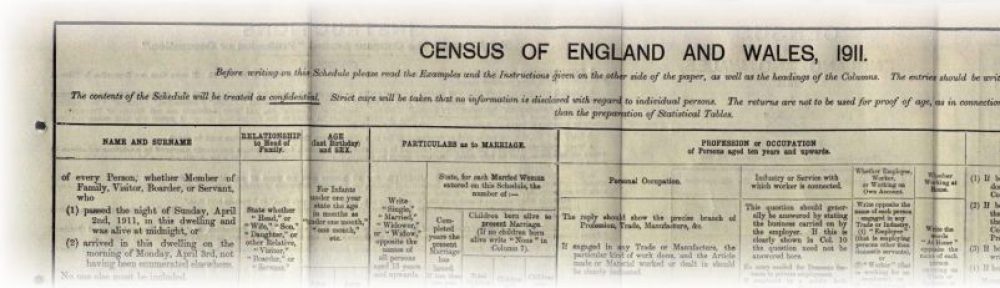
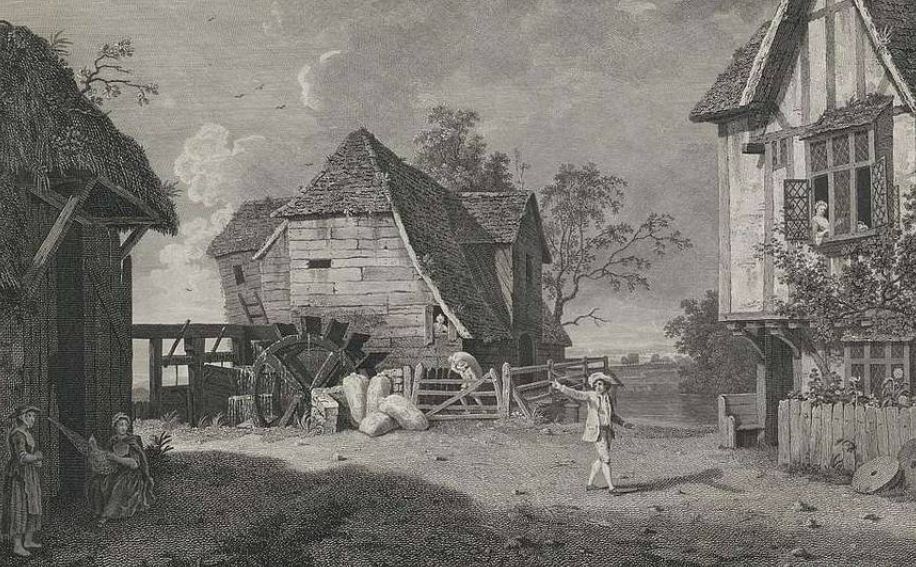
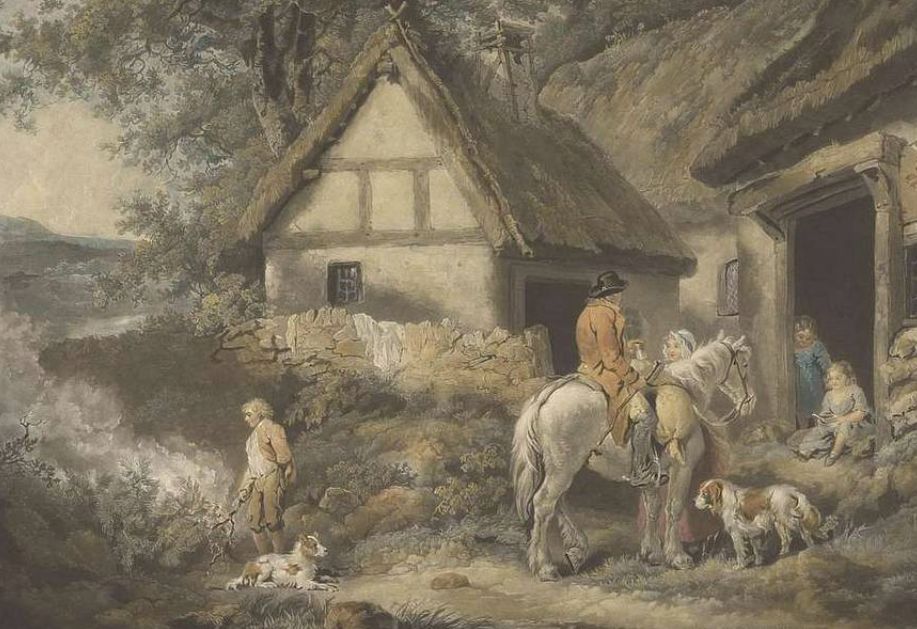

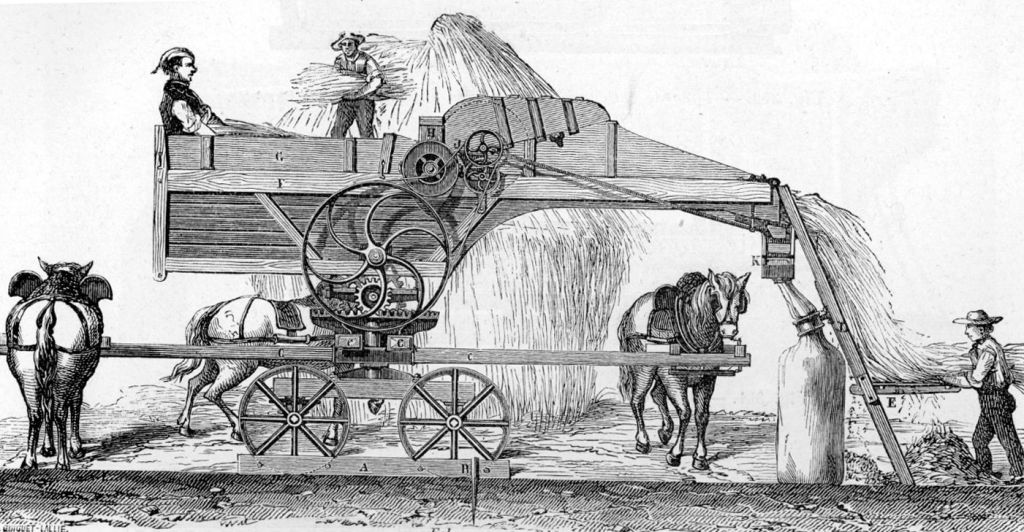


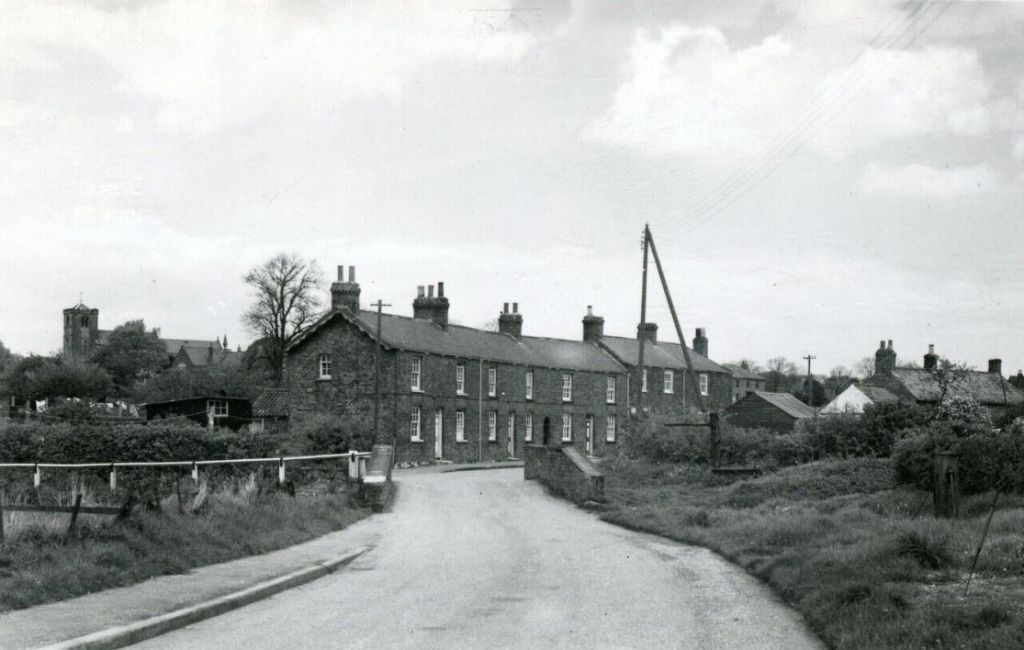


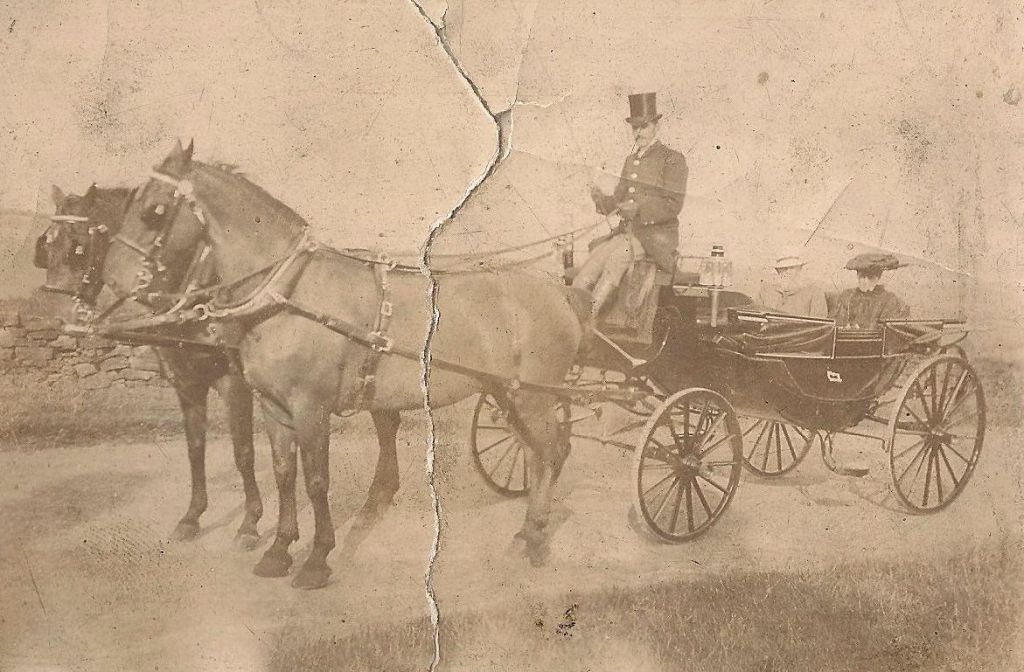

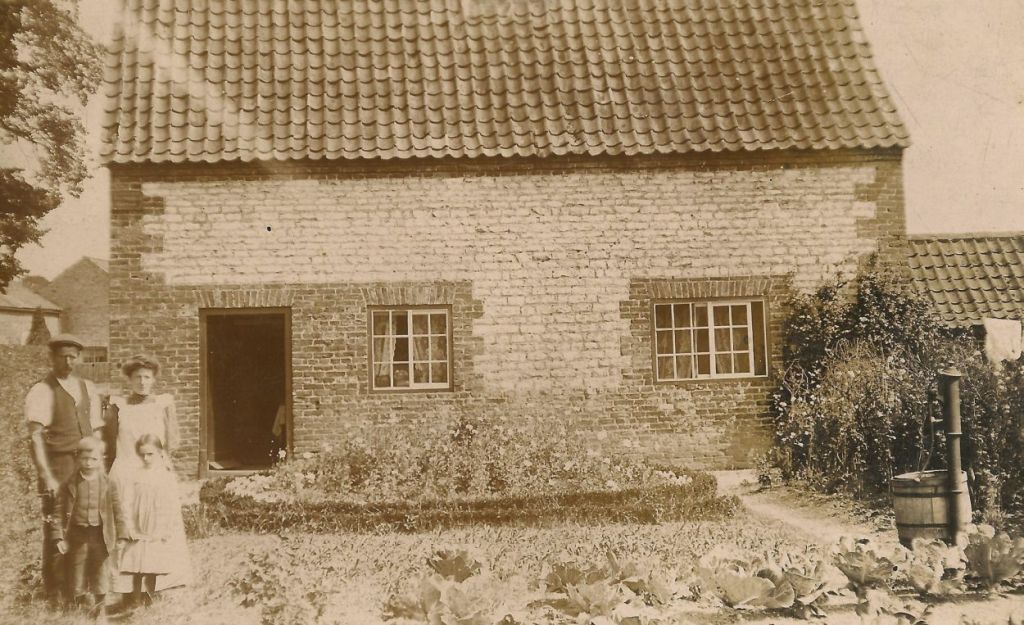
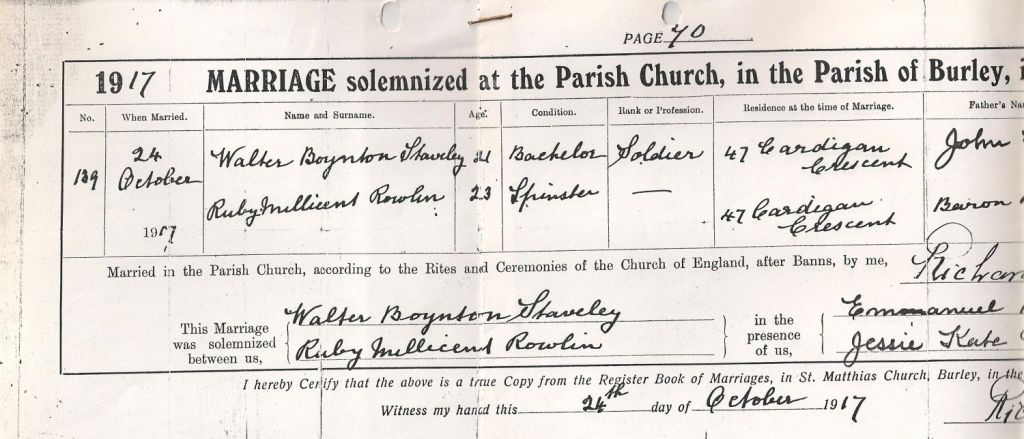
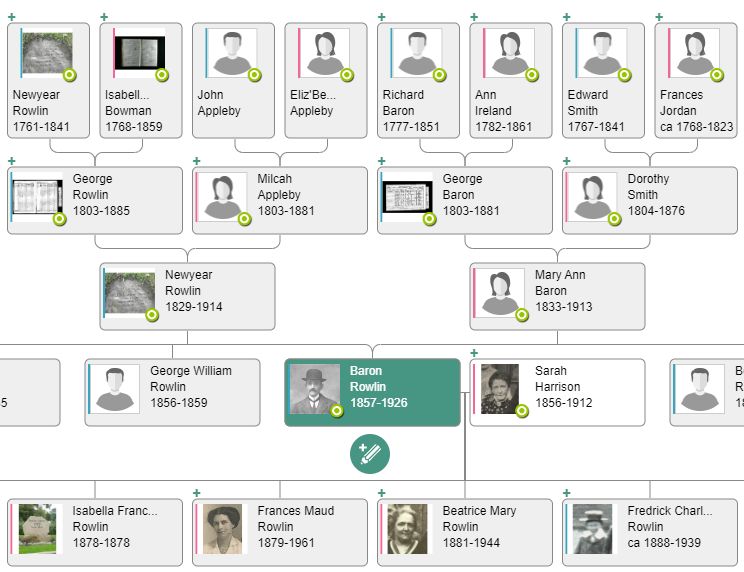
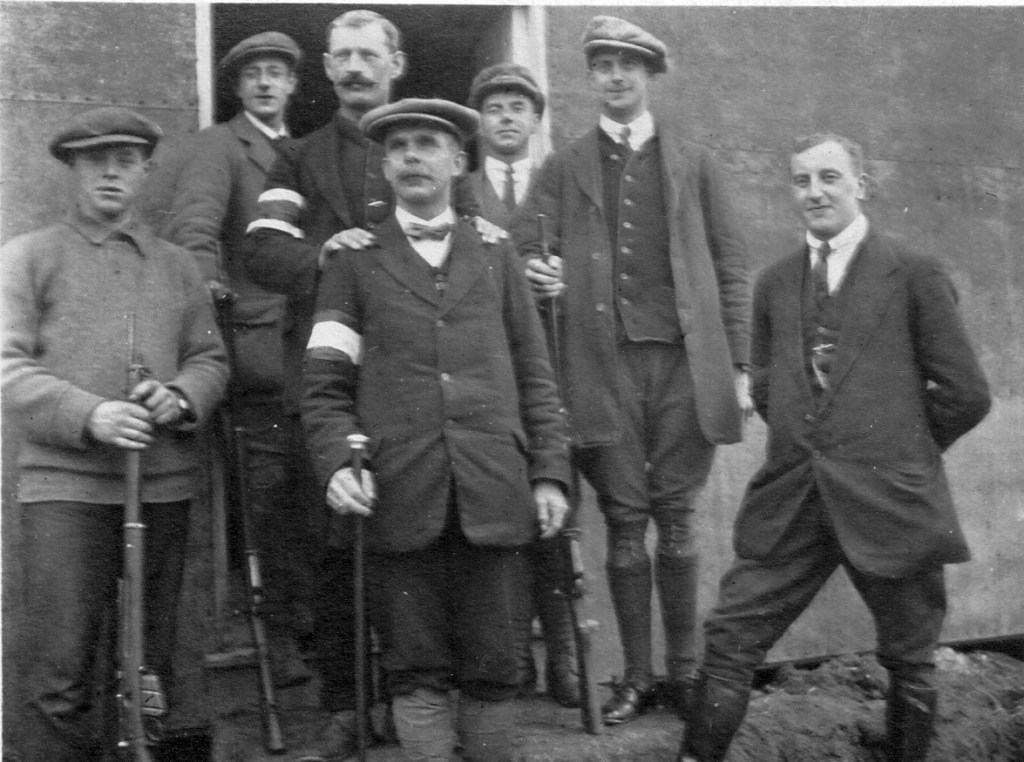
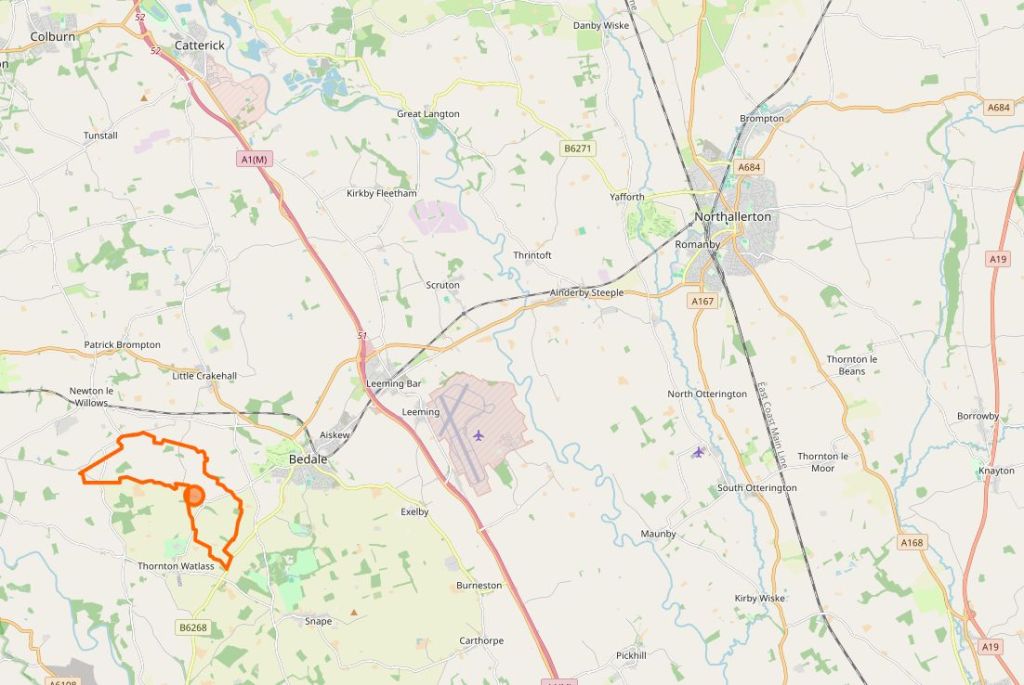
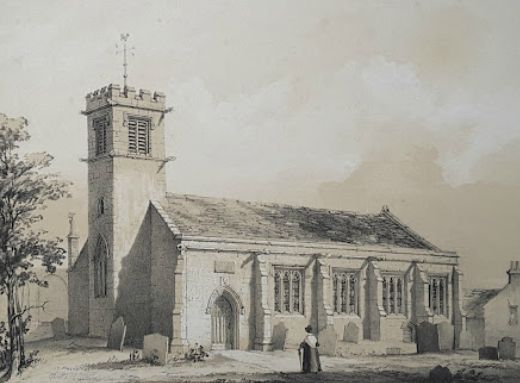

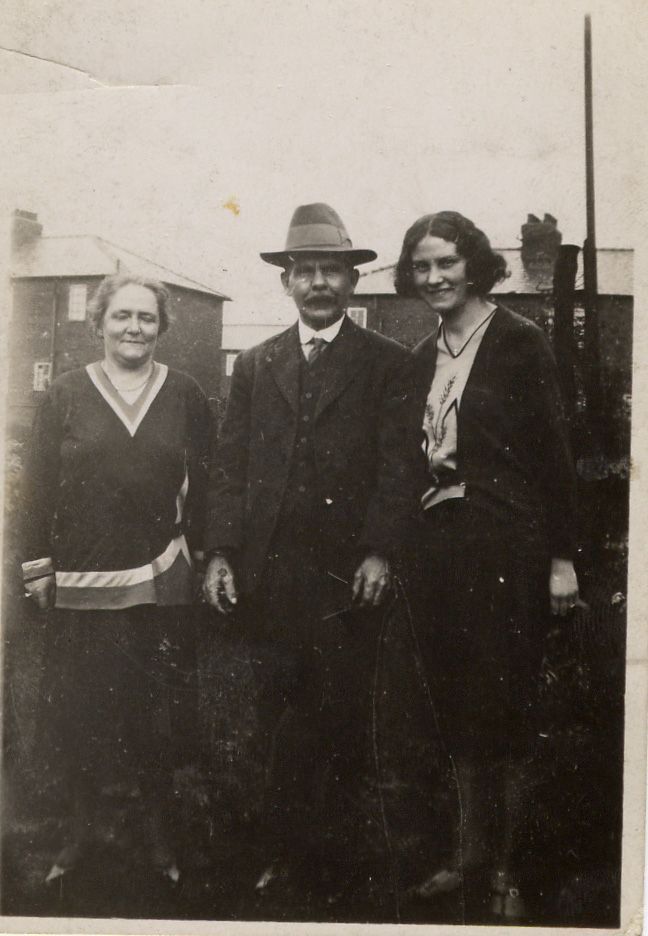
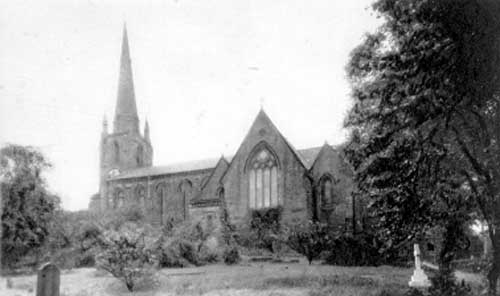
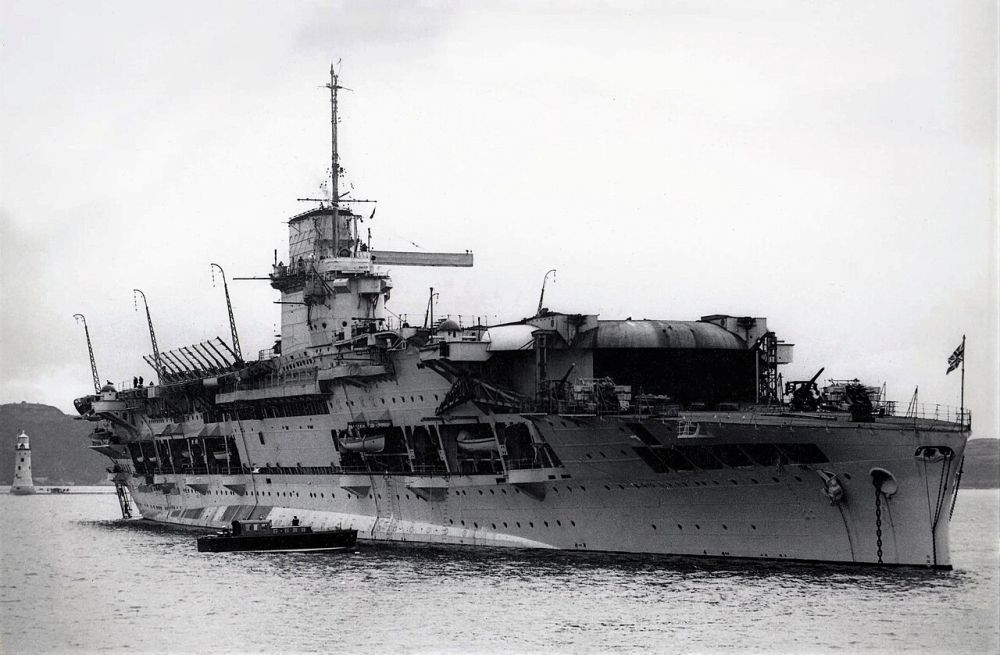
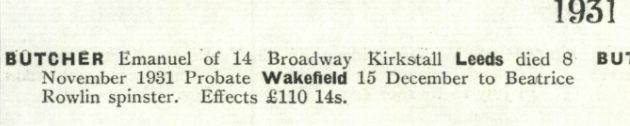
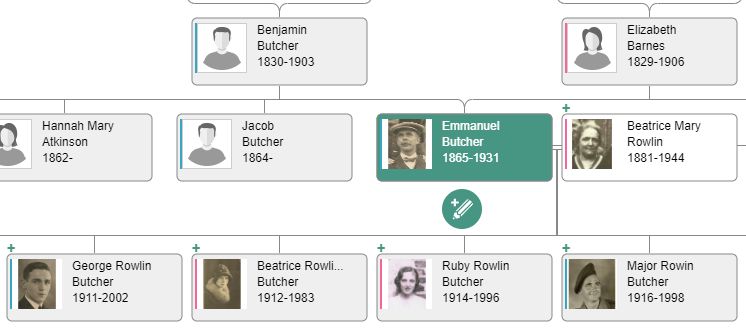


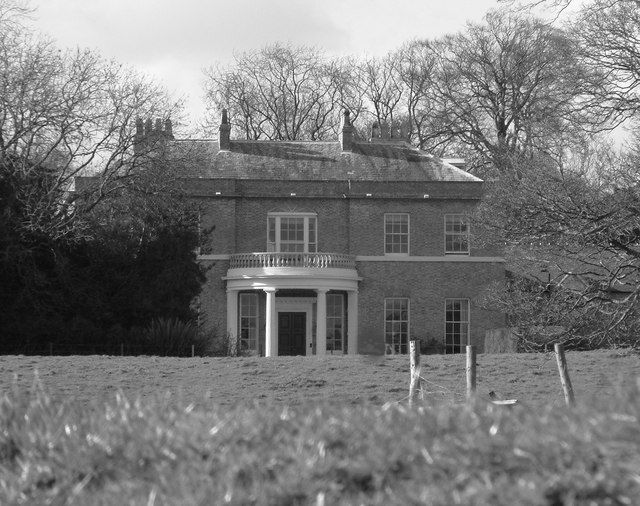
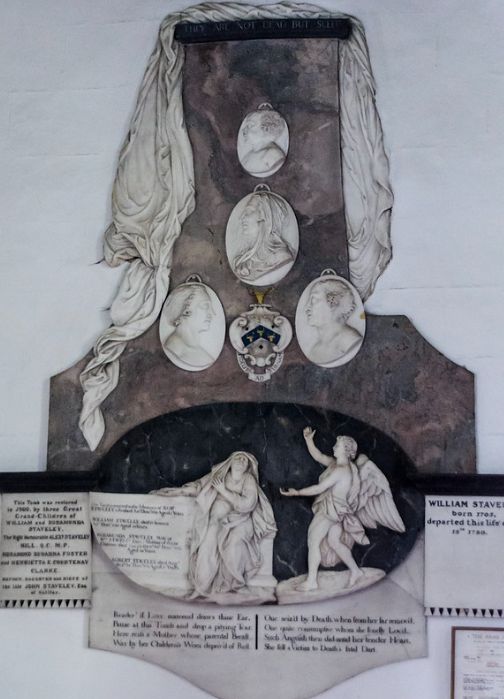

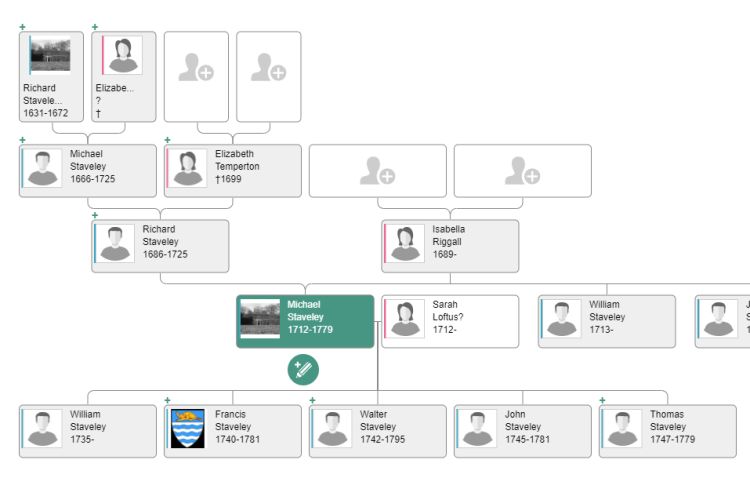

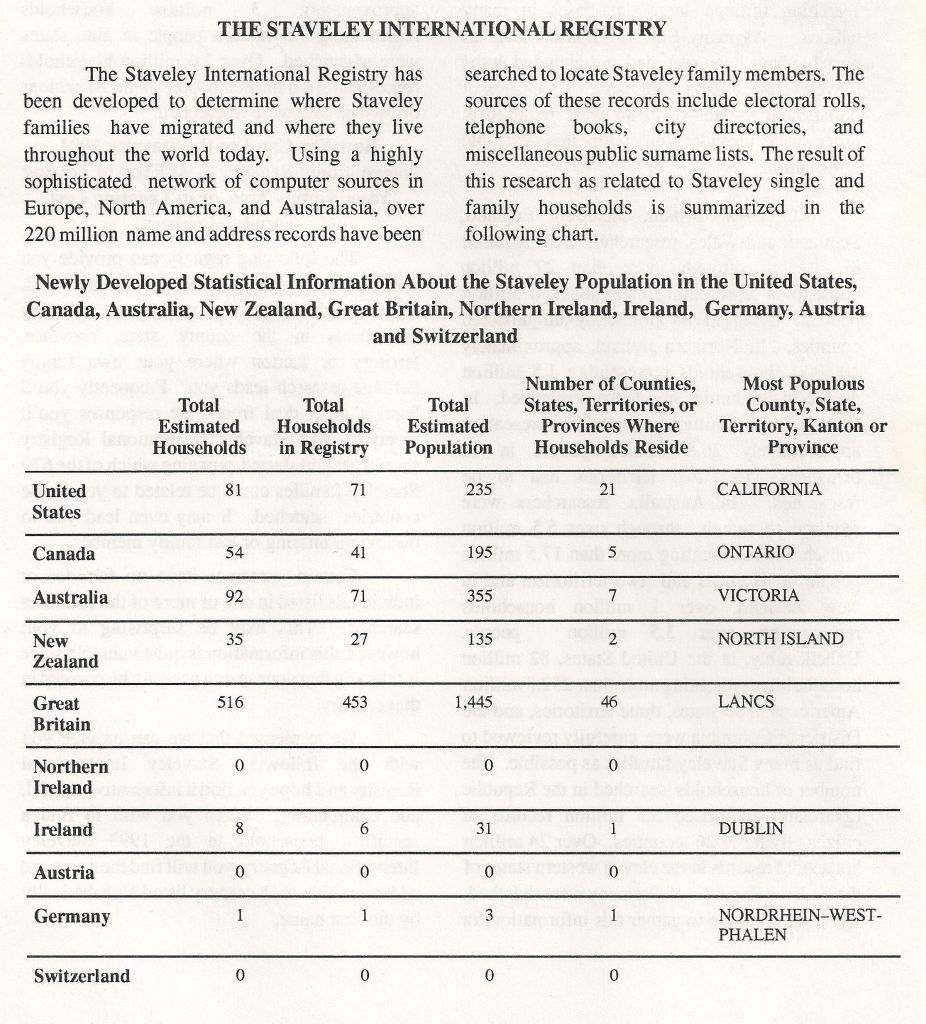
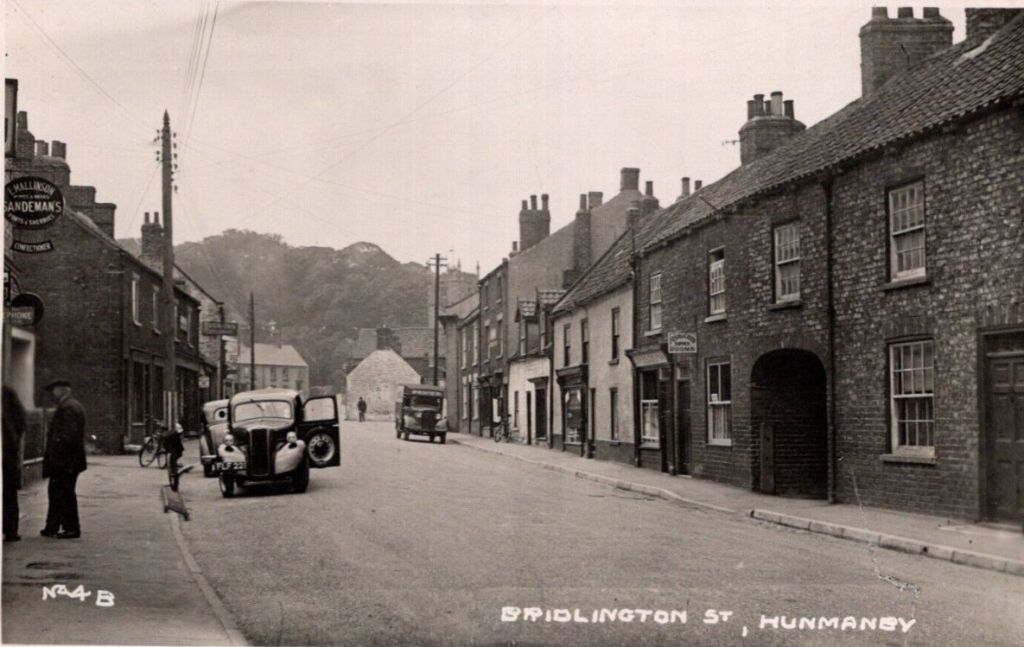
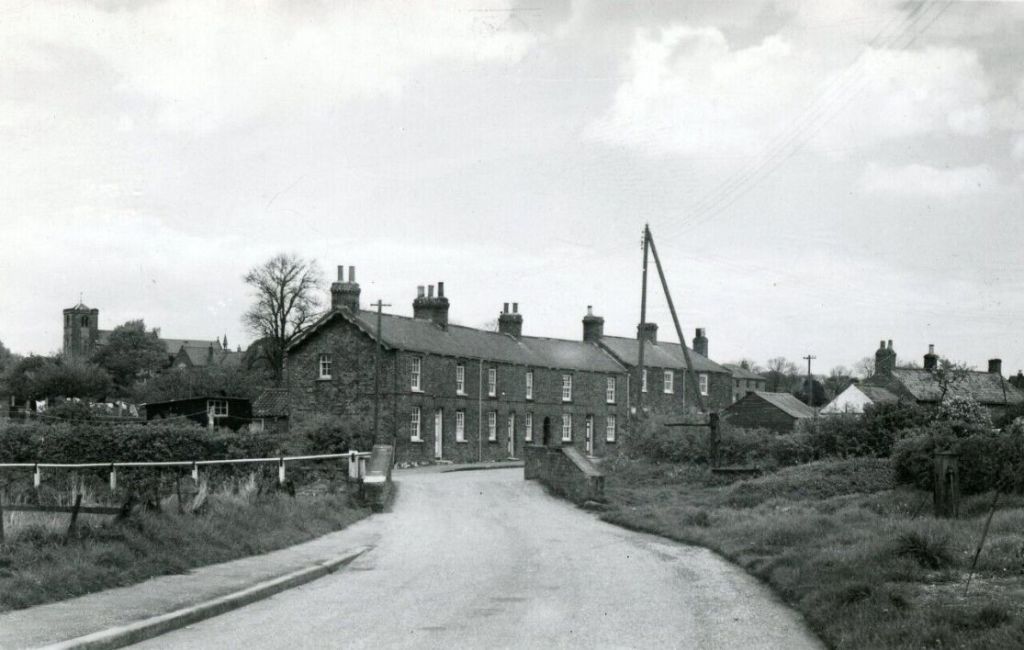
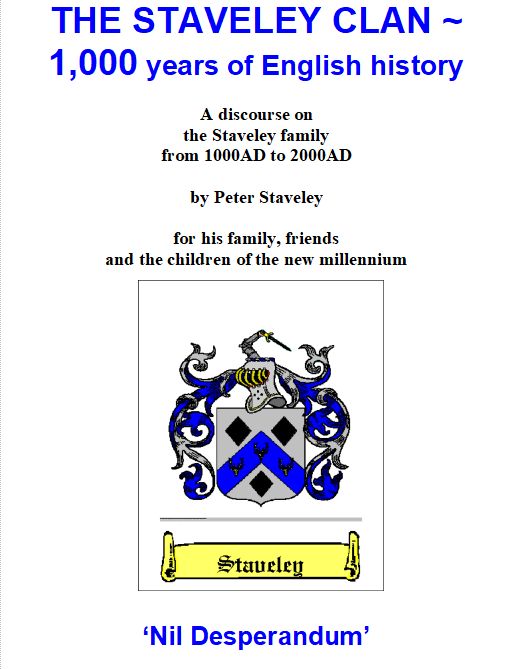

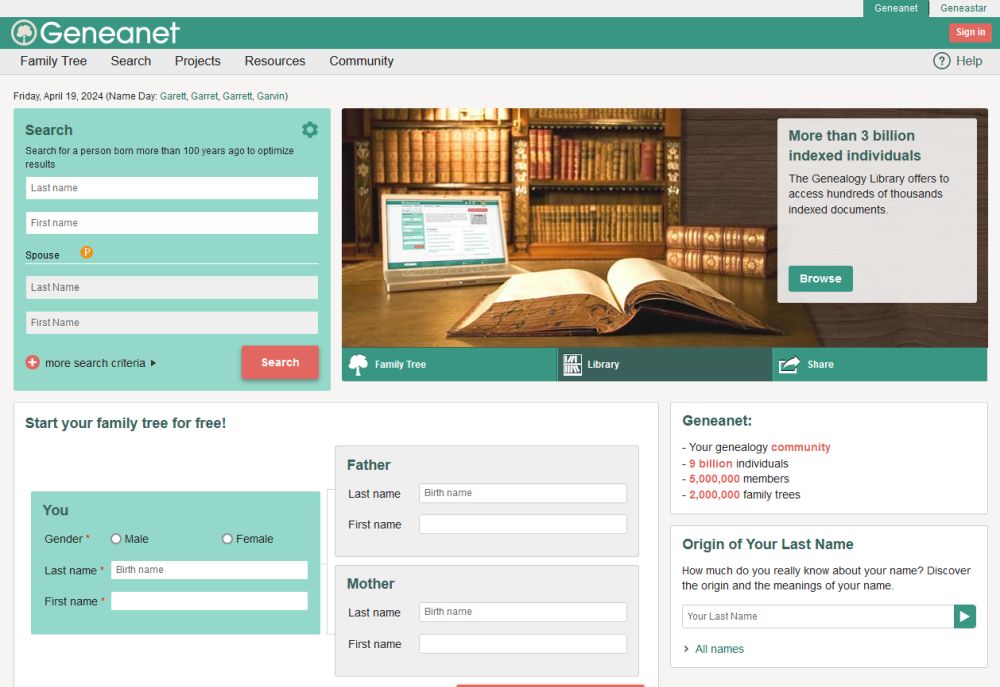
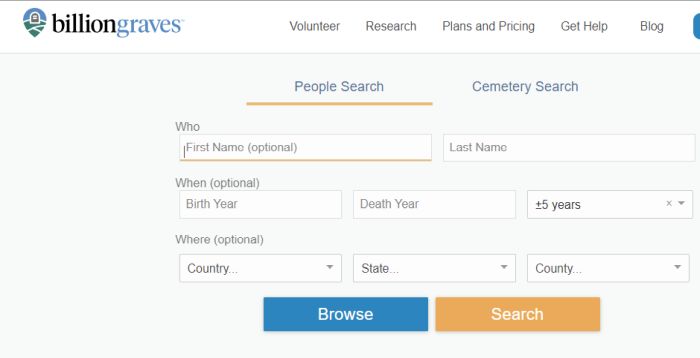
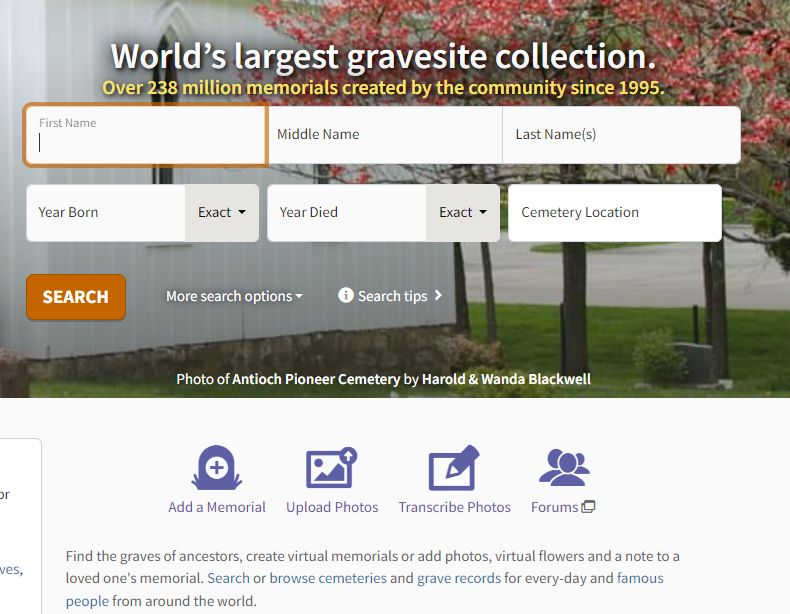
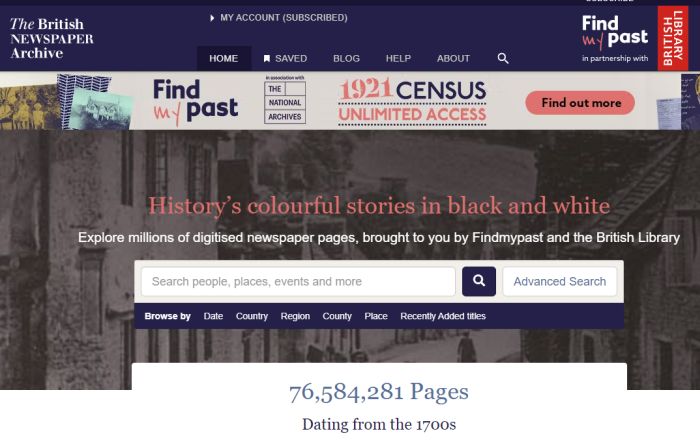


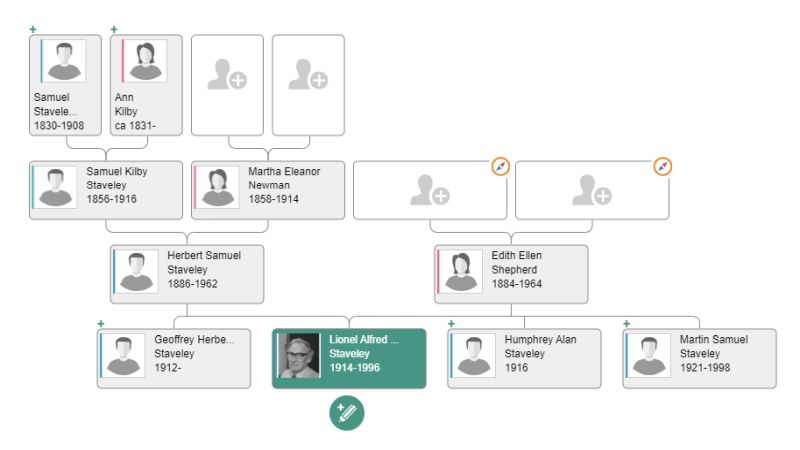
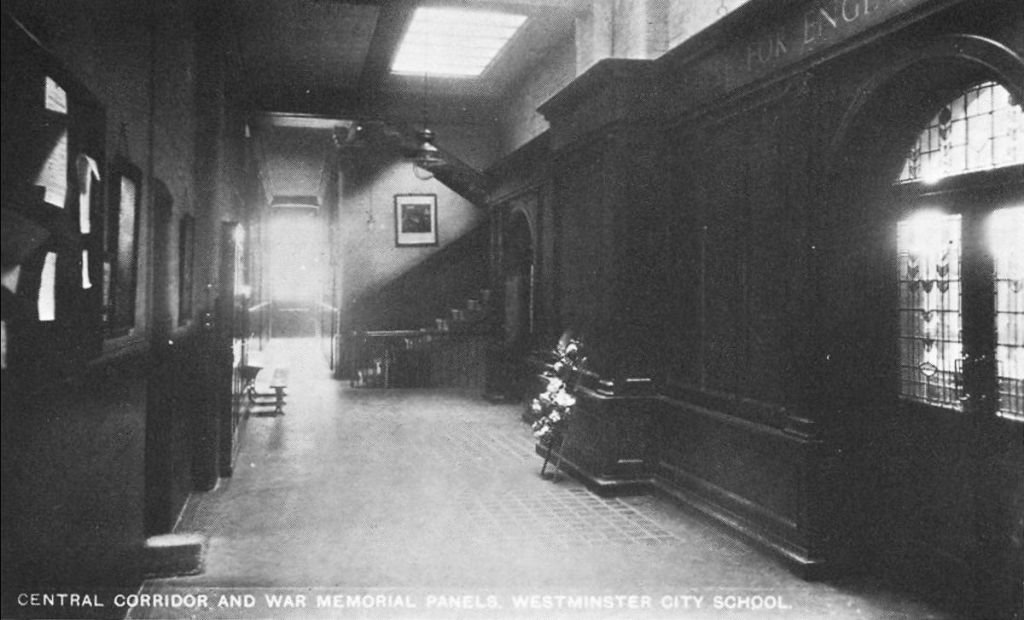
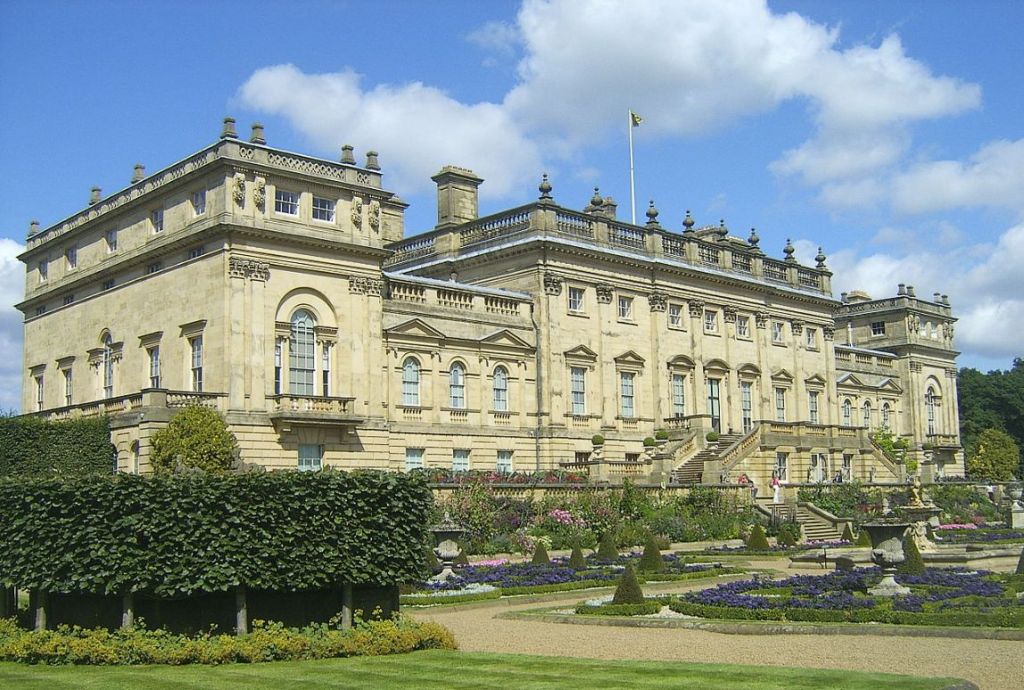

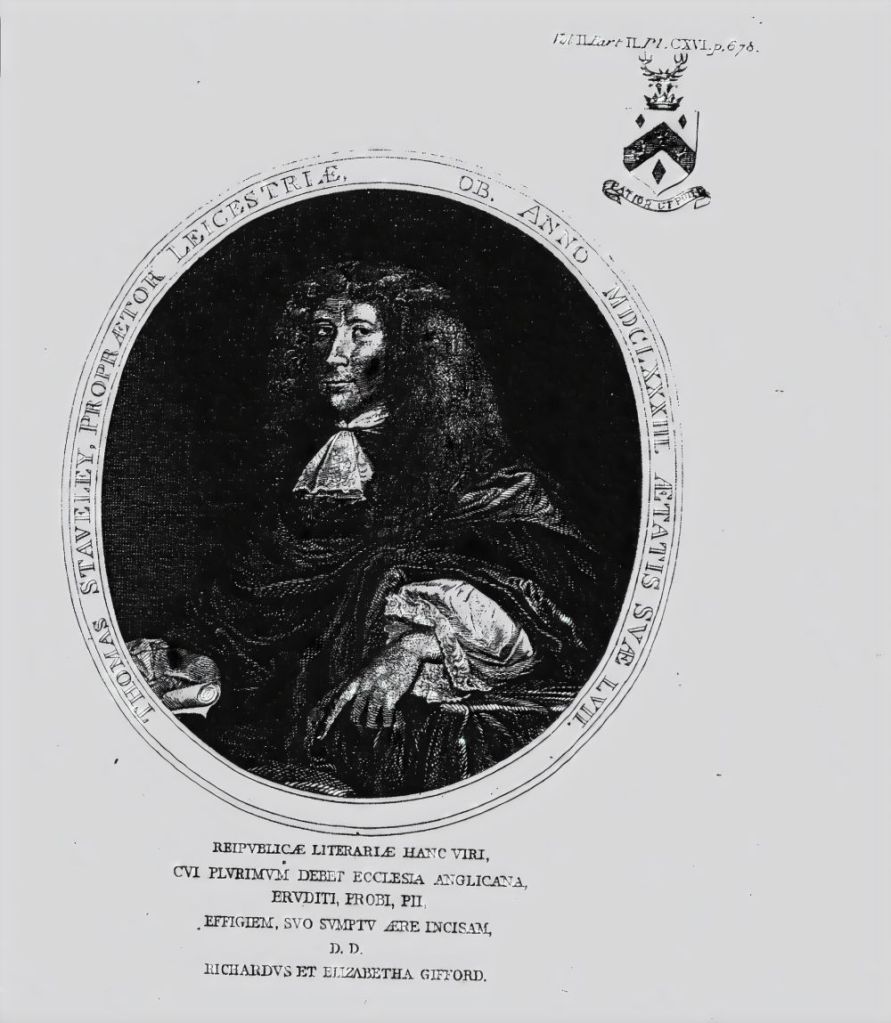
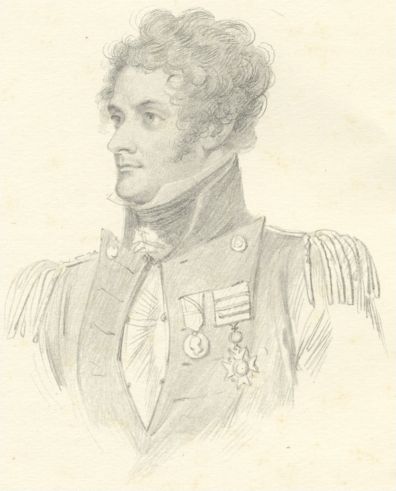
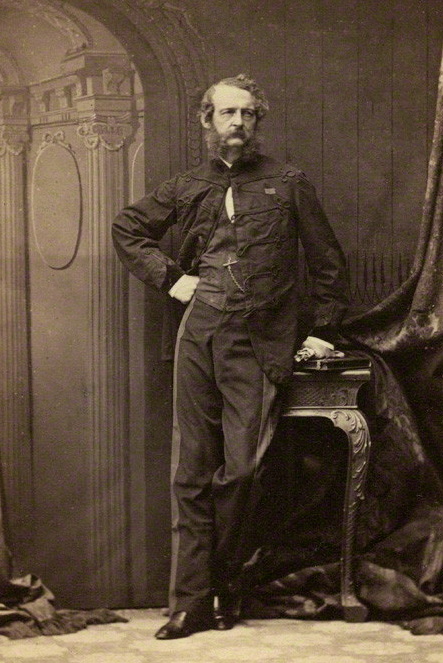
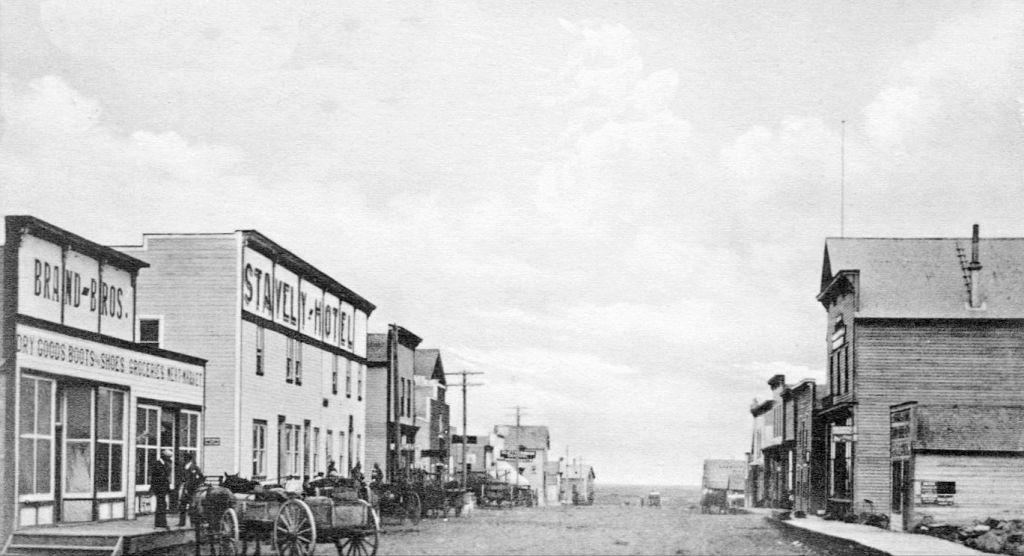

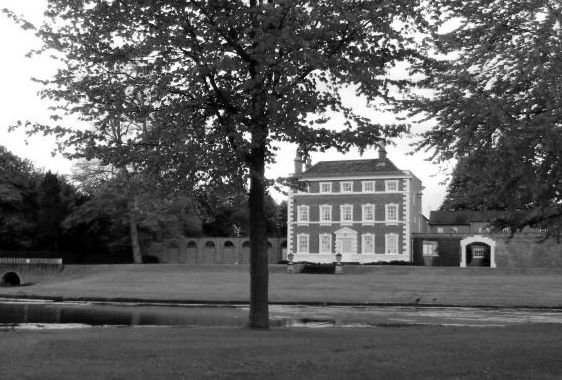
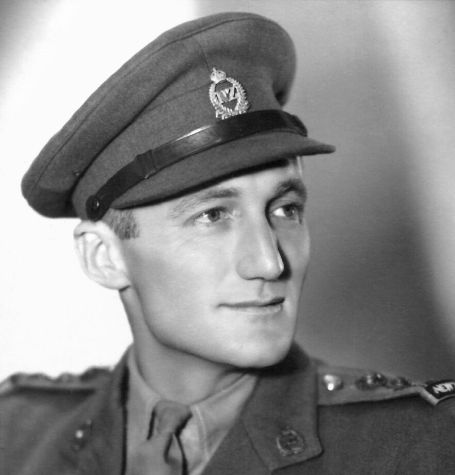
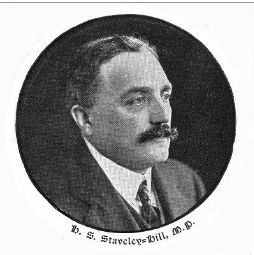
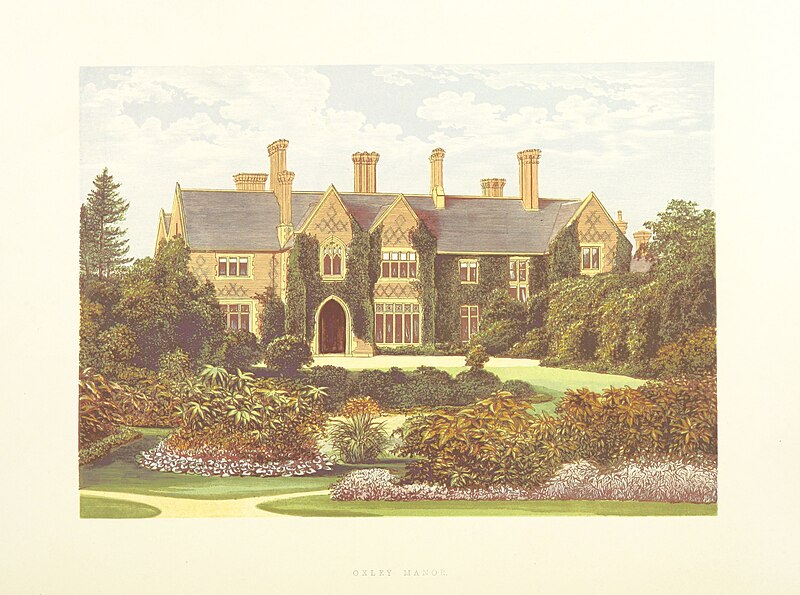

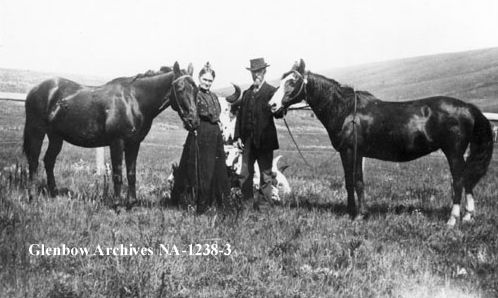

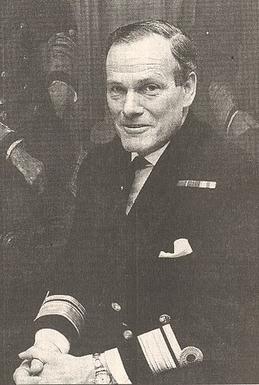
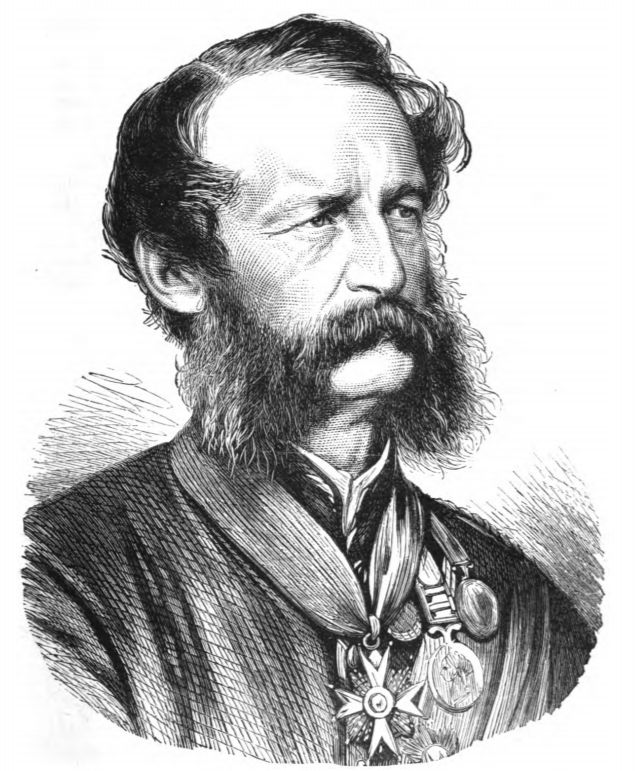
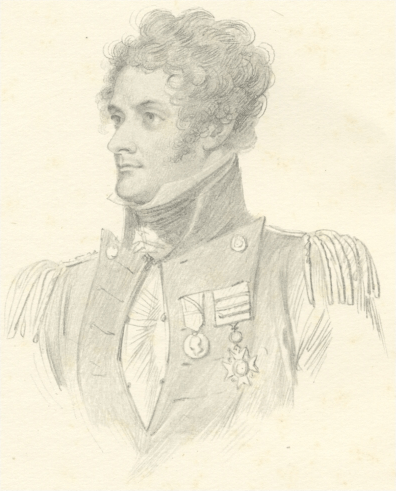
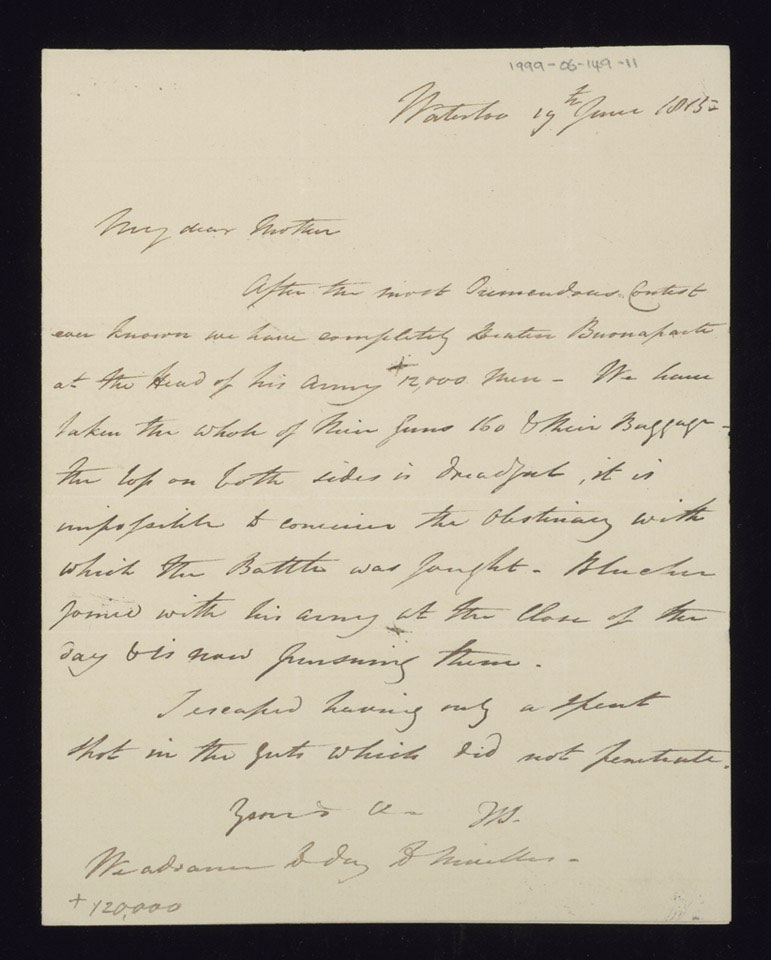
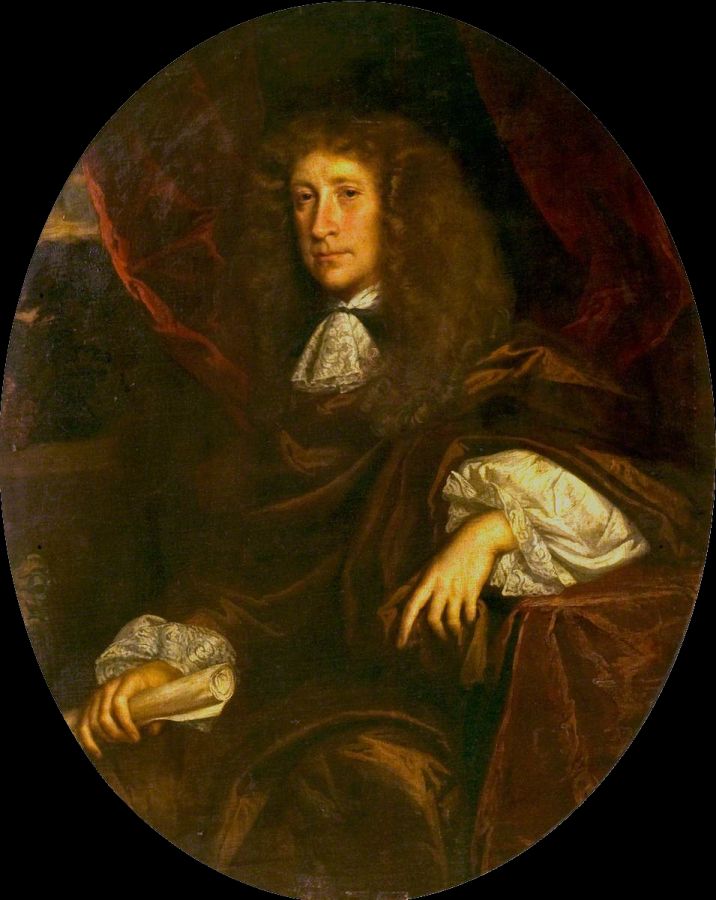
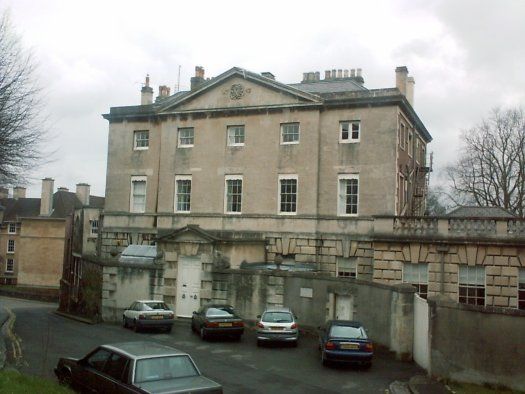

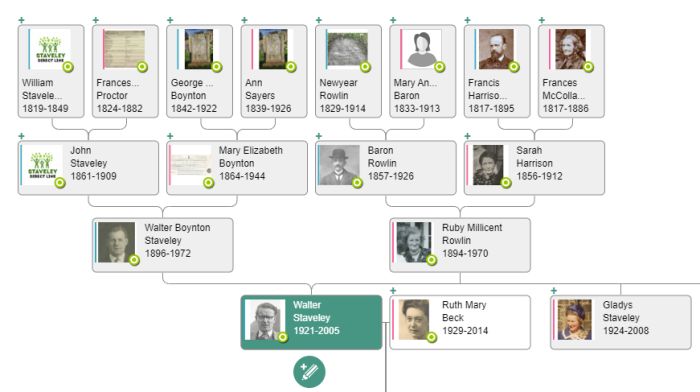
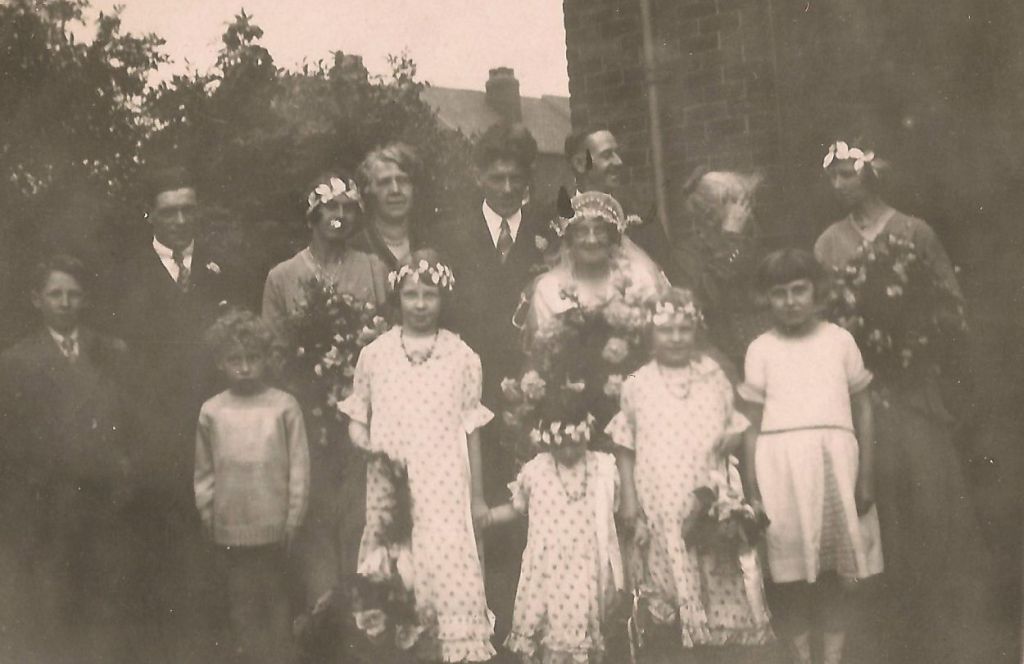

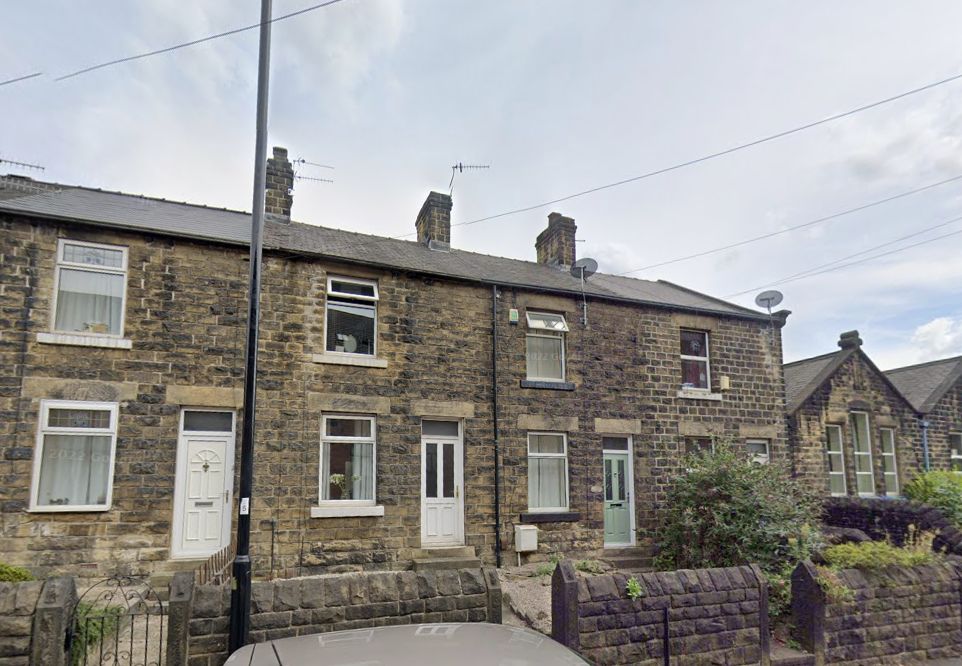
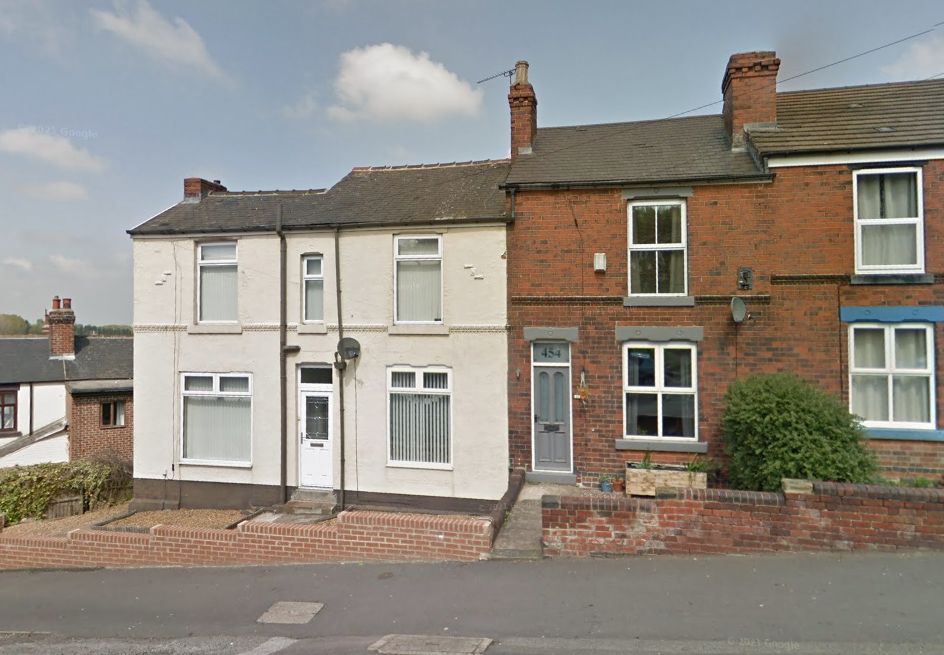
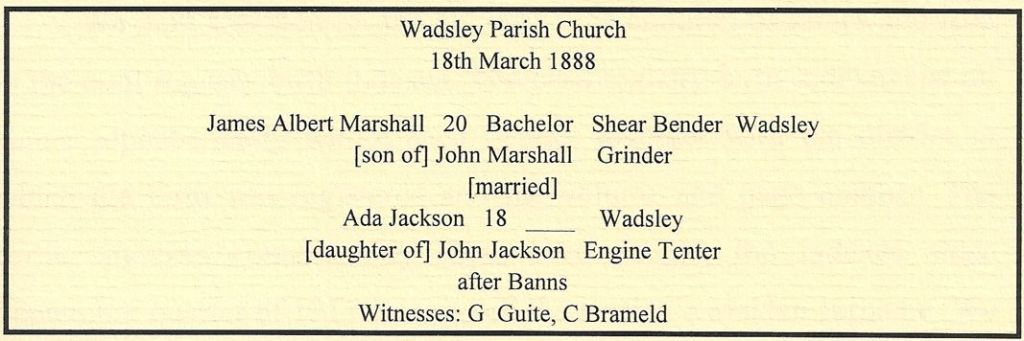
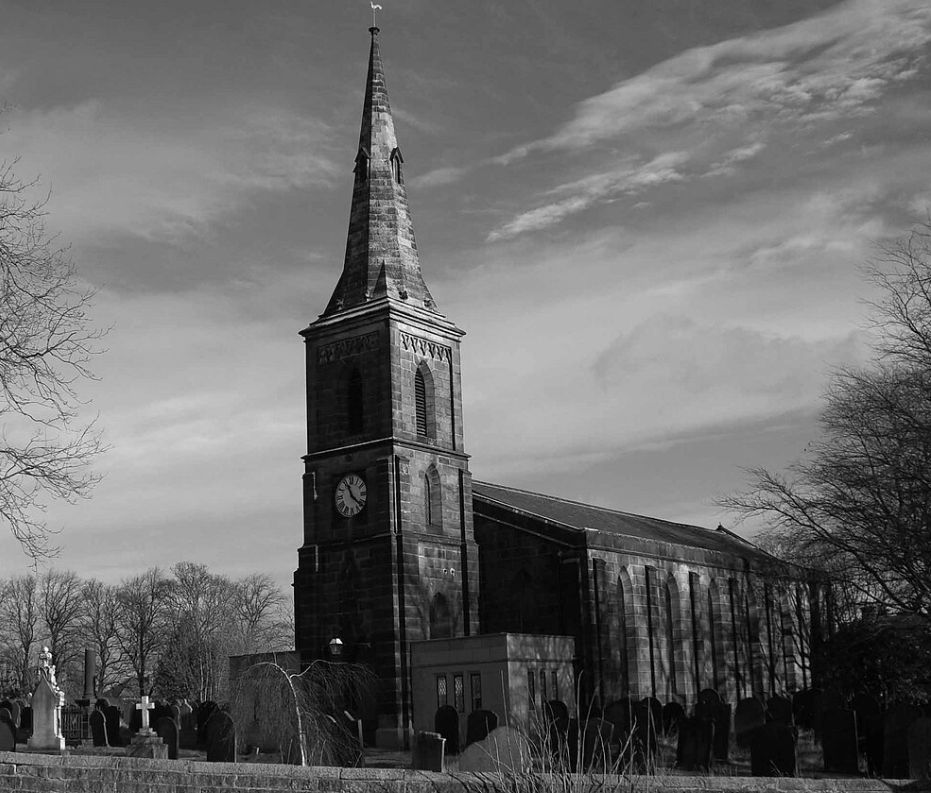
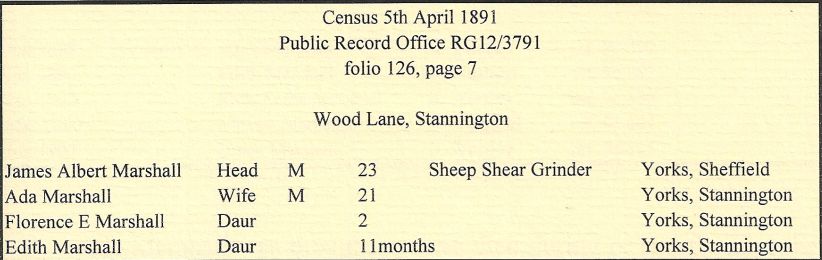
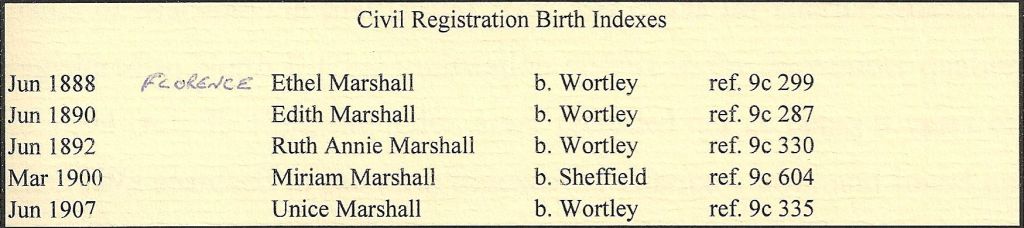
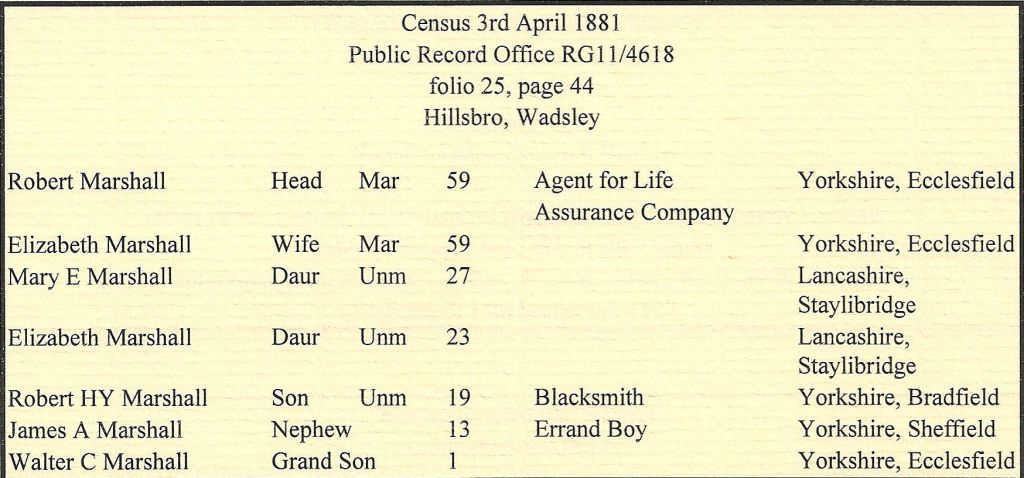

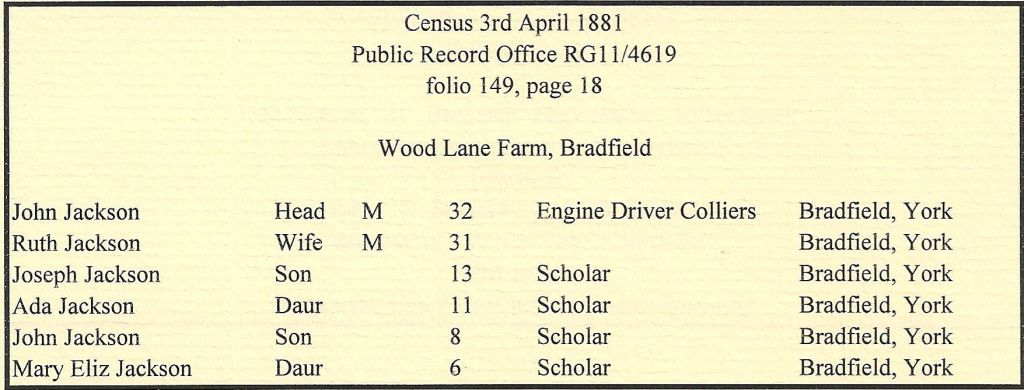
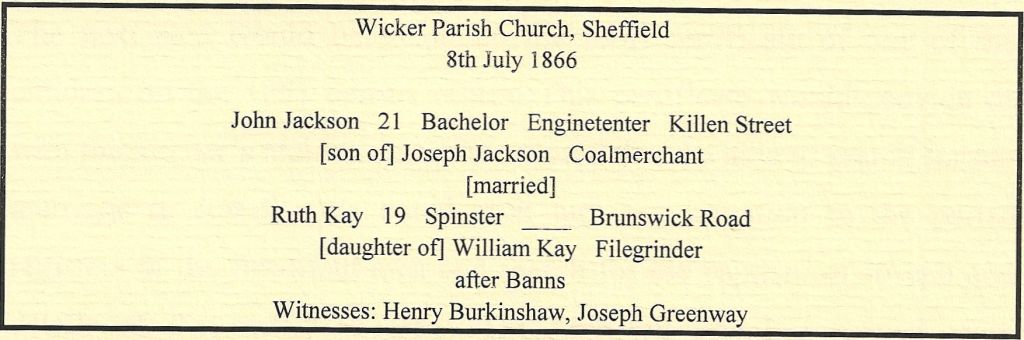
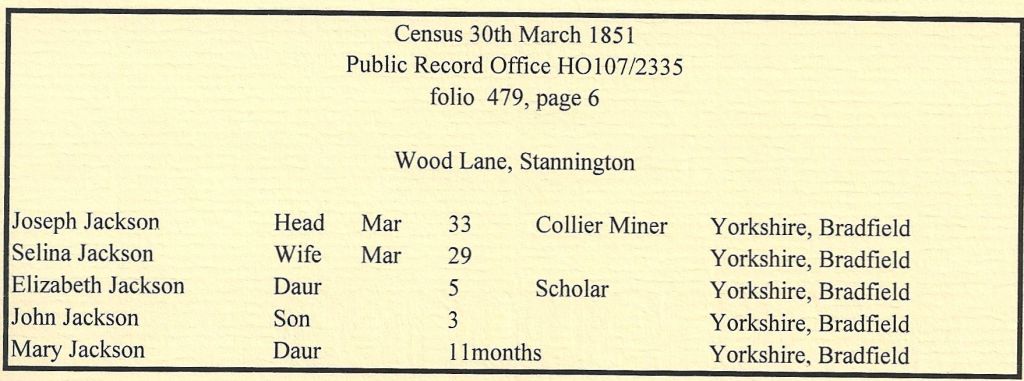

 The Staveley Family