

The Manor of Bridlington had been confiscated by Henry VIII from the monks of Bridlington Priory during the Dissolution of the Monasteries in 1537. The country was divided and it was inevitable that problems would occur in the future. The English Civil Wars occurred from 1642 through 1651. The fighting during this period is traditionally broken into three wars: the first happened from 1642 to 1646, the second in 1648, and the third from 1650 to 1651.
The government tried to raise taxes with all kinds of wonderful and ingenious ways to extract money from the working population. Times were tough and there was a lot of sympathy for the smugglers and traders who brought cheap goods onto the market place.

Bridlington Priory Church
The Staveleys of Bridlington can be traced back to the birth of Robert Stayfley who was born around 1500. He originated from the village of Bempton. Upon his death in 1558 his surname was recorded as Stafeley. He is listed in 1557 as being an inn keeper along with his wife Agnes. This whole area would under the ownership of the Bridlington Priory prior to its Dissolution of the Monasteries. For a period of around 30 years the manor was under the ownership of the crown.
In 1566, Queen Elizabeth I leased the manor to 12 key inhabitants who became known as Lord Feofees. In turn they had 12 assistants. They paid rent to the Crown and it was their job to maintain and upkeep the piers and harbour and administer the lands and manors. Interestingly enough this society is still in existence today. Further information can be found here: https://www.lordsfeoffees.co.uk/
This is where our story really begins. One of the very first leases was in 1595, when one of the Lords was a certain William Staveley ( 1568-1596 ) who was married to an Agnes Law ( his second wife ). Unfortunately he died just a year after his appointment.
In 1623 James I broke what should have been a 40 year least and devolved the Manor to a certain John Ramsey the Earl of Holderness. It was in payment and a reward for his defending the King and saving his life during an assassination attempt. When Ramsey died in 1629 the Manor was sold to the 12 Lord Feoffees which was formed by the townsfolk as a body of men to place the manor ‘in trust for the majority’. They were back in control again and this group of twelve people would now rule Bridlington for the next two hundred and fifty years!
Our story continues with Richard Staveley ( 1591 – 1651 ) who was born in Bridlington in July 1591 and died in 1651. He was just an infant when his father died aged only 28 but he looks to have elder sisters. One was seemingly at least 18 and another may have been slightly older. They were probably looked after by his widowed mother until he came of age.
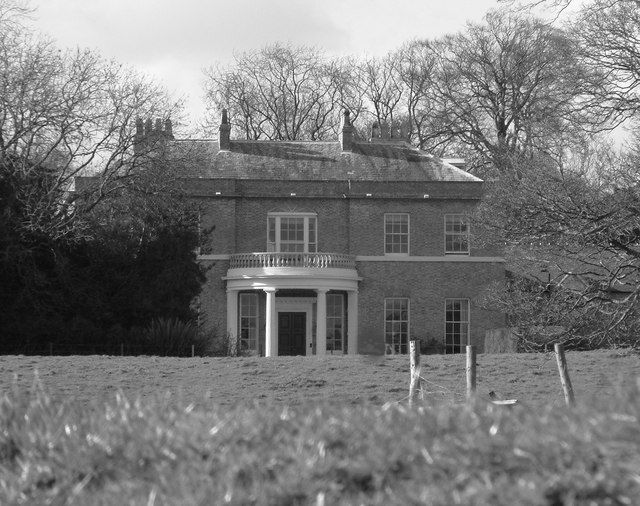
Richard Staveley was appointed in 1630 as one of the 12 Lords of the Manor of Bridlington Priory. His children were all born in the village of Bessingby which was just 2 miles from Bridlington town centre in those days. The Manor House at Bessingby was home to the Staveley family during this period.
After Richard died his son William Staveley ( 1626 – 1696 ) would also become a Lord Feoffee. This is recorded in 1655. He married an Ursula Copeland an is recorded as still being a Lord Feoffee in 1684. The connection with Staveleys then ceases to exist after the death of William in 1696. Did the family move into trade with Jamaica? Possibly smuggling or the slave trade? This seemingly innocent line of Staveley farmers may have taken a more lucrative occupation.
William’s brother Richard ( 1631 – 1672 ) is recorded as having purchased the manor house in 1659 from a Thomas Syring. He died intestate but a letter of administration covering the estate ensured that the property was left to his wife Elisabeth and her five children.
It is a very valid suspicion of Peter Staveley, who did an enormous amount of work on the Staveley ancestry, that his son Richard, with quite likely some position in society and money behind him, could possibly have moved into the smuggling business. This dangerous and elicit trade was about to take off along the Filey to Bridlington coastline and in fact throughout the whole of England.
There is a very clear link with Jamaica that certainly deserves further investigation. I have not found any direct evidence of what this particular branch of the Staveley family were up to in Jamaica but perhaps someone can shed more light on this?
There is a reference to a Stavley Park in Jamaica on the Legacies of British Slavery website of the University College London. It reads: John Miller, merchant, born circa 1778 in Glasgow, Lanarkshire, husband of Mary Robinson McCook, born Jamaica. Described also as a merchant in Kingston, Jamaica. Awarded compensation as co-owner of 3 enslaved persons in Kingston, Jamaica, and for 19 enslaved persons on Stavely Park in Jamaica as executor of Robert Hamilton.
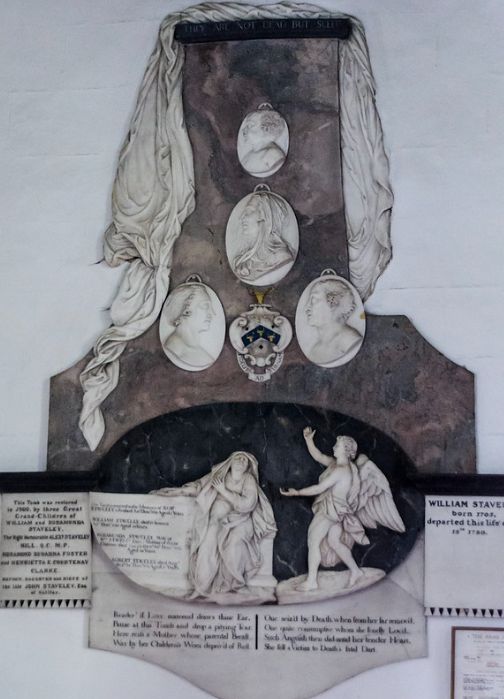
Tomb erected to the memory of Robert Staveley, died 1742, age 2. William Staveley died in Jamaica 1765 age 36 ( 1729 – 1765 ). This tomb was restored in 1900 by two great grandchildren and one great-great granddaughter of William and Rosamund Staveley. They being:- The Right Hon. Alexander Staveley Hill Q.C. M.P.
The above is the alabaster tomb of this line of Staveley’s. It can be found on the wall of the church in Hunmanby.
*Michael Staveley ( 1712 – 1779 ), the son of Richard who died in 1672, sold Bessingby manor in 1729 when aged only 17, to a Thomas Goulton. There is probably a lot more to this family tie over three generations than meets the eye and it would be interesting to get more details if possible from a Goulton family researcher. Michael and his family moved to Beverley near Bridlington. The were grocery traders of some means.
Richard Staveley ( 1684 – 1721 ), the son of William ( 1626 – 1693 ), was a well known grocer in the area and he had one son and three daughters with is wife Ann Newton. His son, William Staveley ( 1705 – 1780 ) who is mentioned on the tomb in Hunmanby Church and who married Rosamund Cattles, would to on to have many children who would have dealings with Jamaica. They were clearly a very wealthy and influential family.
Luke Staveley ( 1740 – 1835 ), William and Rosamunda’s son, married twice and would still be producing children at the age of 55. He would outlive his younger second wife and died at the age of 95 after participating in radical politics in London and having lived in Halifax.
Luke held positions in London having been elected to the Common Council of the City Corporation between 1770 until 1777. Records show that in 1769 his occupation was that of a business merchant and linen draper at 27 Ironmonger Lane. He was also the Governor of the London Workhouse for a period of thirty years.

*Michael’s grandson William became the assistant Governor after marrying the York Castle Prison Governor’s daughter Martha Clayton. He would go on to take over the position of of Governor when his father in law retired.
The association with politics would continue through Luke’s son, Henry Hill who was the father of the famous politician Alexander Staveley Hill and through his son, Henry Staveley Hill. But that is another story! This family line continues on our family tree and includes the branch of the Staveley Hill ancestors and their involvement in government.
For a full and very detailed account of the intricate story of the Staveleys of Bridlington please contact Peter Staveley directly via the Staveley Genealogy website.
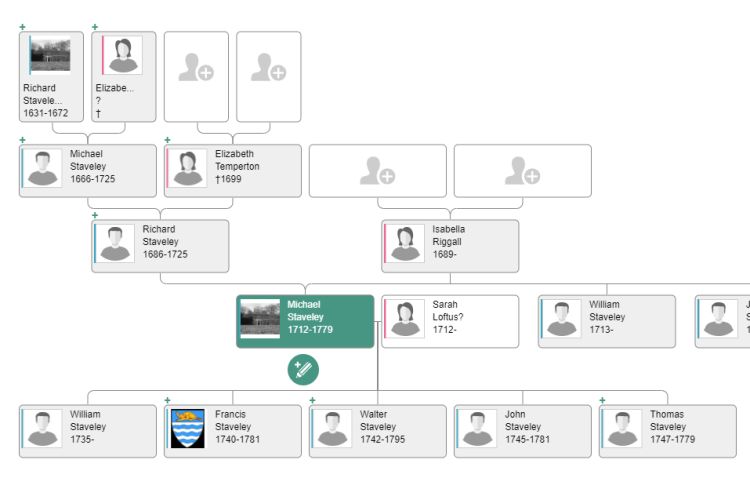
 The Staveley Family